







A return to Bohol, where memory meets new horizons
The island's changing landscape offers both the comfort of the familiar and the excitement of discovery
Published Sep 24, 2025 11:37 pm


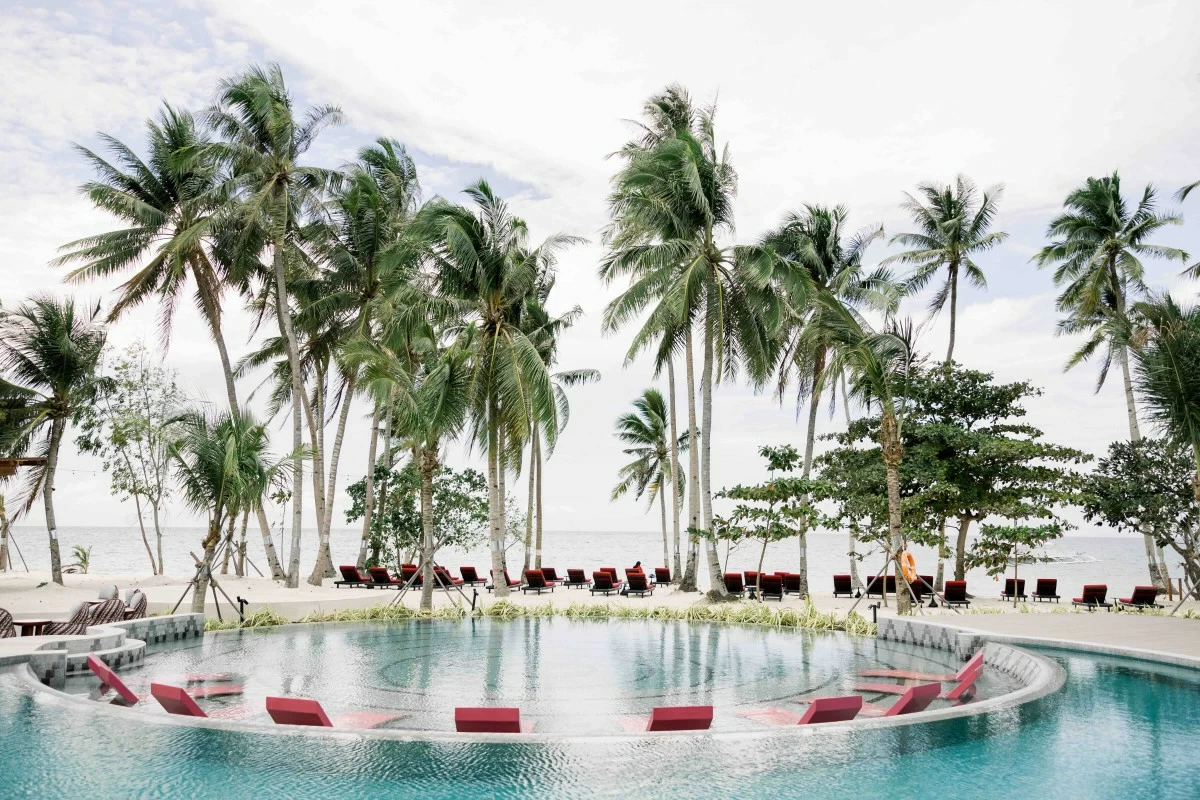
BEACHFRONT HAVEN The South Palms MGallery Panglao opens onto a shoreline framed by tropical trees and outdoor pools, offering a tranquil island setting.
Our first trip to Bohol came in 2010, when a friend from Tagbilaran extended an invitation to explore the island. The flight landed at the small city airport, a modest terminal set right in the middle of town. From there, it was only a short walk to the host’s house, a reminder of how compact and unhurried provincial life could be.
What struck us then was the harmony of the community. People were warm and genuine, the streets were clean, and there was little of the commercial clutter that had already crept into other towns. Tagbilaran felt orderly and proud, much like Marikina, standing in sharp contrast to our own hometown of Sta. Rosa, Laguna, where rapid development had begun to crowd out the old charm.
Like many locals unsure of what to show visitors, the host turned to a friend — a doctor assigned to Bohol under the Doctors to the Barrios program — for suggestions. That set the group on the familiar circuit: the Tagbilaran Museum, the old city church, and a restaurant where the staff, all deaf and mute, served with quiet grace. Dinner that evening was at the Bohol Bee Farm, where herbs, flowers, and honey flavored the meal.
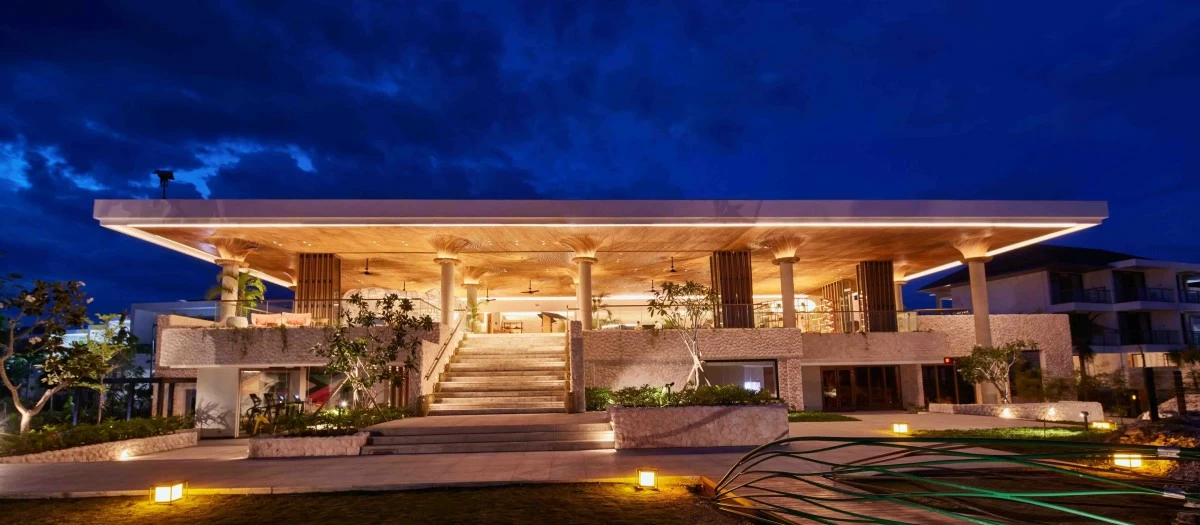
ISLAND ELEGANCE The main building of the resort blends modern design with a coastal setting, welcoming guests with both style and warmth.
Over the following days we saw the places every first-time visitor wants to see. Panglao’s white-sand beach. The Loboc river cruise. The Chocolate Hills. And the tarsiers of course (back then, visitors were still allowed to hold them). Baclayon Church, its stones weathered by centuries, was unforgettable.
As journalists, we were fortunate to return to Bohol again and again. Each visit reaffirmed the island’s consistency in hospitality, the way locals were deeply involved in welcoming visitors. We witnessed the devastation of the magnitude 7.2 Bohol earthquake on Oct. 15, 2013, and just as quickly, we saw the province recover. The resilience of the Boholanos was never in doubt. Later, we covered the groundbreaking of Panglao International Airport and photographed the skeletal tarmac under construction, a reminder of how the island kept moving forward.
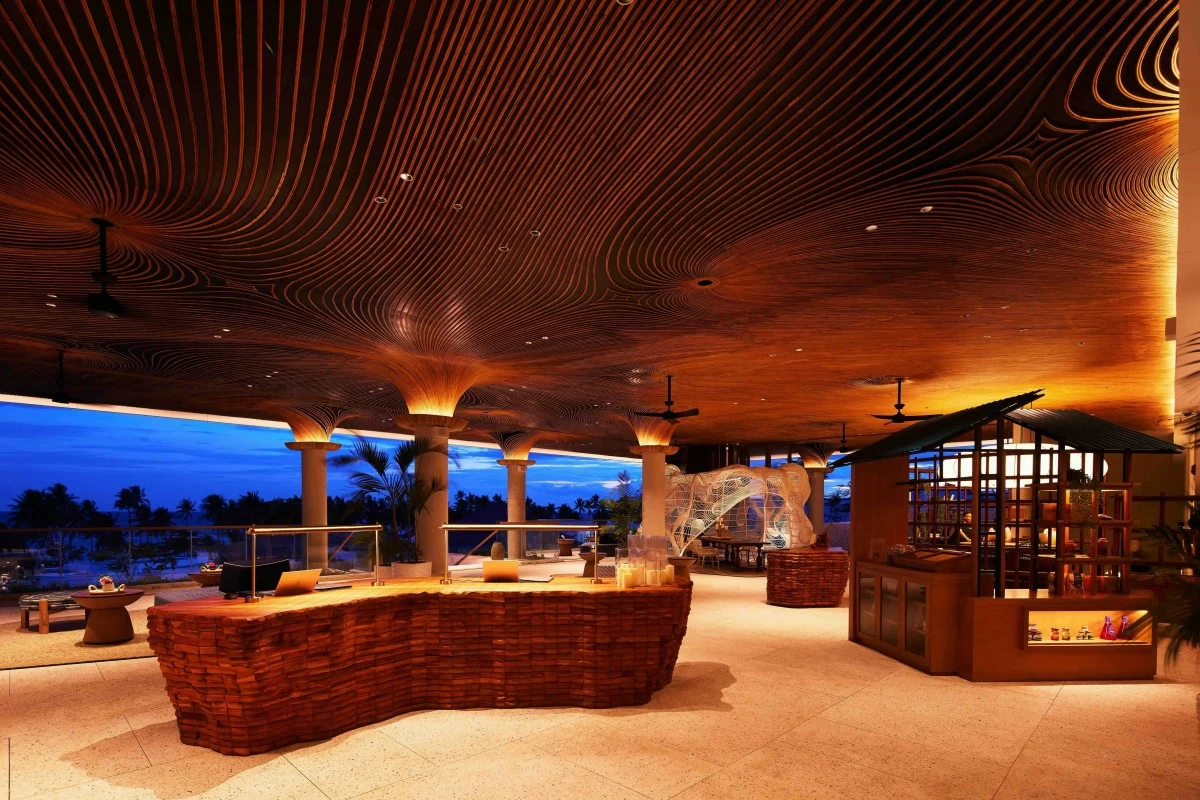
WOOD WARMTH The lobby highlights natural accents and open spaces, setting a welcoming tone for arriving guests.
This year, another invitation brought us back. The opening of South Palms Resort & Spa Panglao – MGallery Collection last August felt like a natural continuation of that story: proof of Bohol’s measured growth and its enduring sense of place.
Set on a broad sweep of sand shaded by coconut trees, the 188-room resort introduces a new expression of tropical luxury rooted in design, craft, and cultural memory. Its location is just ten minutes from the airport, but its spirit reaches deeper into Bohol’s landscape, close to the Chocolate Hills, coral gardens, and forests where the tarsier clings to branches no larger than a finger.
The design is inspired by Sirenna, the mythical sea guardian said to protect these waters. Her presence runs through the resort, from coral-shaped forms in the lobby to nightly oceanfront rituals. A banyan tree, revered and towering, anchors the property. “Sirenna emerged from a rare alchemy where global design met the soul of Bohol. By listening to local voices and weaving in cultural memory, we shaped a hotel that feels both discovered and dreamed,” said Bill Barnett, managing director of C9 Hotelworks and lead consultant for the project.
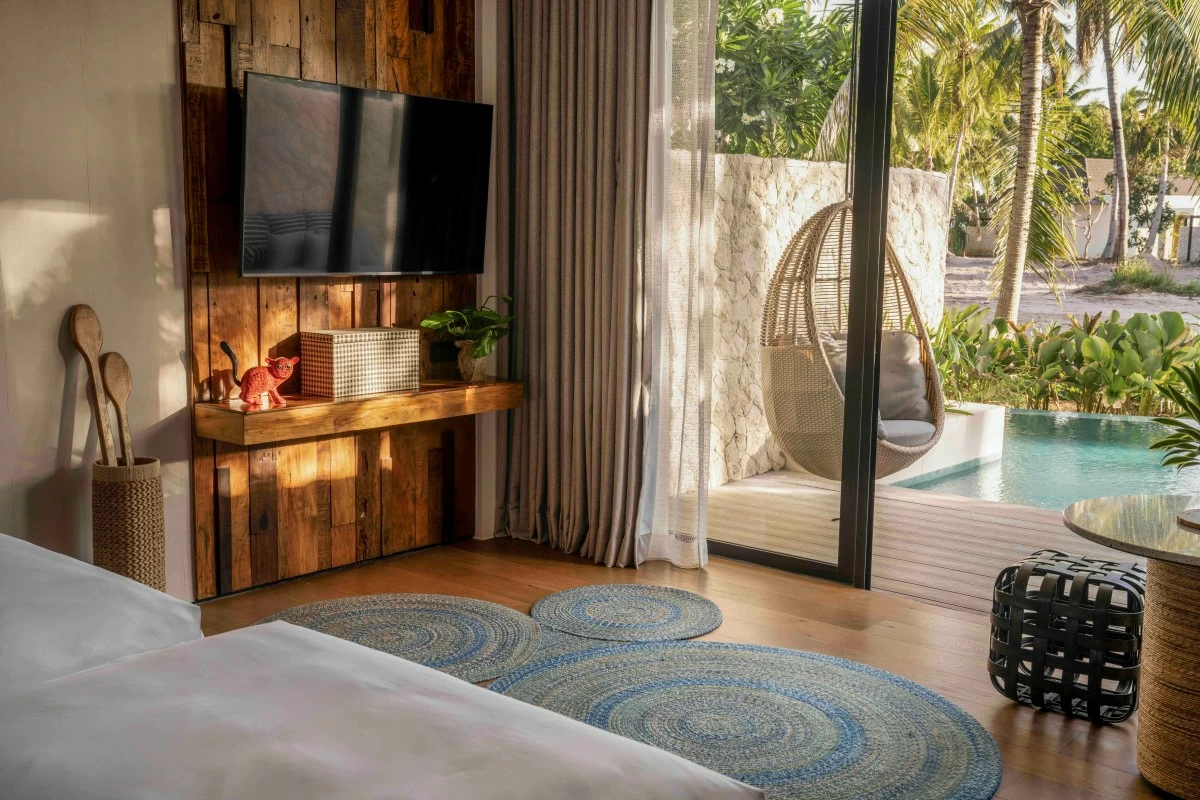
PRIVATE PLUNGE One of the room options at the resort comes with its own private pool for a more exclusive stay.
The creative team worked with textures and traditions. Interiors carry walls of salvaged Boholano wood, handwoven banig headboards, and rugs crafted by artisans. Eight beachfront villas offer deeper encounters with the island, complete with sunset picnics and keepsakes made by local hands.
Food plays its own role in the storytelling. UMA, a beachfront concept, presents seafood and fruits in a market-style setting, with alfresco dining under the stars. At sundown, Sirenna Bar mixes cocktails with lambanog, each drink carrying a local inflection.
Wellness is shaped by the rhythms of nature. Guests can walk herbal trails, visit hydroponic gardens, or rise early for yoga by the sea. In the evenings, torches are lit, drums beat softly, and the island seems to breathe in time with the rituals. Children have their own sanctuary at Aya’s Jungle, where nature and creativity guide play.
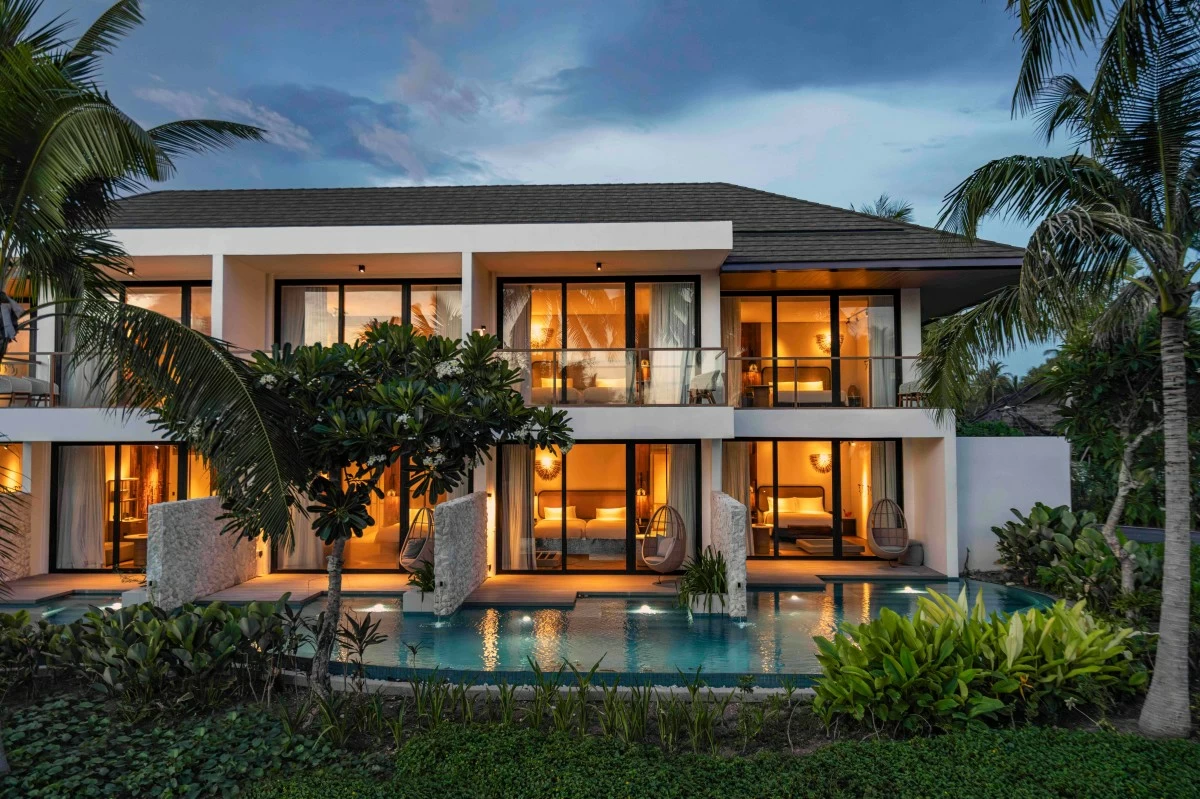
SWIMSIDE SUITES The façade features rooms with private pools, blending privacy with a resort view.
Perhaps the most notable experience is the resort’s signature “M Moment,” devoted to Asin Tibuok. This rare sea salt is crafted through a painstaking process of filtering seawater through coconut husks. Guests are invited to witness the making of this salt alongside artisans, discovering the patience and skill it demands. It is more than a culinary detail; it is a meditation on how the island’s heritage lives on.
South Palms MGallery Panglao also extends its reach to the community, supporting two local orphanages through meals, visits, and donations. “South Palms MGallery Panglao is redefining what lifestyle hotels mean in the Philippines,” said Danish Khan, general manager. “Every guest experience tells the authentic story of our island through traditional craftsmanship and time-honoured traditions woven into our design and programming. We have created a place where Boholano culture comes alive, where nature and luxury exist in harmony, and where every guest forge meaningful connections that transform their stay into a personal story.”
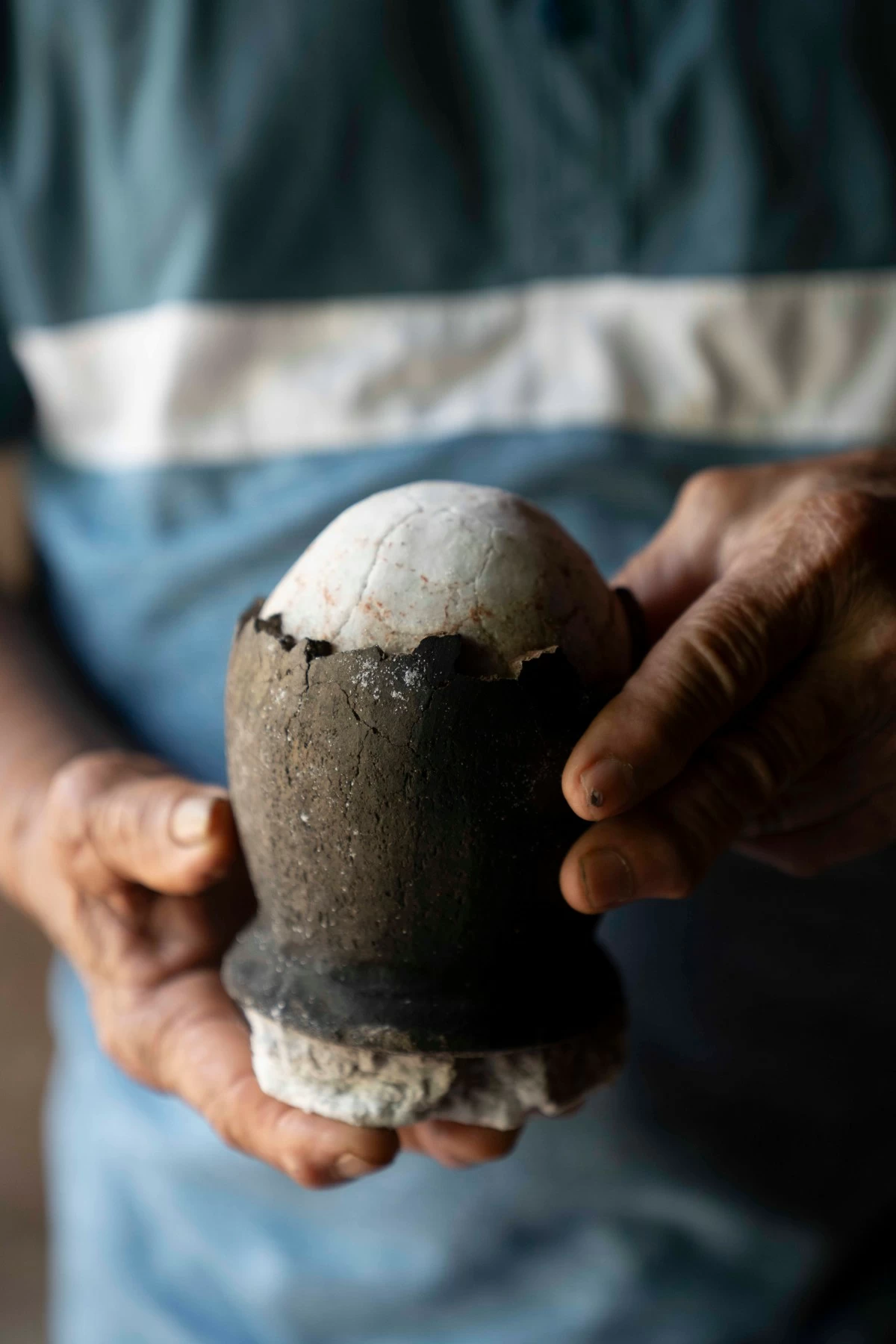
SALT HERITAGE Guests can experience the centuries-old tradition of making Asin Tibuok, a rare artisanal sea salt from Bohol.
The property is MGallery’s second in the Philippines, after the Admiral Hotel Manila. Together, they reflect the brand’s focus on meaningful design and cultural immersion.
For us, the opening of South Palms is a reminder of how Bohol has evolved. From a city airport within walking distance of a friend’s home to an international gateway framed by a world-class resort, the island has changed, but not beyond recognition. The same warmth that first greeted us remains. The same landscape continues to inspire. And each visit, whether years ago or now, leaves the feeling that Bohol’s story is still unfolding.