






Manila Bulletin
 Business
Trade & Industry
DOE seeks Japanese investment to boost renewable energy goals
Business
Trade & Industry
DOE seeks Japanese investment to boost renewable energy goals
Business
Trade & Industry
DOE seeks Japanese investment to boost renewable energy goals
DOE seeks Japanese investment to boost renewable energy goals
Published Sep 12, 2025 03:21 pm


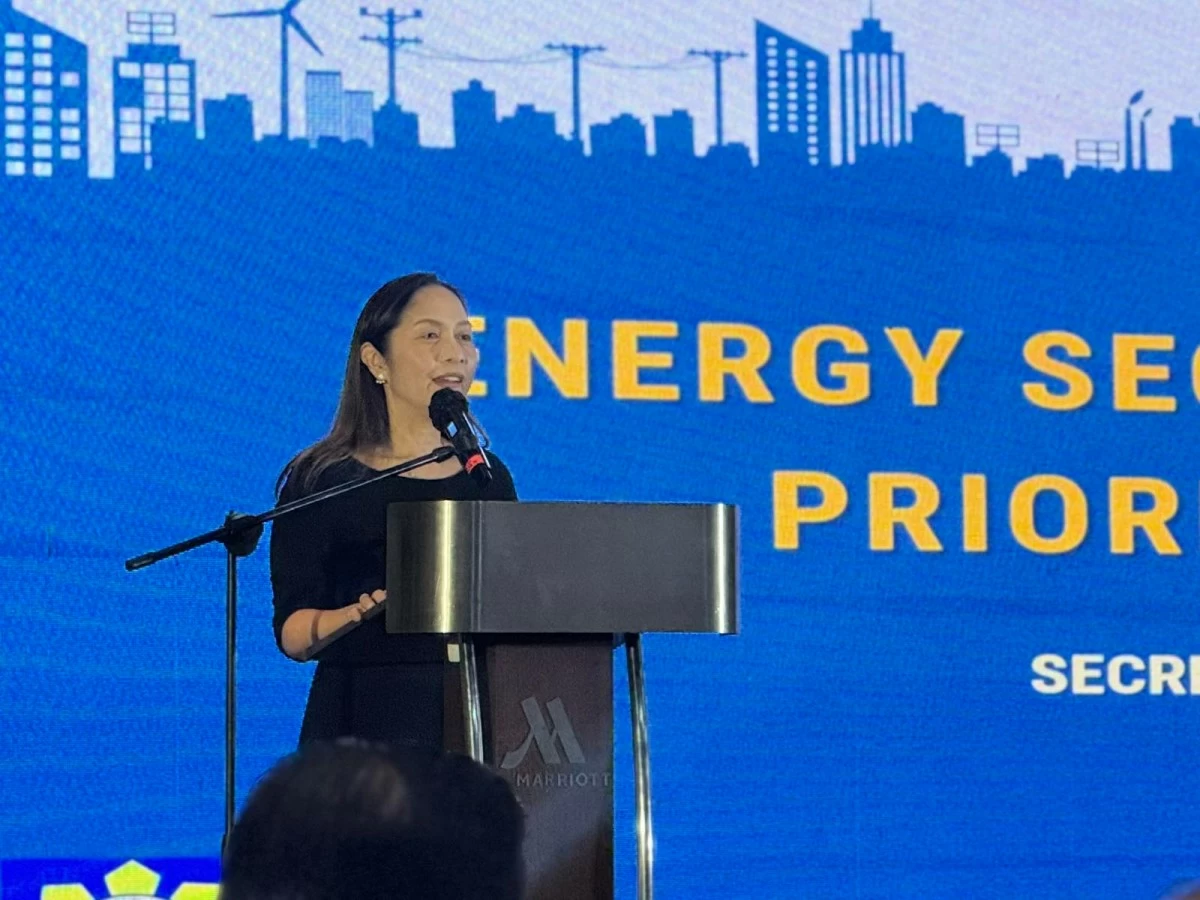
Energy Secretary Sharon Garin
The Department of Energy (DOE) is actively seeking more investors from Japan to bolster the Philippines’ renewable energy (RE) sector.
On Friday, Sept. 12, Energy Secretary Sharon Garin detailed potential partnerships to attract Japanese interest as the Philippines aims for a 35 percent RE share in its energy mix by 2030 and 50 percent by 2040.
To achieve these goals, Garin said the country is looking to increase investments in solar, wind, and geothermal projects, as well as integrate advanced grid technologies to support both current and future developments.
As the government prepares for the fifth Green Energy Auction (GEA-5) for offshore wind (OSW) projects, Garin said the DOE is also encouraging Japanese investors to help develop port facilities crucial for unlocking an estimated 178 gigawatts (GW) of OSW capacity.
During a meeting and roundtable discussion with the Kansai Economic Federation (Kankeiren), Garin highlighted other areas for collaboration. These include private-sector initiatives to decommission and repurpose coal plants, and expand the electric vehicle (EV) fleet.
“With Kansai’s advanced expertise and our ambitious renewable energy and decarbonization agenda, we can build mutually beneficial opportunities that deliver sustainability, energy security, and resilient growth,” Garin said, expressing her belief that Japan will be a key driver in the country’s energy transition.
Garin also expressed interest in Japanese partnerships for nuclear energy, stating, “We look forward to drawing on Japan’s extensive nuclear expertise to build a safe, reliable, and sustainable program.”
The Philippine National Nuclear Energy Safety Act, which would establish the Philippine Atomic Regulatory Authority (PhilATOM), is currently awaiting presidential approval.
The Energy chief also sees opportunities in native hydrogen, noting, “Green hydrogen and green ammonia will be pivotal to our clean energy transition—and Japan is an ideal partner to scale these technologies.”
In related news, the Department of Trade and Industry (DTI) announced that Japanese wellness company Nambu Co., Ltd. has committed to a ₱4 billion investment to establish a network of 10 Japanese-style retirement and wellness centers in the Philippines.
According to DTI, the first facility is set to open in Lapu-Lapu City, Cebu. This development marks the initial phase of Nambu Co.’s strategic expansion into the Philippines, with plans for more centers in the future. The project aims to establish the country as a premier destination for retirement and wellness in Asia, attracting both Japanese and global retirees.
DTI Secretary Cristina A. Roque said the initiative is more than just an investment, calling it “a partnership for dignity, wellness, and opportunity for our people.”
By combining Japanese expertise with the Philippines’ warm climate, hospitable culture, and skilled workforce, the partnership can make the Philippines a "second home" for Japanese and international retirees.
The project is the result of a coordinated effort from multiple government agencies, including the Department of Tourism (DOT) and the Philippine Retirement Authority (PRA), reflecting a “whole-of-government approach” to attracting foreign investment.