







World Bank to help de-risk nuclear power projects
Published Sep 8, 2025 01:09 pm


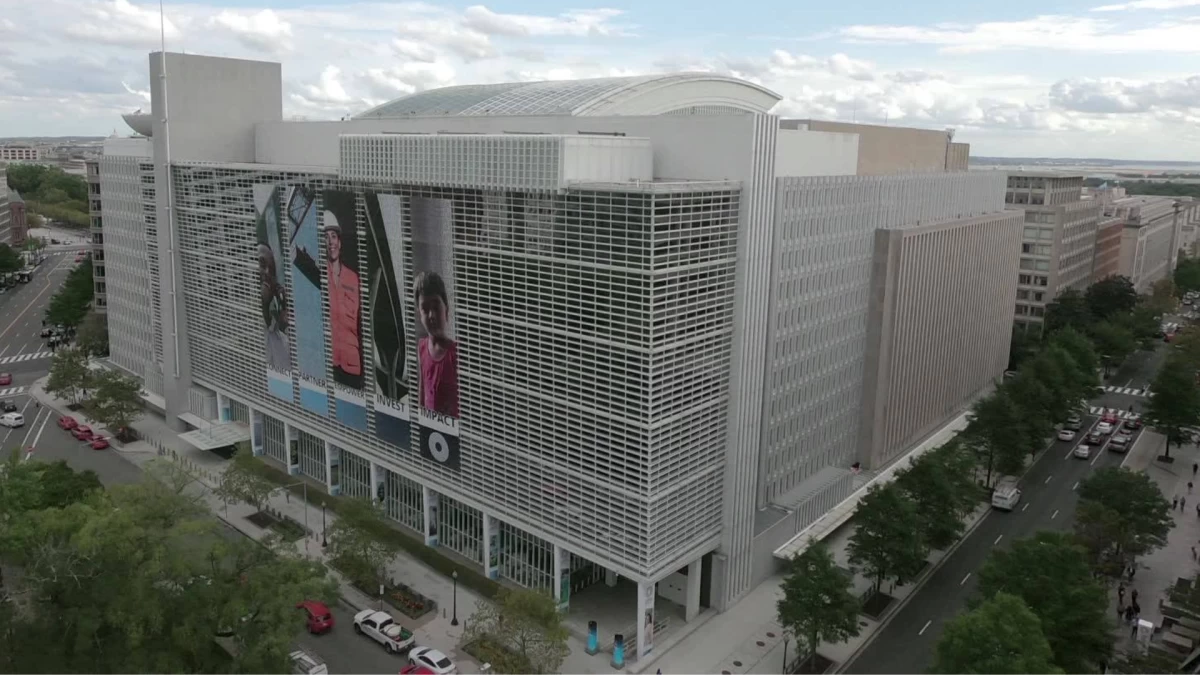
World Bank Headquarters in Washington DC
LONDON, England – The World Bank is gearing up to help countries build safer nuclear power facilities by enhancing their technical capacity and strengthening institutional structures to mitigate project risks.
In an exclusive interview on the sidelines of the recently concluded World Nuclear Symposium, World Bank Senior Energy Specialist Lauren Culver indicated that they will not be funding nuclear power projects directly at this point, but their focus will be on helping governments de-risk planned installations by enabling them to strengthen their policies and regulatory frameworks so targeted investments would flow.
“The role of the World Bank is not necessarily on financial risk allocation – but it will be working with the government to help on planning, project preparation, in having that consistent policy – and in having that capacity enhancement overall; those would all reduce the risk to the public sector,” she qualified.
The capacity building collaboration that the World Bank would be pursuing with host countries, she noted, “can be different instruments and tools” – and that can come in the form of technical assistance or any risk-readiness mechanism that would qualify under its program.
She added, “We’re working with all countries that have interest; obviously, nuclear is really something that governments have to own and really have a clear direction on how they would want to move forward. You can’t just wake up one day and decide you want to be in nuclear – you need a lot of planning and commitment on resources; and so we’re open to working with clients anywhere where the government shows that strong indication.”
Culver pointed to the Philippines as possible prime candidate for World Bank support, citing its early institutional groundwork and moves to lock in legal and regulatory frameworks; and these are considered signs that it is serious on its nuclear ambitions.
“The public sector would need to have legal and regulatory frameworks in place; and host- countries must have that – like the Philippines, you’re having those already,” she stressed.
Culver highlighted that while many countries are eyeing nuclear power, most governments face major blind spots, and if public sector risks aren't managed wisely, the private investment they're counting on may never be concretized.
“Public sector is often not aware of how much risk they’re keeping…so we often provide that leverage on understanding the gap between the risks that might be taken by the public sector; and what are the risks that shall also be allocated to the private sector,” she said.
And while the World Bank is not into directly rolling out loans for nuclear power projects yet, the intended outcome of the capacity enhancement boost it is extending to host-governments will be reduced risks for investments so that the resulting tariff for consumers shall also be at more affordable scale.
“The World Bank is not necessarily getting into the financing and risk allocation; but our main interest is how do we reduce the risk for everybody; so the risk that the public sector keeps as passed on to the consumers would be a reasonable risk to take…our goal is not more nuclear; our goal is affordable and reliable energy,” she asserted.
Typically, she stated that “private sector is willing to take on a lot of different risks if they can price it; and they may price it really expensive. So even if they’re willing to bring in capital, it may make the economics of the project not viable, so those projects may not go anywhere else -that’s why it is important to understand these gaps and how to manage the risks.”
In assessing countries or markets that could be beneficiaries of the bank’s capacity enhancement funding, Culver conveyed that “the whole World Bank has a structure; we have serious steps that we would need to go through in evaluating the risks of a project; the benefits of the project – and whether or not, it can be implemented and if it can be successful.”
She expounded “with nuclear, we will evaluate where we will need to develop additional guidelines, especially with the new technologies like SMRs (small modular reactors); additional steps to follow – whether for uranium mining, decommissioning, power plant construction or community development projects – there are really different stakeholders involved; different risks involved and all of these will require the same careful analysis.”
The more specific components the World Bank would be dissecting, she said, will be those on “the macro physical risks; we look at government policy risks; we look at the power sector risks if these are financeable; if the grid is reliable and functioning at the level that it is required -- so we look at all of those types of risks; and since nuclear technology is a not a new technology; there’s really a lot of evidence out there as to what would be required.”