






Manila Bulletin
 Business
Trade & Industry
DOE considers new coal plants for 'own-use' amid power woes
Business
Trade & Industry
DOE considers new coal plants for 'own-use' amid power woes
Business
Trade & Industry
DOE considers new coal plants for 'own-use' amid power woes
DOE considers new coal plants for 'own-use' amid power woes
Published Sep 8, 2025 12:01 am
|
Updated Sep 6, 2025 12:59 pm


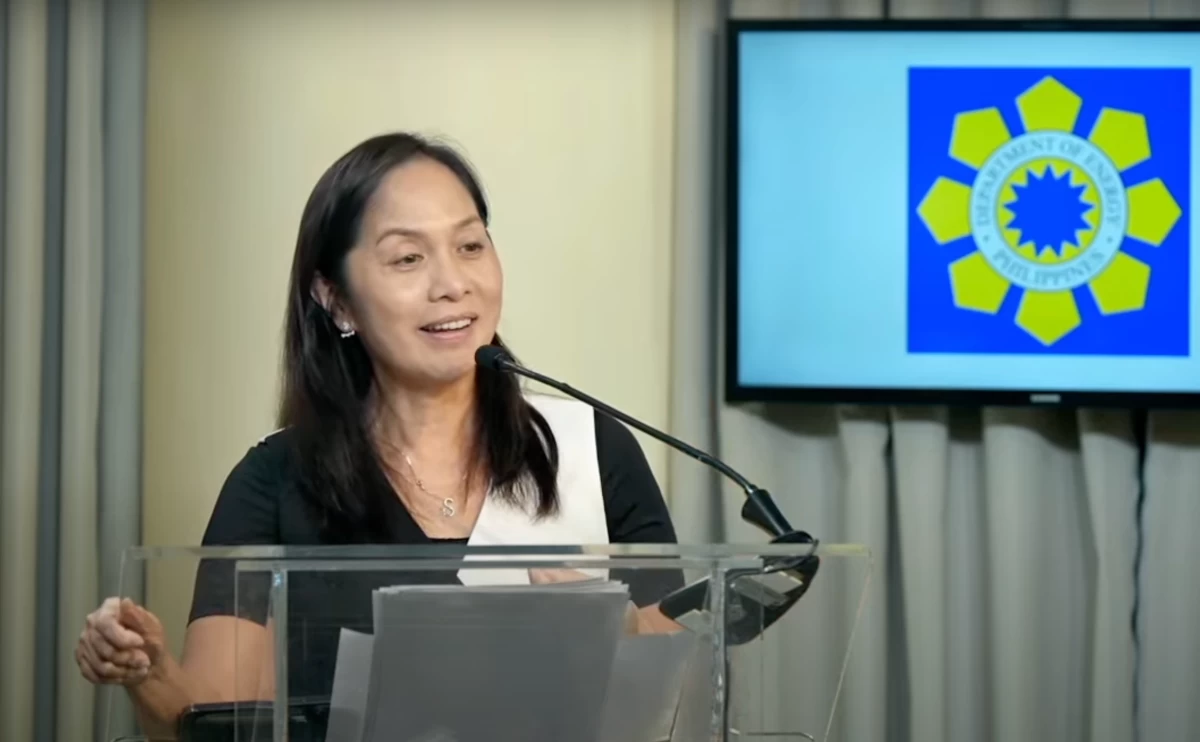
Energy Secretary Sharon S. Garin
The Department of Energy (DOE) is considering exceptions to its ban on new coal-fired power plants, aiming to allow limited “own-use” facilities to help regional power shortages and support renewable energy with additional baseload power.
The coal moratorium, introduced in 2020, was designed to halt new endorsements of coal-fired projects in the country as the government aims to increase the share of renewable energy (RE) sources, specifically achieving a 35 percent green energy share in the generation mix by 2030 and 50 percent by 2040.
However, the current caveat here is that it is not an “outright” ban, but rather it still permits some existing or planned projects to pursue developing their coal assets, as long as they are subject to government assessment.
Energy Secretary Sharon Garin explained last week that while the Philippines is still pushing for more RE, it will not be able to address the power situation in other regions, such as Visayas and Mindanao.
“Just because we are pushing for RE, doesn’t mean that we want to abandon baseload. Baseload can be coal, it can be gas, it can be hydro, geothermal,” she told reporters.
“RE is a good source of energy, but it will not be enough,” she said.
According to the energy chief, a few undisclosed companies have proposed developing “own-use” coal-fired power assets, which are supposedly intended for internal consumption and could be considered outside the scope of the existing moratorium.
“There is a move that some companies are asking if it’s [for] their own use. For example, if you have manufacturing and you want a cheap source of energy [that’s] not connected to the grid, there are requests for that, and we’re still evaluating that.”
“This has also been discussed at the time of [DOE Energy] Secretary Lotilla, and we’re still discussing. Because we are already pushing for renewable energy… We want to be fair, not just clean, but also affordable. So, that’s a dilemma that we have always [had].”
The need to re-evaluate the coal moratorium comes after the ongoing power crisis in Visayas and Mindanao, as Garin stressed the need for more baseload power sources in the two regions apart from RE developments. To recall, Visayas has experienced numerous yellow alerts in August due to multiple forced power plant outages and derated capacities that failed to meet the grid requirements.
Additional budget for electrification
Apart from reviewing the coal moratorium, the DOE is also advancing total electrification, one of the priorities underscored in the President’s State of the Nation Address (SONA) this year.
“As proposed in the NEP (National Expenditure Program), it is probably around ₱5 billion only. We actually need about ₱69 billion or ₱70 billion,” Garin said regarding the budget for the total electrification program.
In August, the DOE, alongside five electric cooperatives from Luzon and Visayas have secured a ₱192.8 million deal to power households that reside in off-grid areas.
Garin added that aside from powering Luzon and Visayas, the DOE targets to focus on Mindanao areas next, as she stated, “That’s why most of the budget [that will] eventually come in, hopefully by next year it will be ₱10 billion, most of that will be sent to Mindanao and electric cooperatives.”
“As of today, the budget [that] was prepared by DOE together with DBM (Department of Budget and Management), and we are confident that with the budget proposed about ₱3 billion that we can perform as expected by the President and how DOE will perform.”
Moreover, the DOE is also exploring additional revenue streams beyond remittances to the National Treasury, which could be utilized for electrification projects.