ADVERTISEMENT

Cost, safety concerns hinder nuclear power financing in Philippines

Published Sep 5, 2025 11:27 am
Behind the scenes: experts explain why financing nuclear projects is a tough sell.
While the Philippines is exploring the re-entry of nuclear power, securing financing may prove challenging as some local banks remain cautious about backing such projects.
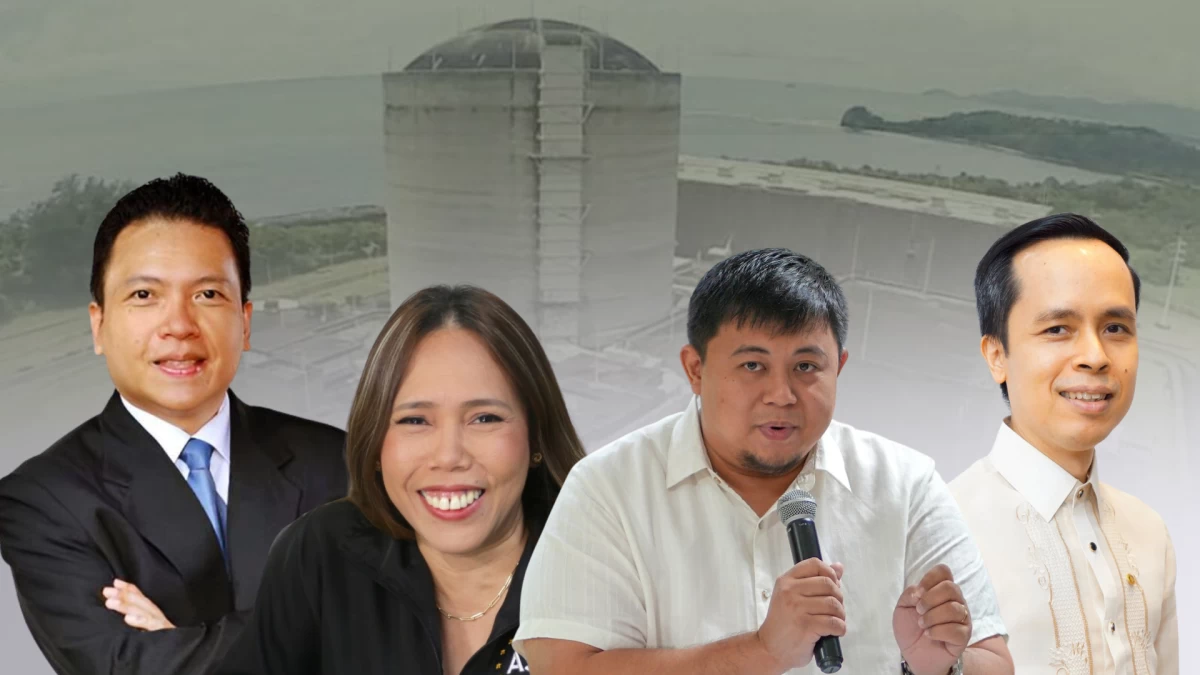
In an exclusive interview, Michael Ricafort, Chief Economist at Rizal Commercial Banking Corp. (RCBC), explained that the high costs and persistent safety concerns are major factors that could discourage financing.
“Safety issues have been the nagging concerns, as evidenced by the BNPP (Bataan Nuclear Power Plant) that was left unused despite being expensive,” he told the Manila Bulletin. The BNPP, finished in 1984, was mothballed two years later due to safety issues, corruption allegations, and cost overruns.
Ricafort noted that nuclear developments come with more than just environmental risks. He also cited issues such as nuclear waste management, the risk of terrorism, and the potential impact of natural disasters on power facilities.
“Thus, the profitability or at least financial feasibility of nuclear power facilities would need important considerations on the financing side,” he said.
Another obstacle is the government’s fiscal deficit. “The government also has budget deficits, which is another challenge, given that nuclear power facilities/infrastructure are expensive,” Ricafort added.
He pointed out that financing for other energy sources, such as renewable energy (RE), is more attractive to lenders because these projects have become cheaper and safer to develop and operate. 
“RE is among the biggest sources of foreign direct investments in the country in recent years, especially offshore wind. These other REs are also partly financed through loans/credit,” the economist stated. For Ricafort, the cost of nuclear projects would need to drop, similar to how RE became financially viable for banks after its costs declined over the past few years.
Juan Paolo Colet, an analyst and managing director at Chinabank Capital Corp., added that high-level commitments and trustworthy developers are essential to gaining banking confidence.
“A nuclear power project is a very complex and costly undertaking, so we would need to consider the quality and safety of the technology, the financial strength and commitment of the sponsors, and the reputation and capability of the contractors and suppliers,” he said.
Colet also noted the risk of environmental disasters, particularly since the Philippines is on the Ring of Fire. 
“If things go wrong with a nuclear project, the consequences are much more severe compared with, say, renewable energy projects. You could end up losing not just the entire plant, but entire communities,” he said.
Gov’t agencies weigh in
Although a nuclear project could take a decade or more to develop, the Department of Energy (DOE) has expressed readiness to welcome proposals as early as next year.
The Department of Environment and Natural Resources (DENR) has also weighed in on the environmental impact.
DENR Environmental Management Bureau (EMB) Director John Edward Ang stated, “While there are perceived benefits with the nuclear route, it is our collective responsibility to ensure that its implementation will be in harmony with the environment and our people.”
For its part, the DENR believes that an updated regulatory framework would facilitate the proper management of nuclear energy, from planning to operations.
The DOE recently organized a technical workshop to discuss environmental policies and regulations for nuclear power projects. Myra Fiera Roa, DOE Legal Services Director, believes the workshop will address long-standing challenges and enhance current tools to ensure that Environmental Compliance Certificate (ECC) applications secure public trust and scientific integrity.
“This undertaking defines the Nuclear Energy Program's commitment in pursuing the integration of a comprehensive environmental safeguards with the Philippines' peaceful transition into nuclear energy utilization,” she said. “We are working to put in place a process to ensure that environmental risks are addressed before projects are rolled out. We can make economic progress and maintain the integrity of the environment.”
As the country considers the revival of conventional nuclear power plants (NPPs) and the development of small modular reactors (SMRs), the DOE, DENR, and the Philippine Nuclear Research Institute (PNRI) stressed the need for projects to acquire a License to Operate from PNRI, a Certificate of Endorsement (COE) from the DOE, and an Environmental Clearance Certificate from the EMB.

Related Tags

Rizal Commercial Banking Corp. (RCBC) Chinabank Capital Corporation Department of Energy (DOE) Department of Environment and Natural Resources (DENR)
ADVERTISEMENT
.most-popular .layout-ratio{ padding-bottom: 79.13%; } @media (min-width: 768px) and (max-width: 1024px) { .widget-title { font-size: 15px !important; } }

{{ articles_filter_1561_widget.title }}

.most-popular .layout-ratio{ padding-bottom: 79.13%; } @media (min-width: 768px) and (max-width: 1024px) { .widget-title { font-size: 15px !important; } }

{{ articles_filter_1562_widget.title }}

.most-popular .layout-ratio{ padding-bottom: 79.13%; } @media (min-width: 768px) and (max-width: 1024px) { .widget-title { font-size: 15px !important; } }

{{ articles_filter_1563_widget.title }}

{{ articles_filter_1564_widget.title }}

.mb-article-details { position: relative; } .mb-article-details .article-body-preview, .mb-article-details .article-body-summary{ font-size: 17px; line-height: 30px; font-family: "Libre Caslon Text", serif; color: #000; } .mb-article-details .article-body-preview iframe , .mb-article-details .article-body-summary iframe{ width: 100%; margin: auto; } .read-more-background { background: linear-gradient(180deg, color(display-p3 1.000 1.000 1.000 / 0) 13.75%, color(display-p3 1.000 1.000 1.000 / 0.8) 30.79%, color(display-p3 1.000 1.000 1.000) 72.5%); position: absolute; height: 200px; width: 100%; bottom: 0; display: flex; justify-content: center; align-items: center; padding: 0; } .read-more-background a{ color: #000; } .read-more-btn { padding: 17px 45px; font-family: Inter; font-weight: 700; font-size: 18px; line-height: 16px; text-align: center; vertical-align: middle; border: 1px solid black; background-color: white; } .hidden { display: none; }
function initializeAllSwipers() { // Get all hidden inputs with cms_article_id document.querySelectorAll('[id^="cms_article_id_"]').forEach(function (input) { const cmsArticleId = input.value; const articleSelector = '#article-' + cmsArticleId + ' .body_images'; const swiperElement = document.querySelector(articleSelector); if (swiperElement && !swiperElement.classList.contains('swiper-initialized')) { new Swiper(articleSelector, { loop: true, pagination: false, navigation: { nextEl: '#article-' + cmsArticleId + ' .swiper-button-next', prevEl: '#article-' + cmsArticleId + ' .swiper-button-prev', }, }); } }); } setTimeout(initializeAllSwipers, 3000); const intersectionObserver = new IntersectionObserver( (entries) => { entries.forEach((entry) => { if (entry.isIntersecting) { const newUrl = entry.target.getAttribute("data-url"); if (newUrl) { history.pushState(null, null, newUrl); let article = entry.target; // Extract metadata const author = article.querySelector('.author-section').textContent.replace('By', '').trim(); const section = article.querySelector('.section-info ').textContent.replace(' ', ' '); const title = article.querySelector('.article-title h1').textContent; // Parse URL for Chartbeat path format const parsedUrl = new URL(newUrl, window.location.origin); const cleanUrl = parsedUrl.host + parsedUrl.pathname; // Update Chartbeat configuration if (typeof window._sf_async_config !== 'undefined') { window._sf_async_config.path = cleanUrl; window._sf_async_config.sections = section; window._sf_async_config.authors = author; } // Track virtual page view with Chartbeat if (typeof pSUPERFLY !== 'undefined' && typeof pSUPERFLY.virtualPage === 'function') { try { pSUPERFLY.virtualPage({ path: cleanUrl, title: title, sections: section, authors: author }); } catch (error) { console.error('ping error', error); } } // Optional: Update document title if (title && title !== document.title) { document.title = title; } } } }); }, { threshold: 0.1 } ); function showArticleBody(button) { const article = button.closest("article"); const summary = article.querySelector(".article-body-summary"); const body = article.querySelector(".article-body-preview"); const readMoreSection = article.querySelector(".read-more-background"); // Hide summary and read-more section summary.style.display = "none"; readMoreSection.style.display = "none"; // Show the full article body body.classList.remove("hidden"); } document.addEventListener("DOMContentLoaded", () => { let loadCount = 0; // Track how many times articles are loaded const offset = [1, 2, 3, 4, 5, 6, 7, 8, 9, 10]; // Offset values const currentUrl = window.location.pathname.substring(1); let isLoading = false; // Prevent multiple calls if (!currentUrl) { console.log("Current URL is invalid."); return; } const sentinel = document.getElementById("load-more-sentinel"); if (!sentinel) { console.log("Sentinel element not found."); return; } function isSentinelVisible() { const rect = sentinel.getBoundingClientRect(); return ( rect.top < window.innerHeight && rect.bottom >= 0 ); } function onScroll() { if (isLoading) return; if (isSentinelVisible()) { if (loadCount >= offset.length) { console.log("Maximum load attempts reached."); window.removeEventListener("scroll", onScroll); return; } isLoading = true; const currentOffset = offset[loadCount]; window.loadMoreItems().then(() => { let article = document.querySelector('#widget_1690 > div:nth-last-of-type(2) article'); intersectionObserver.observe(article) loadCount++; }).catch(error => { console.error("Error loading more items:", error); }).finally(() => { isLoading = false; }); } } window.addEventListener("scroll", onScroll); });

Sign up by email to receive news.