ADVERTISEMENT

Goodbye FOMO, hello Fogo: The Brazilian feast is here

Fogo de Chão brings the authentic Brazilian churrasco experience to Glorietta, complete with gauchos, the Market Table, and endless flavor

Published Sep 3, 2025 07:37 am
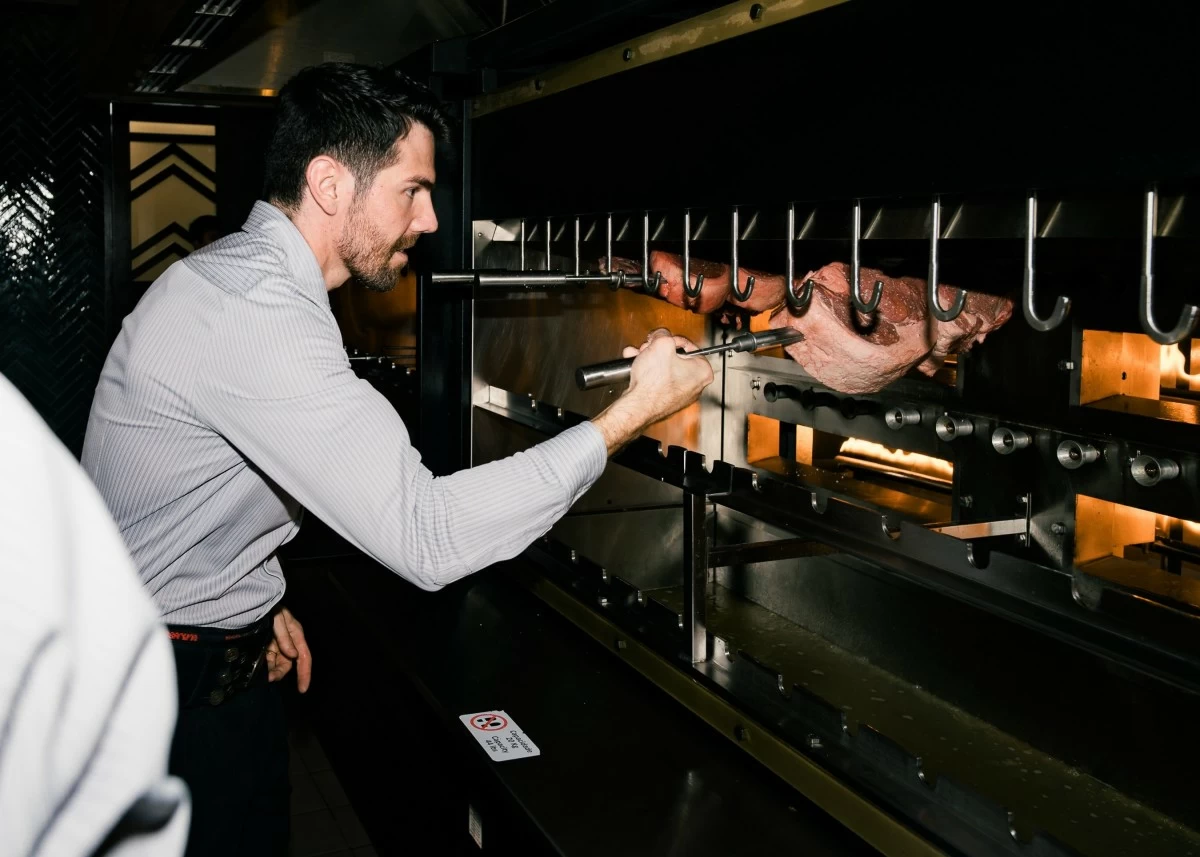
GRILL MASTER A gaucho chef tends to skewers over open flames, turning the art of churrasco into a smoky, savory ritual.
When the doors opened at Glorietta 4 last August 28, the room was already humming. Friends from the food world were gathered around the space, phones in hand, eyes sharp. There was talk of Pasadena, Miami, Texas. “It looks exactly the same,” someone said, pointing to the fire oven glowing at the far end of the dining floor. Another nodded toward the centerpiece: the Market Table, bright with greens and fruit, wheels of cheese, plates of charcuterie.
For a moment, there was that old ache of FOMO, fear of missing out. Brazil! Brazil! The word carried across conversations like an echo. Some remembered churrascarias long gone, others spoke of nights in São Paulo and Houston. For those who had tasted this before, the space was familiar, almost comforting. But for anyone new to it, the idea was enough to stir curiosity. And now, the waiting was done.
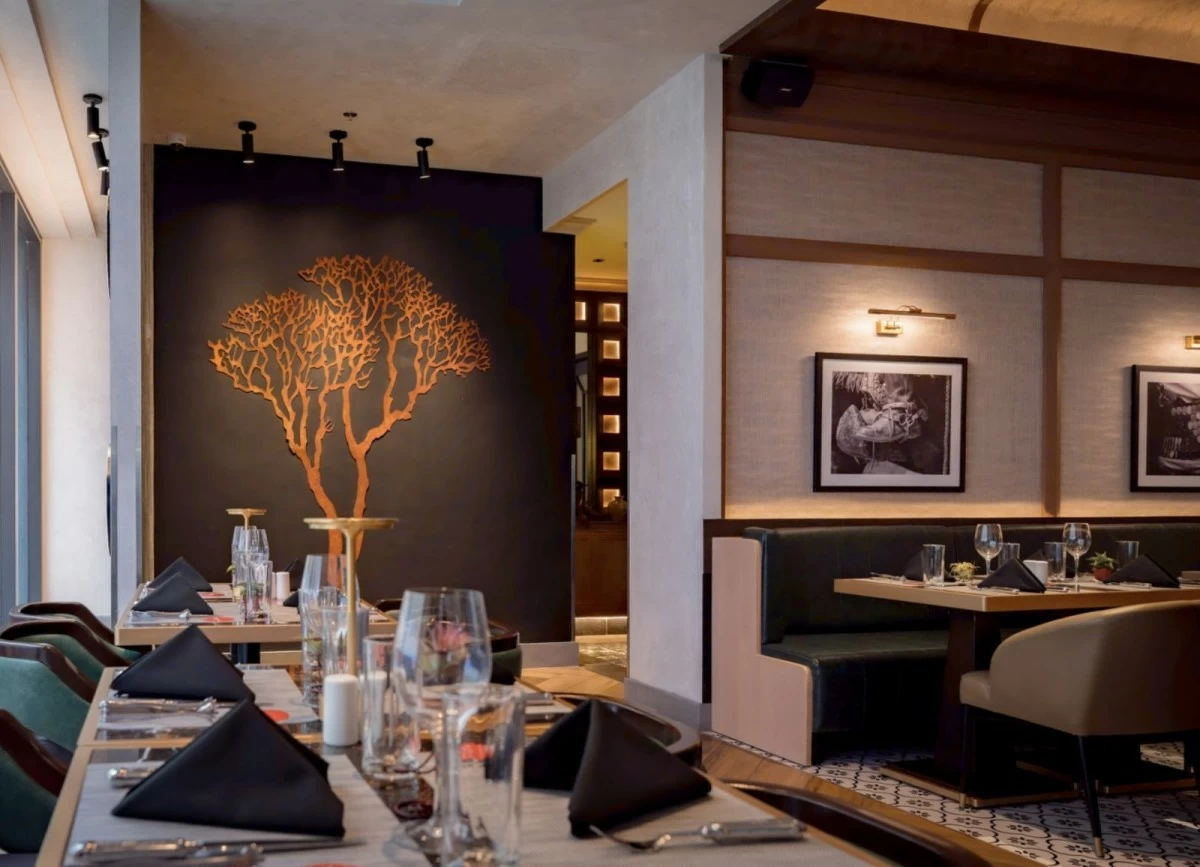
HERITAGE MARK Inside the two-level space, the iconic metal tree stands proud, reflecting Fogo de Chão’s story of fire, tradition, and growth.
Fogo de Chão (fogo-dee-shown), the world-renowned Brazilian steakhouse, has opened its first branch in Asia, right at the heart of Makati. This is not just a restaurant. It is a ritual, one built on fire, meat, and movement. Founded in Southern Brazil in 1979, Fogo grew from its roots in Porto Alegre to a global presence with locations across North America, the Middle East, and beyond. Now, its first Philippine outpost brings the same experience to Manila with the Bistro Group at the helm.
Fogo de Chão, which means “fire on the ground,” takes its name from the centuries-old Southern Brazilian tradition of roasting meat over open flames. This tradition lives on through the gauchos, Brazilian cowboys turned grill masters, who bring the experience to life by carving fire-grilled meats tableside with precision and grace.
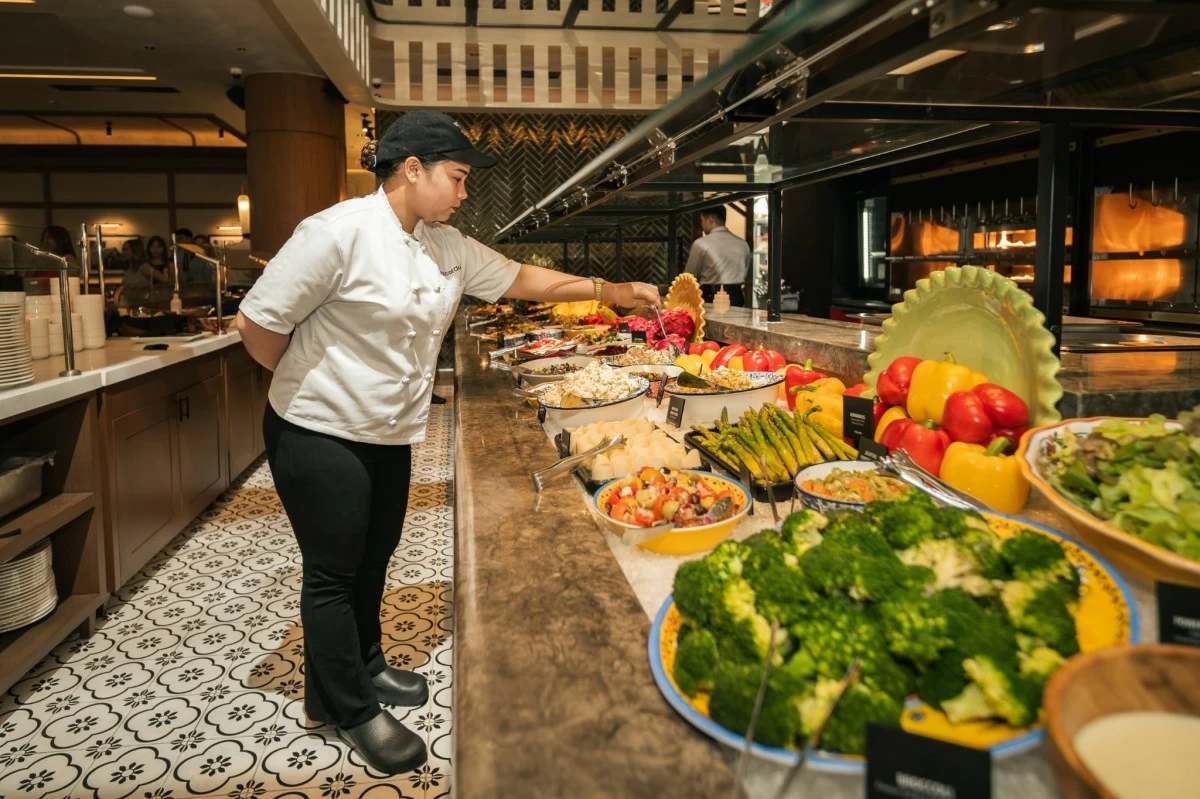
GREEN GLORY The Market Table at Fogo de Chão bursts with fresh greens, charcuterie, cheeses, and feijoada, a colorful counterpoint to the endless parade of meats.
Inside, the design is warm and exacting. Natural stone meets dark wood. Lighting softens the sharp edges of steel. On one wall, the brand’s signature metal tree motif stands like an emblem. Two floors rise above the Glorietta concourse, the upper level devoted to the main dining area. In the center sits the Market Table, bright and abundant, framed by the open grill where the real spectacle happens.
Churrasco is the heart of it all, the art of roasting meat over open flames, a Brazilian tradition that has become a language of its own. Gaucho chefs move through the room with quiet grace, skewers of meat balanced like spears. They carve with precision, slicing portions straight onto plates. The rhythm is steady: slice, serve, move. Then another gaucho comes with a different cut. And another. There is no limit. When the small card on the table is green, the flow does not stop.
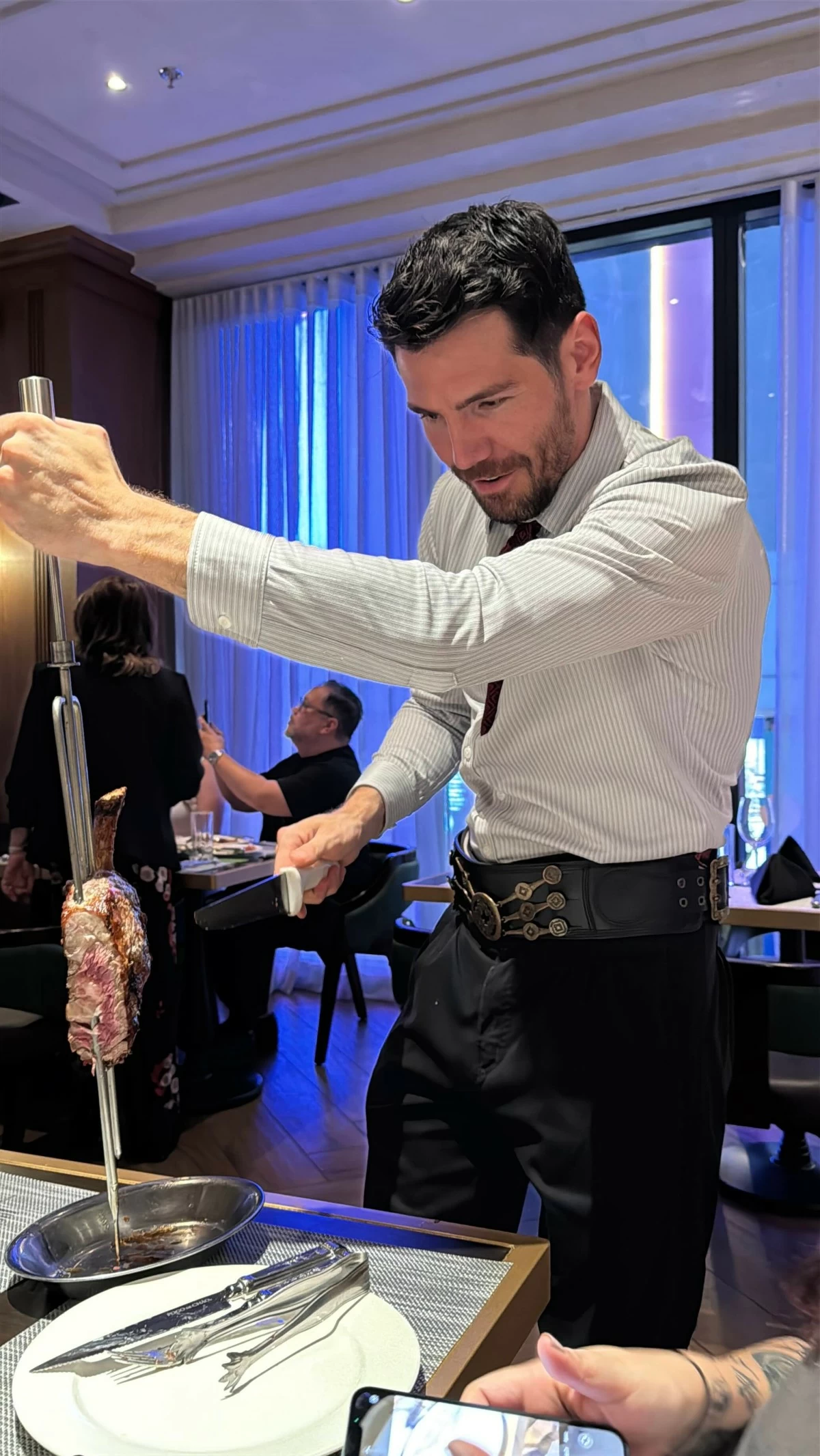
TABLE THEATRE A gaucho brings the art of churrasco to life, carving premium cuts of fire-roasted meat straight onto your plate.
The meats come in waves. It begins with Picanha, the prized sirloin, seared under salt until the edges crust and the fat melts. Then the Filet Mignon, tender as silk. Fraldinha follows, marbled and rich. There are sixteen cuts in all, from beef ribs roasted slow until the bone trembles loose to lamb chops carved smoking hot, chicken wrapped in bacon, and pork loin crusted with Parmesan. Even the Brazilian linguiça, a garlicky sausage that crackles with fat. It is a feast without haste, and yet the plates seem to fill themselves.
Between the rounds of meat, there is the Market Table. It is no ordinary salad bar but a vivid sprawl of color and texture, leafy greens slick with olive oil, slices of smoked salmon, ribbons of cured meat, cheeses from sharp to creamy. There are charcuterie boards, seasonal fruit, antipasti, and the black bean stew called feijoada, a dish that feels like the countryside of Brazil laid into a bowl. It is abundance made art.
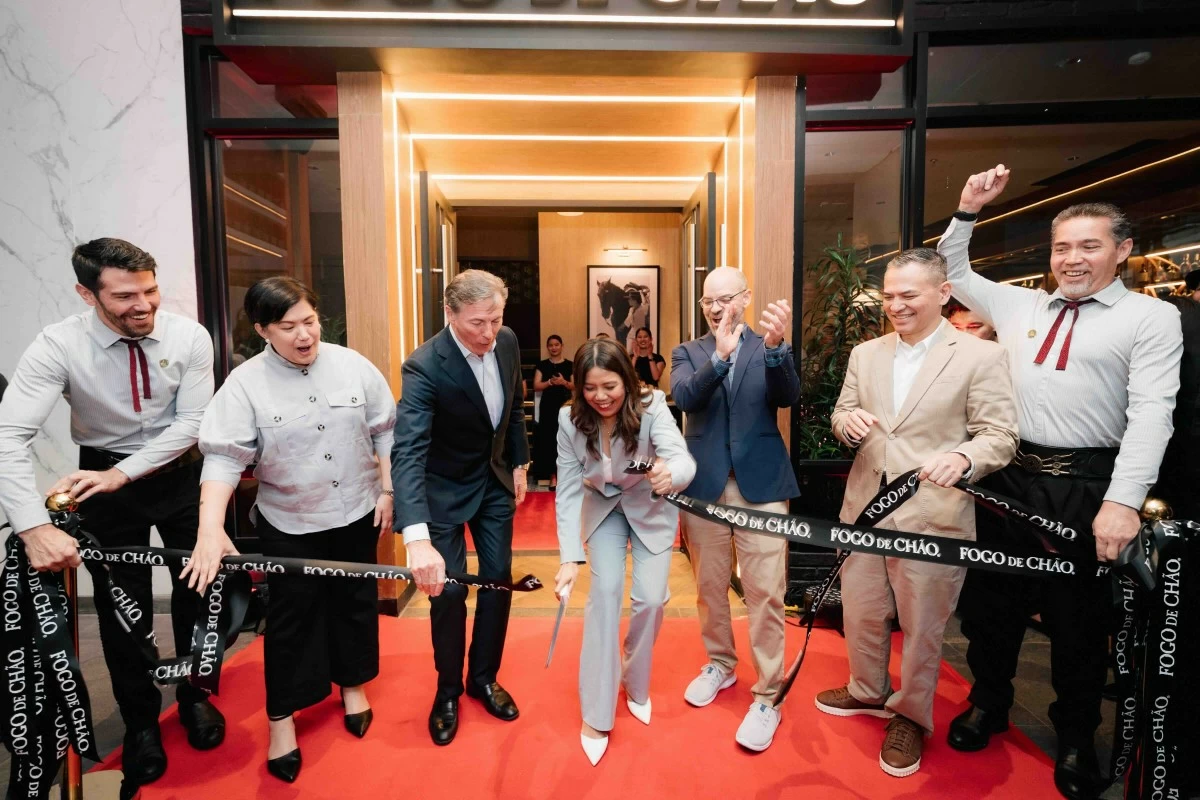
OPENING FLAME With smiles and steel, Barry McGowan, chief executive officer of Fogo de Chão, and Jean Paul Manuud, president of the Bistro Group, lead the ribbon-cutting moment that signals the brand’s fiery debut in the Philippines.
For those who have seen Fogo abroad, the Manila branch is a faithful twin. For those who never have, it feels new, almost ceremonial. There is a sense of old hospitality in the way the gauchos work, a rhythm that seems both choreographed and unforced. And while the fire is the main act, there is more beyond it. Bar Fogo, tucked to the side, offers cocktails like caipirinhas laced with lime and sugarcane alongside South American wines poured deep and red.
The Full Churrasco Experience includes endless servings of these meats and full access to the Market Table. Prices range from ₱3,200 for weekday lunch to ₱4,200 for weekend dinner, with brunch and weekday dinners in between. There are also à la carte offerings for those who want more, such as Wagyu, dry-aged steaks, and seafood done with precision.
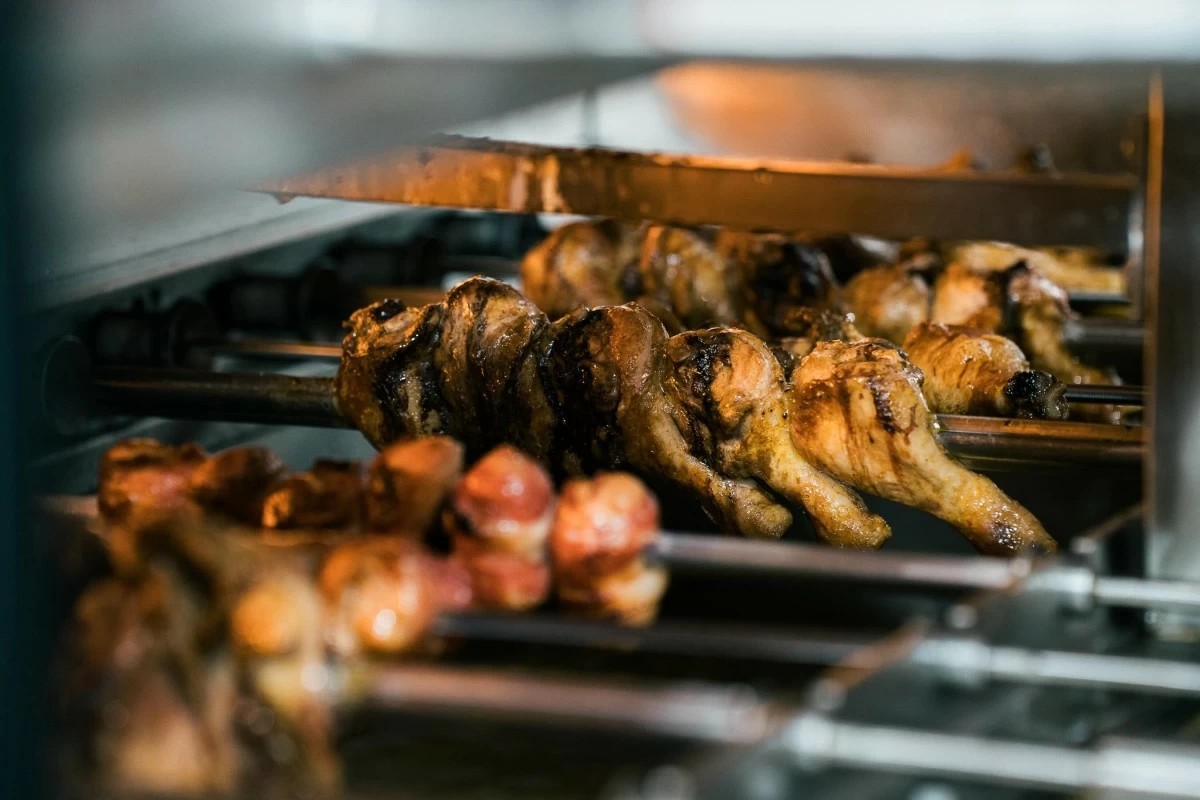
FLAME FEAST Skewers of premium cuts sear over an open fire, capturing the essence of Brazilian churrasco at Fogo de Chão.
For all its movement and spectacle, Fogo is not just about eating. It is about a conversation with tradition. Forty-five years of history now set in Makati, a ritual of fire and flesh kept alive. For some, it will recall Brazil and its wide skies. For others, it will feel like something new, a discovery bold and unending.
And so the room stayed bright as the night drew on, with plates of meat and glasses of wine and the low hum of voices rising above the soft crackle of fire. No more FOMO. Fogo is here now, and it brought the fire with it.
ADVERTISEMENT
.most-popular .layout-ratio{ padding-bottom: 79.13%; } @media (min-width: 768px) and (max-width: 1024px) { .widget-title { font-size: 15px !important; } }

{{ articles_filter_1561_widget.title }}

.most-popular .layout-ratio{ padding-bottom: 79.13%; } @media (min-width: 768px) and (max-width: 1024px) { .widget-title { font-size: 15px !important; } }

{{ articles_filter_1562_widget.title }}

.most-popular .layout-ratio{ padding-bottom: 79.13%; } @media (min-width: 768px) and (max-width: 1024px) { .widget-title { font-size: 15px !important; } }

{{ articles_filter_1563_widget.title }}

{{ articles_filter_1564_widget.title }}

.mb-article-details { position: relative; } .mb-article-details .article-body-preview, .mb-article-details .article-body-summary{ font-size: 17px; line-height: 30px; font-family: "Libre Caslon Text", serif; color: #000; } .mb-article-details .article-body-preview iframe , .mb-article-details .article-body-summary iframe{ width: 100%; margin: auto; } .read-more-background { background: linear-gradient(180deg, color(display-p3 1.000 1.000 1.000 / 0) 13.75%, color(display-p3 1.000 1.000 1.000 / 0.8) 30.79%, color(display-p3 1.000 1.000 1.000) 72.5%); position: absolute; height: 200px; width: 100%; bottom: 0; display: flex; justify-content: center; align-items: center; padding: 0; } .read-more-background a{ color: #000; } .read-more-btn { padding: 17px 45px; font-family: Inter; font-weight: 700; font-size: 18px; line-height: 16px; text-align: center; vertical-align: middle; border: 1px solid black; background-color: white; } .hidden { display: none; }
function initializeAllSwipers() { // Get all hidden inputs with cms_article_id document.querySelectorAll('[id^="cms_article_id_"]').forEach(function (input) { const cmsArticleId = input.value; const articleSelector = '#article-' + cmsArticleId + ' .body_images'; const swiperElement = document.querySelector(articleSelector); if (swiperElement && !swiperElement.classList.contains('swiper-initialized')) { new Swiper(articleSelector, { loop: true, pagination: false, navigation: { nextEl: '#article-' + cmsArticleId + ' .swiper-button-next', prevEl: '#article-' + cmsArticleId + ' .swiper-button-prev', }, }); } }); } setTimeout(initializeAllSwipers, 3000); const intersectionObserver = new IntersectionObserver( (entries) => { entries.forEach((entry) => { if (entry.isIntersecting) { const newUrl = entry.target.getAttribute("data-url"); if (newUrl) { history.pushState(null, null, newUrl); let article = entry.target; // Extract metadata const author = article.querySelector('.author-section').textContent.replace('By', '').trim(); const section = article.querySelector('.section-info ').textContent.replace(' ', ' '); const title = article.querySelector('.article-title h1').textContent; // Parse URL for Chartbeat path format const parsedUrl = new URL(newUrl, window.location.origin); const cleanUrl = parsedUrl.host + parsedUrl.pathname; // Update Chartbeat configuration if (typeof window._sf_async_config !== 'undefined') { window._sf_async_config.path = cleanUrl; window._sf_async_config.sections = section; window._sf_async_config.authors = author; } // Track virtual page view with Chartbeat if (typeof pSUPERFLY !== 'undefined' && typeof pSUPERFLY.virtualPage === 'function') { try { pSUPERFLY.virtualPage({ path: cleanUrl, title: title, sections: section, authors: author }); } catch (error) { console.error('ping error', error); } } // Optional: Update document title if (title && title !== document.title) { document.title = title; } } } }); }, { threshold: 0.1 } ); function showArticleBody(button) { const article = button.closest("article"); const summary = article.querySelector(".article-body-summary"); const body = article.querySelector(".article-body-preview"); const readMoreSection = article.querySelector(".read-more-background"); // Hide summary and read-more section summary.style.display = "none"; readMoreSection.style.display = "none"; // Show the full article body body.classList.remove("hidden"); } document.addEventListener("DOMContentLoaded", () => { let loadCount = 0; // Track how many times articles are loaded const offset = [1, 2, 3, 4, 5, 6, 7, 8, 9, 10]; // Offset values const currentUrl = window.location.pathname.substring(1); let isLoading = false; // Prevent multiple calls if (!currentUrl) { console.log("Current URL is invalid."); return; } const sentinel = document.getElementById("load-more-sentinel"); if (!sentinel) { console.log("Sentinel element not found."); return; } function isSentinelVisible() { const rect = sentinel.getBoundingClientRect(); return ( rect.top < window.innerHeight && rect.bottom >= 0 ); } function onScroll() { if (isLoading) return; if (isSentinelVisible()) { if (loadCount >= offset.length) { console.log("Maximum load attempts reached."); window.removeEventListener("scroll", onScroll); return; } isLoading = true; const currentOffset = offset[loadCount]; window.loadMoreItems().then(() => { let article = document.querySelector('#widget_1690 > div:nth-last-of-type(2) article'); intersectionObserver.observe(article) loadCount++; }).catch(error => { console.error("Error loading more items:", error); }).finally(() => { isLoading = false; }); } } window.addEventListener("scroll", onScroll); });

Sign up by email to receive news.