






Manila Bulletin
 Philippines
National
Palace defends diplomacy with China but rejects 'troublemaker' tag
Philippines
National
Palace defends diplomacy with China but rejects 'troublemaker' tag
Philippines
National
Palace defends diplomacy with China but rejects 'troublemaker' tag
Palace defends diplomacy with China but rejects 'troublemaker' tag
Published Aug 29, 2025 12:42 pm
|
Updated Aug 29, 2025 03:17 pm


At A Glance
- Castro stressed that the Marcos administration remains firm in its rule-based approach, countering criticism from some lawmakers that diplomacy without deterrence makes the country vulnerable.
Malacañang rejected suggestions that the Philippines’ diplomatic stance in the South China Sea shows weakness, while also pushing back against China’s claim that Manila is acting as a “disruptor” in the region.
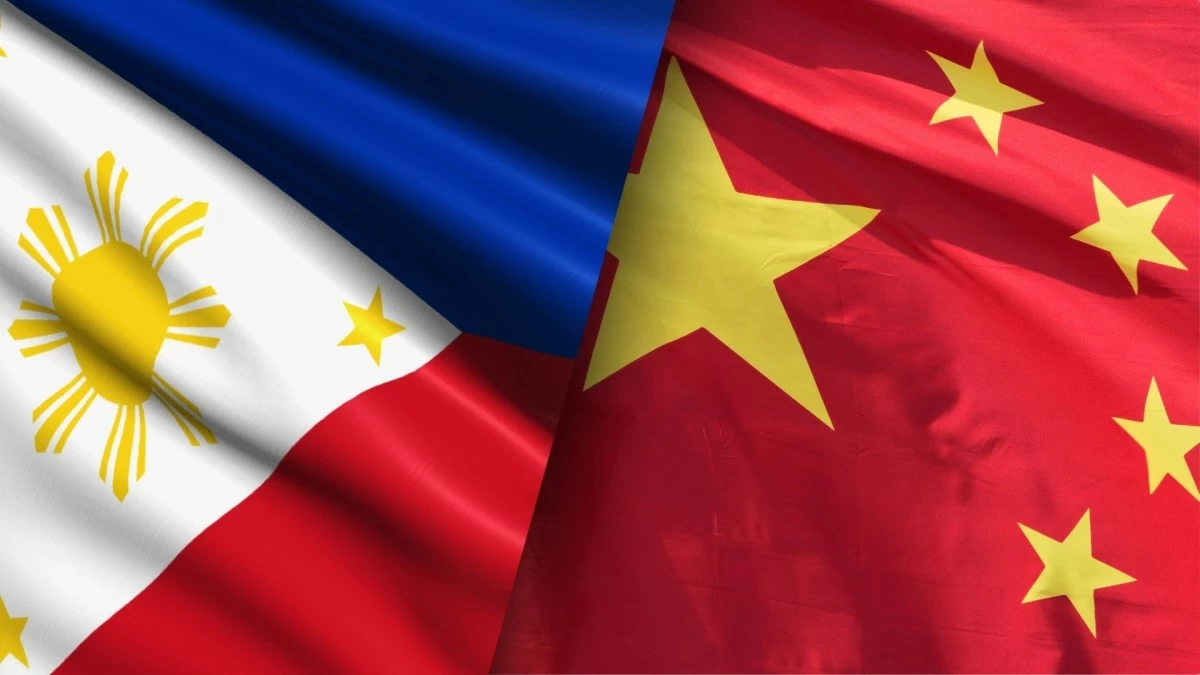
Canva photos
Communications Undersecretary Claire Castro said this after Senator Erwin Tulfo said at a Senate Foreign Relations Committee hearing that the Philippines was “allowing” itself to be bullied in the name of diplomacy, and that “diplomacy without deterrence is weakness.”
In a press briefing, Castro stressed that the Marcos administration remains firm in its rule-based approach, countering criticism from some lawmakers that diplomacy without deterrence makes the country vulnerable.
“Ang katapangan ay hindi nadadaan sa buntalan (Courage is not proven through fistfights),” she said on Friday, Aug. 29.
“Ang pagiging diplomatic ay hindi nagpapakita ng kahinaan (Being diplomatic does not show weakness),” she added.
Castro said the Department of Foreign Affairs (DFA) has already made clear that the President’s directive is to pursue diplomacy and a rules-based approach to maritime disputes.
She reiterated Marcos’ remarks that the Philippines was not waging any war but would not retreat from any fight.
Palace rejects China’s narrative
Despite maintaining diplomacy with Beijing, the Palace rejected the Chinese Ministry of Defense’s recent accusation that Manila was acting recklessly in the South China Sea “at the behest of external powers.”
“We’re going to stop China from making its own narrative,” Castro said.
“But they cannot also stop us from fighting for our rights based on laws, UNCLOS, [the] arbitral ruling, and our being [an] independent country,” she added.
China issued the statement after the Philippines conducted joint maritime activities with Australia in disputed waters. Beijing described Manila as a “disruptor” and a “troublemaker.”
Contingency plans for Taiwan
Meanwhile, the Palace Press Officer also responded to concerns raised in the Senate about contingency measures should tensions over Taiwan escalate into conflict.
She confirmed that contingency plans are in place, as earlier stated by Foreign Affairs Secretary Theresa Lazaro, assuring the public that the government is prepared despite having no budget allotted to it specifically.
“Nothing to worry [about]. Kasi nagawa na rin po natin ito noong nagkaroon ng issue ang Israel (We have done this before when the Israel crisis erupted),” she said.
“Wala sa budget pero nakaya po natin (It was not in the budget, but we managed),” she added.
In a statement on Friday, Aug. 29, the DFA reiterated that the 1975 Joint Communiqué between the Philippines and China remains a cornerstone of our longstanding bilateral relationship.
“In line with the One China Policy, which the Philippines has consistently upheld, the Government of the Philippines does not recognize Taiwan as a sovereign state. This policy is clear and unwavering,” it said.
Despite this, the DFA said the Philippines maintains economic and people-to-people engagements with Taiwan, particularly in the areas of trade, investment, and tourism.
“These interactions are conducted within the bounds of our One China Policy,” it added.
Meanwhile, according to the agency, no official from Taiwan is recognized as a member of the business delegation that recently visited the Philippines, which is consistent with Manila’s One China Policy.
However, given our geographical proximity and the presence of approximately 200,000 Filipinos working and residing in Taiwan, the DFA said the Philippines has a direct interest in peace and stability in the region.
“We therefore continue to call for restraint and dialogue,” it said.