






Manila Bulletin
 Business
Trade & Industry
DOE delays country's first offshore wind auction to Q4 2025
Business
Trade & Industry
DOE delays country's first offshore wind auction to Q4 2025
Business
Trade & Industry
DOE delays country's first offshore wind auction to Q4 2025
DOE delays country's first offshore wind auction to Q4 2025
Published Aug 28, 2025 02:35 pm


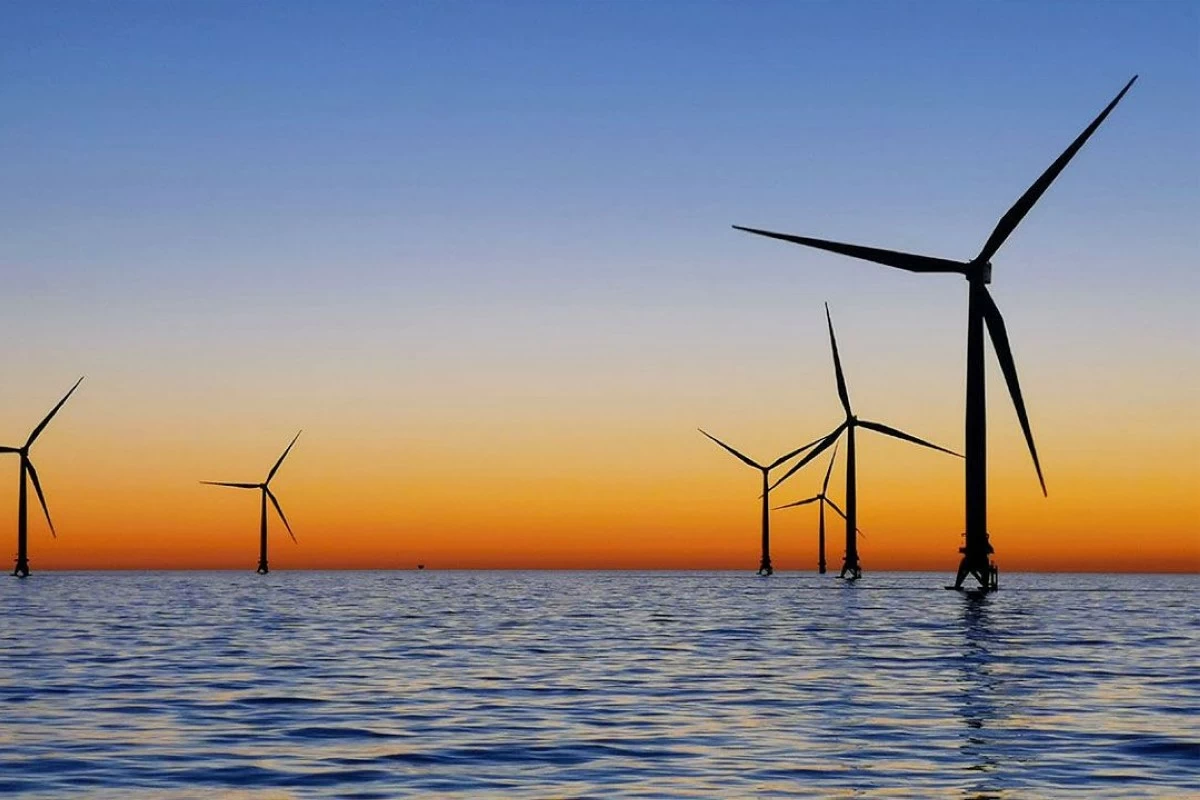
The Department of Energy (DOE) is delaying the country’s first-ever renewable energy auction dedicated to offshore wind to the fourth quarter, as the agency works to address stakeholders’ concerns on a new provision embodied in the proposed terms of reference (TOR).
From the previously slated third-quarter date, Energy Undersecretary Mylene Capongcol said the DOE has scheduled the fifth green energy auction (GEA-5) round for between October and December.
Capongcol said the agency recently tapped stakeholders for a focus group discussion on the auction’s draft TOR, where she noted that there were “questions raised” on the proposed non-price criteria.
She noted that the non-price criteria were adopted by the agency for GEA-5 since offshore wind projects would also entail availability of ports and transmission lines, among others.
Countries that are ramping up their renewable sources have been leveraging the non-price criteria to keep companies’ environmental compliance in check, as it pertains to their offshore wind projects.
According to a report by the World Wildlife Fund (WWF), non-price criteria are more commonly used for these projects, as they are typically larger in scale, which tends to have a greater impact on the environment and communities.
Capongcol said the DOE is now addressing these concerns, but did not elaborate on them, given the impending auction.
She said the proposed TOR on GEA-5 will delve into the designs of the project, how companies will deliver their proposed project, and the green energy tariff of the winning bid, among others.
Under GEA-5, the government will specifically focus on developing fixed-bottom offshore wind projects, which are securely anchored to the seabed.
The DOE stated that this technology was selected for its “established global track record, cost-efficiency, and scalability.”
Former Energy Secretary Raphael Lotilla said this approach will provide a strong foundation for the country’s offshore wind sector, which can deliver power as early as 2028 or by the end of President Marcos’ term.
Capongcol said the DOE, which is now under Energy Secretary Sharon Garin, is sticking to this target.
“For the offshore wind, our target for GEA-5 is 3.3 gigawatts (GW). So hopefully, all of those come online [by 2028],” she said on the sidelines of an energy forum hosted by the European Chamber of Commerce of the Philippines (ECCP).
The official, however, noted that DOE’s timeline for the delivery of 3.3 GW from offshore wind projects spans from 2028 to 2030.
“So, after we finalize the terms of reference, we will issue a notice of auction. So that will define the timelines,” said Capongcol.
“One of which will be the issuance by the Energy Regulatory Commission (ERC) of what we call the GEAR price,” she added.
While she did not disclose figures, the offer price cap for GEA-5 is likely to be higher, given that it is location-specific and requires more strenuous installation, along with other complications.
To put things in perspective, under GEA-4, the ERC approved the GEAR price for rooftop solar at ₱5.68 per kilowatt-hour (kWh), ground-mounted solar at ₱4.4832 per kWh, floating solar at ₱6.5258 per kWh, onshore wind at ₱6.0859 per kWh, while integrated solar stands at ₱5.4028 per kWh.
Capongcol said there are foreign and domestic players that have expressed interest in participating in GEA-5, but did not divulge their names.
“But definitely, whoever wins in GEA-5, we will help them facilitate their project because they have a commitment,” she explained.
She said the DOE has so far awarded around 86 offshore wind service contracts with a combined capacity of around 65 gigawatts.
GEA-5 forms part of the government’s ambitious strategy to expand the share of renewables in the country’s energy mix from the current 22 percent to 35 percent by 2030 and 50 percent by 2040.