







Palace: Rice supply stable despite import suspension
Published Aug 27, 2025 01:22 pm


At A Glance
- Castro said the Department of Agriculture (DA) sees no major problems with supply, given the harvest season and the agency's weekly monitoring of rice stocks nationwide.
Malacañang assured the public that the country’s rice supply remains sufficient even with the 60-day suspension of imports starting next month, citing local harvests and stronger government monitoring.
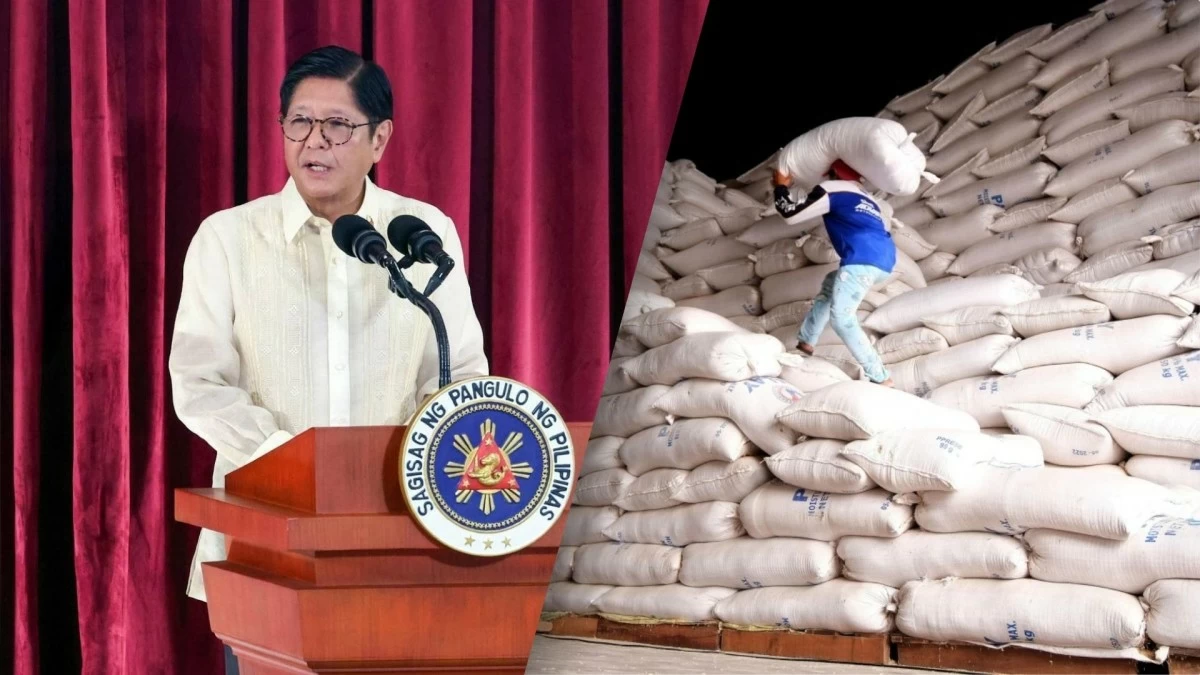
Malacañang/DA photos
Communications Undersecretary Claire Castro said this ahead of the start of the two-month suspension of rice imports on Sept. 1.
In a press briefing on Wednesday, Aug. 27, the Palace Press Officer said the Department of Agriculture (DA) sees no major problems with supply, given the harvest season and the agency’s weekly monitoring of rice stocks nationwide.
“Ayon po sa DA, magkakaroon sila ng price monitoring to enforce the maximum suggested retail price (According to the DA, they will conduct price monitoring to enforce the maximum suggested retail price),” she said.
Castro added that consultations with farmers, millers, and traders are ongoing to stabilize the market and prevent artificial price hikes.
“Pa-start na nga rin po ang harvest season. So, with that, nakikita po natin na tama po ang supply ng bigas sa atin mula sa local farmers, so wala pong masyadong iniisip na magiging problema ang DA patungkol sa supply ng bigas (The harvest season has also started. With that, we see that the rice supply from our local farmers is sufficient, so the DA does not expect major problems with supply),” she said.
While some stakeholders expressed concern that the suspension could trigger shortages, Castro said the DA remains firm that there will be no disruption in supply.
“Patuloy naman ang konsultasyon ng ahensiya sa mga magsasaka, millers at traders para maiwasan ang price manipulation sa bigas at ayusin ang estado sa merkado kahit na mayroong rice import ban (The DA continues to consult with farmers, millers, and traders to prevent price manipulation and stabilize the market despite the rice import ban),” she said.
The DA has also vowed stricter enforcement of suggested retail prices and weekly inspections to track possible attempts at price manipulation.
Meanwhile, in line with President Marcos’ directive to strengthen food security, Castro said the DA will auction off 1.2 million bags, or about 100,000 metric tons, of locally produced rice this week.
The floor price is expected to range between P25 to P28 per kilo, depending on grain age. Castro said the auction also aims to decongest warehouses to accommodate new harvests.
She added that the DA will also release another 100,000 metric tons of rice under the “Benteng Bigas Meron Na” program, intended to help stabilize retail prices in the market.
During his trip to India early this month, President Marcos ordered the suspension of rice importation for 60 days, effective Sept. 1, to protect local farmers reeling from low palay (unmilled rice) prices during the current harvest season.
The DA earlier reported that bumper rice harvests across the world, the lifting of India's rice export ban, and a record-high 9.08 million metric tons of palay produced by the Philippines in the first half of the year have put downward pressure on prices, particularly from exporting countries.
Malacañang has defended President Marcos' constitutional authority to adjust tariff rates, particularly on rice imports, saying that while Congress can impose tariffs, it may delegate this authority to the President to enable timely and responsive economic interventions.