






Manila Bulletin
 Business
The Economy
Stronger PPP safeguards in proposed classroom-building program pushed
Business
The Economy
Stronger PPP safeguards in proposed classroom-building program pushed
Business
The Economy
Stronger PPP safeguards in proposed classroom-building program pushed
Stronger PPP safeguards in proposed classroom-building program pushed
Published Aug 25, 2025 03:15 pm
|
Updated Aug 25, 2025 01:39 pm


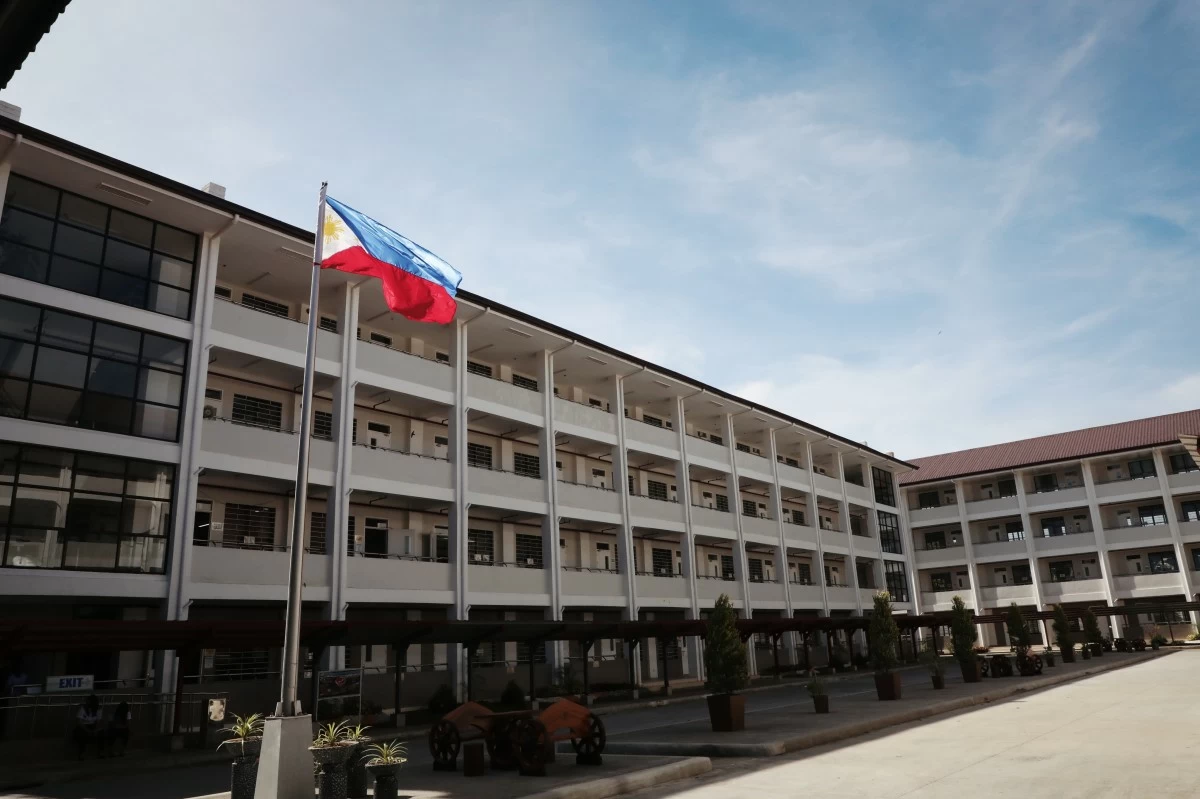
DepEd is set to build 105,000 classrooms nationwide through strategic Public-Private Partnerships—an ambitious move to bridge infrastructure gaps and support growing learner populations. (DepEd photo)
State-run think tank Philippine Institute for Development Studies (PIDS) has recommended the inclusion of stricter safeguards for public-private partnership (PPP) projects under a Senate bill (SB) seeking to accelerate classroom construction nationwide.
In an Aug. 18 comment on SB No. 121, or the proposed Classroom-Building Acceleration Program (CAP) Act authored by Sen. Paolo Benigno “Bam” Aquino, PIDS senior research fellow Michael Ralph M. Abrigo said the measure should draw from lessons of past education infrastructure programs to ensure sustainable and accountable delivery.
The bill aims to tap local government units (LGUs) and private-sector partners in addressing the country’s classroom backlog, estimated at more than 165,000, through funding support from the Department of Education (DepEd), national government (NG) appropriations, and PPP arrangements.
Abrigo noted that while PPPs can expand delivery capacity, the earlier PPP for School Infrastructure Project (PSIP), rolled out during the Benigno Aquino III administration, exposed contractual weaknesses and failed to attract broad private participation due to delays and high risks.
To prevent a repeat of such problems, Abrigo recommended that the CAP law require financial viability assessments for classroom PPPs, adopt flexible cost-recovery models such as staggered payments, viability gap funding or targeted tax incentives, and establish clear revenue-risk frameworks that define cost-sharing rules, penalties, and performance bonds.
He also urged the creation of dedicated PPP oversight units to handle early site appraisals, contract design, and project preparation.
“Such measures could incentivize sustainable private participation while safeguarding transparency, efficiency, and equity in classroom construction delivery,” Abrigo said.
Beyond PPP safeguards, Abrigo also proposed an equity-focused allocation framework to prioritize underserved areas, disaster-resilient classroom designs, lifecycle maintenance funding, and monitoring mechanisms that track not just project completion but actual improvements in class sizes and learning conditions.
SB 121 is being deliberated alongside SB 122, or the proposed E-Textbook Para sa Lahat Act, which mandates free digital versions of DepEd-approved textbooks.
Abrigo likewise offered recommendations on bridging digital access gaps, ensuring teacher training, and protecting intellectual property (IP) in digital learning.
“Taken together, both SBs share a common strength in tackling foundational barriers to quality education: one by improving physical access to classrooms, the other by expanding digital access to learning materials,” Abrigo said.
“They complement each other by addressing both infrastructure and resource gaps, advancing equity, inclusivity, and innovation, and embodying a whole-of-nation approach to education reform,” he added.
(Ricardo M. Austria)