






Manila Bulletin
 Business
Trade & Industry
Siargao airfare: Why this flight costs more than a trip to Tokyo
Business
Trade & Industry
Siargao airfare: Why this flight costs more than a trip to Tokyo
Business
Trade & Industry
Siargao airfare: Why this flight costs more than a trip to Tokyo
Siargao airfare: Why this flight costs more than a trip to Tokyo
Published Aug 25, 2025 02:31 pm


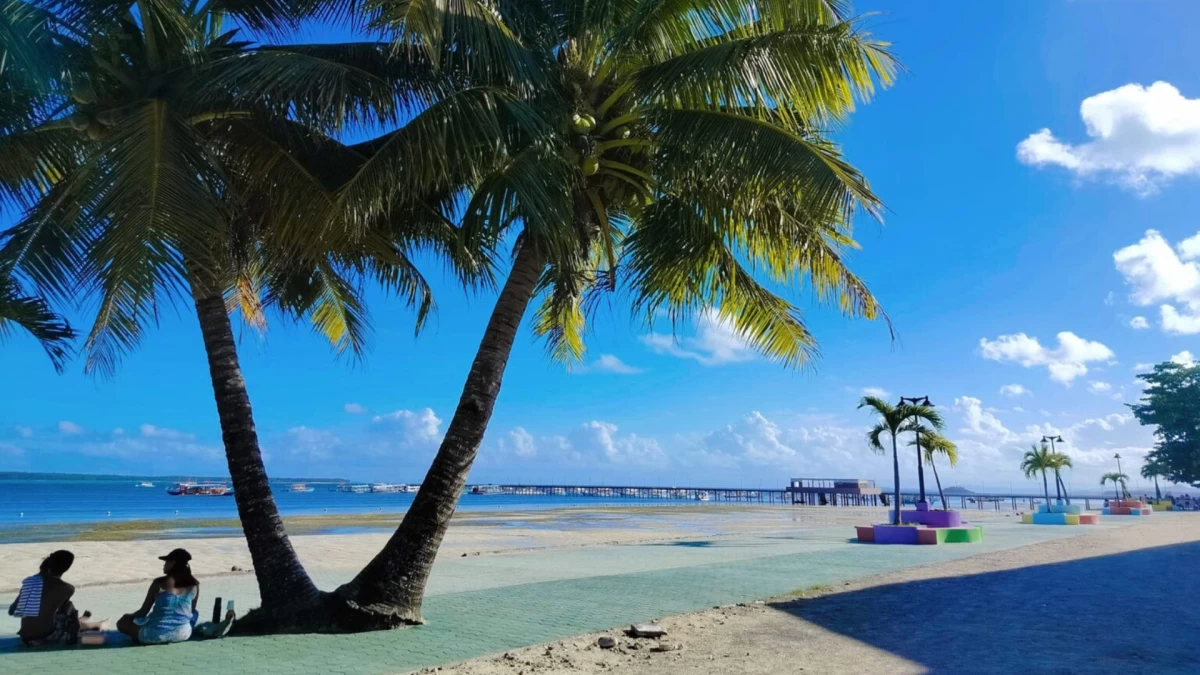
Siargao’s appeal is being challenged by high ticket prices, a result of its airport's limited ability to handle more flights and larger aircraft. (Municipality of General Luna photo)
Soaring airfares to Siargao, the Philippines’ surfing capital, are now more expensive than flights to major international hubs like Hong Kong, Thailand, or Japan, making the island’s famous waves feel increasingly out of reach for travelers.
Round-trip tickets from Manila to Siargao can cost up to over ₱30,000. Considering the flight from Ninoy Aquino International Airport (NAIA) is only about two hours, the steep price has left many travelers and officials questioning the value.
The Department of Transportation (DOTr) will step in on Tuesday, Aug. 26, to ask this very question to local carriers operating on the Siargao route.
DOTr Spokesperson for Business Infrastructure Maricar Bautista said last week that the meeting will be “somehow similar to AirAsia [MOVE],” with the department and other government agencies asking the airlines what’s fueling the spike in airfares and what can be done to lower them.
In June, AirAsia MOVE was fined ₱6 million for allegedly overpricing fares. The online booking arm of Malaysia-based AirAsia was reported to have offered a one-way ticket from Tacloban to Manila for nearly ₱39,000.
While it remains uncertain if the DOTr will also impose fines or other sanctions on carriers over the high fares, what’s clear is that travelers will soon have a better understanding of what’s driving ticket prices to Siargao higher.
The price of limitations
For an aviation expert, the reasoning behind these high prices would boil down to existing limitations in the main gateway to Siargao, Sayak Airport, also known as Siargao Airport.
“So the issue with Siargao is two things: it’s a small runway and it’s not instrument-rated,” said Vincent Ong, president of Cebu-based Airworks Aviation Academy.
With over 60 years of operations, Sayak Airport enables tourists to enter the island via Del Carmen town, located approximately 40 minutes from the municipality of General Luna, the island’s primary destination.
Reports indicated that the airport’s runway was last majorly renovated in 2018, when it was extended to about 1,300 meters to better serve small turboprop aircraft carrying around 80 passengers.
However, the runway is not capable of handling larger, more cost-efficient aircraft, such as the Airbus A320, which seats about 180 passengers, or the Airbus A330neo, which can carry up to 459.
With the airport only capable of handling turboprops, Ong said the route cannot benefit from the lower costs associated with bigger planes, where expenses for the airline are spread over more passengers.
He said that despite the high demand for Siargao, airlines can only offer as many seats as the airport can handle.
On top of this, Ong told Manila Bulletin that Sayak Airport is currently not instrument-rated and has no capacity to operate during the evening or through heavy rains.
Based on information from its Facebook page, the airport’s operation hours are limited to 6:00 am to 6:00 pm.
Ong said this time restriction enables planes from Manila to only mount two round-trip flights per day.
“So when they fix that, it’s a big help in lowering the price of airfare because there are more flights,” explained Ong. With more passengers and more flights, airlines can achieve economies of scale, which leads to lower airfares.
“That’s how they lower the ticket price,” he said. “There’s no price gouging or anything like that.”
A call for investigation
The high airfares to Siargao have not only alarmed the DOTr but have also caught the attention of lawmakers, leading to resolutions being filed in both the House of Representatives and the Senate to investigate the matter.
In the Senate, Senator Mark Villar filed Senate Resolution No. 53, calling for an inquiry into what he calls “exorbitant, unreasonable, and predatory” pricing for domestic flights.
Villar’s resolution noted the drastic increase in fares, noting that a one-way ticket from Manila to Siargao that cost around ₱3,000 in 2017 has now ballooned to as much as ₱18,000—a round-trip cost of roughly ₱36,000.
In his comparison, this is more expensive than a round-trip ticket to Thailand (₱15,000) or Hong Kong (₱10,000) and even on par with flights to Japan (₱30,000).
In the House of Representatives, Ilocos Sur 1st District Rep. Ronald Singson filed House Resolution No. 30, also pushing for a congressional inquiry into the “alarming rise” in airfares.
Singson alleged that domestic airlines may be “taking advantage” of the high demand for popular destinations like Siargao, contrasting these prices with cheaper fares to lesser-known tourist spots.
Surigao del Norte 1st district Rep. Francisco Matugas, a co-author of the resolution, confirmed the high costs from his personal experience. He shared that a round-trip ticket he purchased last week cost him ₱22,000, noting that this was still relatively cheaper than peak season prices, which can reach as high as ₱30,000.
“Tourists are complaining, so it really has an effect,” Matugas said in a phone interview, adding that the high fares are a barrier to tourism growth.
Citing Department of Tourism (DOT) data, he noted that Siargao had welcomed 242,000 tourists in the first half of the year, with nearly 600,000 arrivals in the previous year.
Matugas believes that lowering ticket prices could significantly boost arrivals, especially from domestic travelers.
He estimated that currently, around 80 percent of passengers on flights to Siargao are foreigners, largely because of the steep prices. Europeans, Australians, and Americans are among the top foreign visitors to the island.
For budget-conscious domestic travelers, alternative options are emerging. Passenger ferry operator 2GO Travel will begin offering a weekly trip from Manila to Siargao, as well as Cebu to Siargao, starting in October.
Matugas referred to this as the “median” price option for tourists, with the lowest fare around ₱2,000. Travelers from mainland Mindanao can also take a fast ferry from Butuan or Surigao directly to Siargao for about ₱550.
Airport overhaul in the works
The DOTr is initiating major overhaul of Sayak Airport to ease congestion and enhance the travel experience for tourists visiting Siargao.
Earlier this month, Transportation Secretary Vince Dizon led the groundbreaking for an expansion of the airport’s passenger terminal. The project aims to increase the terminal’s capacity from its current 200 passengers to at least 750 daily.
Amid these developments, the private sector is also eyeing Sayak Airport. A consortium led by JG Summit Infrastructure Holdings Corp. and Filinvest Infra-Solutions Ventures Inc. has proposed to bundle Sayak, Davao, and Albay airports into a single public-private partnership (PPP) agreement.
But for Ong, the fastest solution to the high airfare issue is for the government to make Sayak Airport “instrument-rated,” which would allow planes to land at night or in bad weather, increasing flight frequencies without straining government funds.
For a long-term solution, Ong suggested extending the runway to about 2,000 meters to accommodate larger aircraft.
“In layman’s terms, you build a road that’s two kilometers, you’re just bridging two towns. But if you build a runway that’s two kilometers, your town is connected to the whole world,” he emphasized.
Matugas disclosed he first recommended a runway extension at the airport nearly two decades ago to the DOTr and the Civil Aviation Authority of the Philippines (CAAP), which operates Sayak Airport.
He stated that the CAAP had informed him that the runway couldn’t be extended due to a nearby mountain that could pose risk to large aircraft attempting to land.
But with the advent of new technology, the lawmaker told Manila Bulletin that he will once again urge the DOTr and the CAAP to conduct a new study on the proposal.
“If we have an Airbus, I’m sure that the plane fare will go down,” he said.
In addition to the current airport’s improvements, Matugas is also proposing the construction of a new international airport that would still be located in the municipality of Del Carmen, about seven kilometers from Sayak Airport.
The National Economic and Development Authority (NEDA) Board—now the Economy and Development (ED) Council—already approved the proposal in December last year under a PPP arrangement.
An estimated 300 hectares have been identified for the project, and Matugas plans to push for its fast-tracking once all necessary documentation is finalized by the Department of Economy, Planning, and Development (DEPDev).
Shifting routes, shifting prices
Sayak Airport handles about 18 flights per day, operated by flag carrier Philippine Airlines (PAL), low-cost airline Cebu Pacific, and boutique carrier Sunlight Air.
As of Aug. 14, PAL is the only carrier operating the Manila–Siargao route, while also mounting flights from Cebu and Clark.
Cebu Pacific’s regional unit, Cebgo, which operates an all-turboprop fleet, canceled its Manila–Siargao route last March in compliance with the government’s mandatory phaseout of smaller turboprop aircraft from NAIA.
As a result, the Gokongwei-led carrier now serves Siargao from other hubs, including Clark, Cebu, and Davao. Similarly, Sunlight Air also operates flights to the island from Clark and Cebu.
PAL declined to comment when the Manila Bulletin reached out for a statement regarding the high airfares. The airline currently offers flight options to Siargao from both Clark and Cebu.
The expanded route from Clark, which began operating in May, will, according to PAL, help shore up the airline’s presence in Siargao. This comes as its long-standing Manila-Siargao route faces threat of being discontinued due to NAIA’s policy to phaseout turboprop operations.
Writing on X (formerly Twitter), Ong had previously criticized the NAIA turboprop phaseout order as “really ill-advised,” arguing that it would create unnecessary delays for tourists.
He noted that international travelers flying into Manila would be forced to endure a four-hour ground trip to Clark just to catch their final connecting flight to Siargao.
Manila Bulletin broke the story that the October 2025 deadline of the planned turboprop transfer to other airports, such as Clark, has been pushed back to March 2026, driven by concerns of industry stakeholders.
“The Manila-Siargao route remains a viable PAL service, ensuring that visitors from all over the world have convenient access to the Philippines’ famous island paradise,” said PAL in a statement.
Manila Bulletin also reached out to Cebu Pacific for its comment and will update the story when it is available.
High airfares, especially to popular destinations, have long been a point of contention for airlines. However, carriers have been arguing that the Civil Aeronautics Board (CAB) is the one responsible for setting the fare matrix for domestic flights, which establishes a maximum price they cannot legally exceed.
Within the CAB price ceiling, airlines employ dynamic pricing, an industry-wide practice that uses real-time data to adjust prices. This system considers factors such as the number of available seats, the proximity of the departure date, and overall demand for a specific route.
The issue of expensive air travel is not unique to Siargao; it has also historically affected other popular Philippine tourist spots like Boracay Island.
For instance, in the early 2000s, flights to Boracay’s Caticlan Airport (now Godofredo P. Ramos Airport) were costly because its short runway could only accommodate smaller turboprop planes.
The limited seating capacity kept ticket prices high until the 2016 expansion project extended the runway, allowing larger jet aircraft to land, resulting in an increase in seat availability, which ultimately lowered airfare to Boracay.