







Turboprop phaseout at NAIA pushed to March 2026
Published Jul 30, 2025 01:20 pm


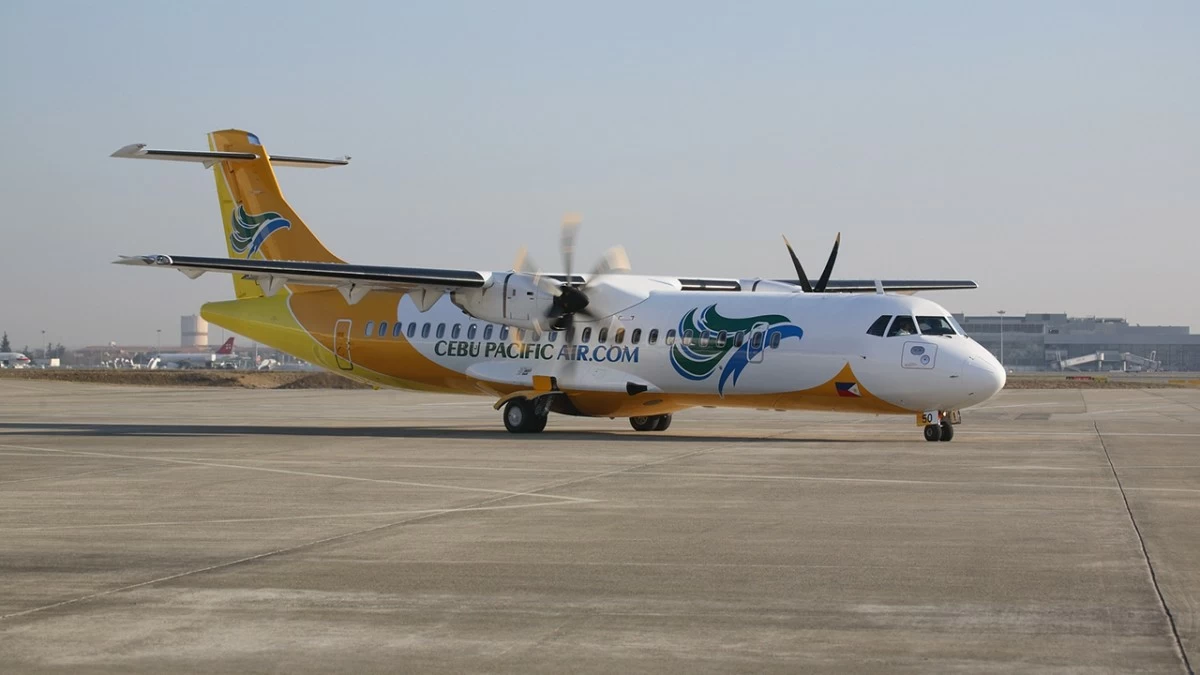
Cebu Pacific's ATR 72-500 aircraft (JG Summit Holdings Inc. photo)
Travelers heading to island destinations can still fly out of Ninoy Aquino International Airport (NAIA) after the government pushed back the planned October phaseout of turboprop flights to next year.
Based on a document obtained by Manila Bulletin, the Manila Slot Coordination Committee (MSCC) is postponing the Oct. 26 deadline of the planned turboprop transfer by five months to March 2026, coinciding with the start of the summer season.
The MSCC, which is composed of the Department of Transportation (DOTr), Manila International Airport Authority (MIAA), Civil Aviation Authority of the Philippines (CAAP), Civil Aeronautics Board (CAB), and NAIA operator New NAIA Infrastructure Corp. (NNIC), said the decision to extend the deadline was driven by concerns of industry stakeholders.
Following reassessment of its initial resolution, the committee said it is critical to balance the impact of turboprop transfer to regional airports with the goal of optimizing the capacity of the country’s primary gateway.
“The MSCC recognized that additional time may be needed to effectively manage and mitigate the impact of such transfer, and address logistical and informational challenges,” it said in the document.
In December last year, MSCC issued Resolution No. 2024-02, which outlined the guidelines of the gradual transfer of turboprop operations from NAIA to regional airports.
Turboprops are smaller aircraft used to reach far-flung towns and island destinations like Siargao, Camiguin, and Coron, where airports have limited runway space that cannot accommodate larger jets.
Pushing out turboprops from NAIA was seen to ease congestion at the congested airport and free up slots for larger aircraft that can carry more passengers.
MSCC earlier required airlines to move 30 percent of their turboprop fleet from NAIA to regional airports on March 30, with all flights relocated by Oct. 26.
Following the March extension, the MSCC opted to instead limit the number of turboprop flights at NAIA to a maximum of 42 flights per week and six flights per day by that same deadline.
“The 42 flights per week shall be distributed and allocated by the Manila Slot Coordinator based on Summer 2025 turboprop operations,” the MSCC said.
“It is up to the individual carriers to determine which destinations they wish to operate to and from NAIA with the allocated frequencies,” it added.
Sources told Manila Bulletin that flag carrier Philippine Airlines (PAL) and low-cost carrier Cebu Pacific will split the weekly turboprop schedule with 21 flights each.
“By the commencement of Summer 2026, all turboprop operations of scheduled carriers at the NAIA must have been completely transferred to other secondary airports,” the MSCC said.
The MSCC said the slots for turboprops of all domestic carriers may only be approved until the end of summer season this year.
Clark International Airport previously projected that its passenger volume would reach up to 3.4 million passengers this year, a million higher than last year’s figures, because of the planned turboprop transfer.