







Ninoy Aquino's final journey home
Journalist Sol Vanzi remembers the fallen freedom fighter
By Sol Vanzi
Published Aug 21, 2025 10:59 am


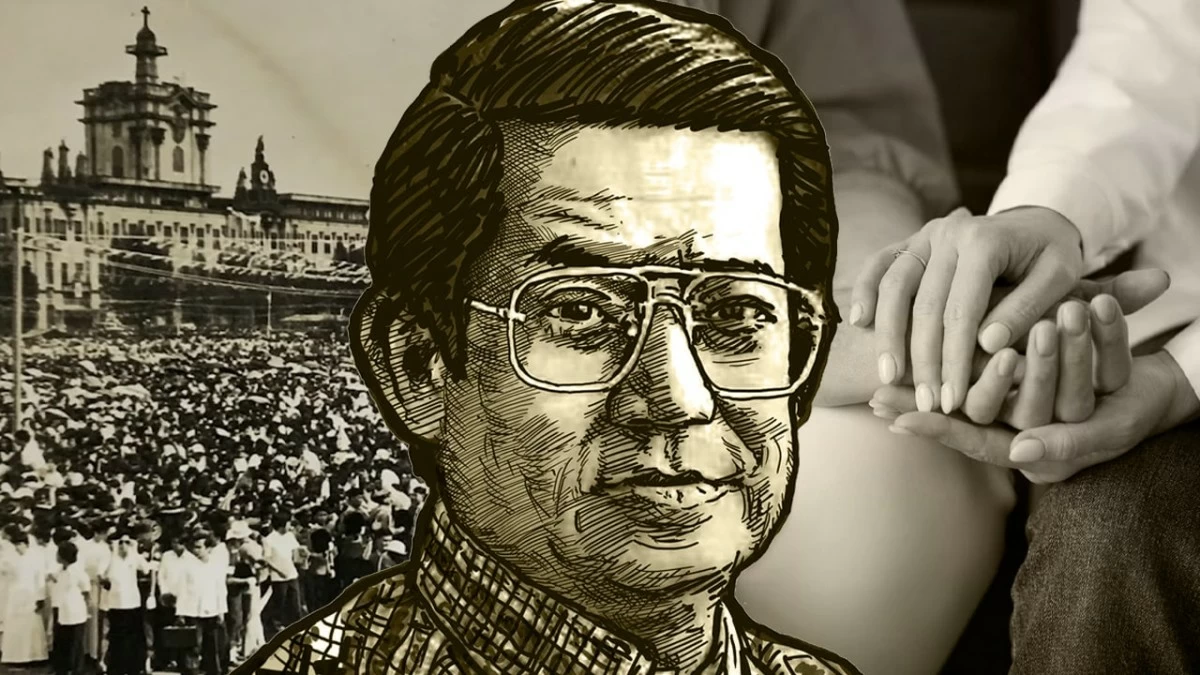
Benigno “Ninoy” Aquino Jr.
In the early 1960s, Ninoy Aquino was a promising young politician from a prominent family in Tarlac. Dashing and adventurous, he stood out even in gatherings of veteran national leaders, with his wit, charm, and uncanny ability to tackle local and international issues in English, Tagalog, Capampangan, and Ilocano. His marriage into the equally prominent Cojuangco clan further improved his position in the country’s political arena, where he was expected by many to one day run for the highest office.
I was working in the PR staff of Atty. Lumen Policarpio when I first met Ninoy. My client was campaigning to be the Nacionalista Party’s candidate for senator, and my job called for mingling with journalists, politicians, and their staff. Ninoy’s boyish smile and down-to-earth views immediately put me at ease. He was different from any public figure I had met. He made everyone feel comfortable.
He was genuinely interested in how ordinary people lived.
When he ran for the Senate, he asked if I could be a consultant in a private capacity so as not to avoid conflict with my regular gig as features writer for a weekly magazine. He won by a landslide despite questions raised on his age qualification. The Supreme Court ruled in his favor and the stage was set for the next step: run for president.
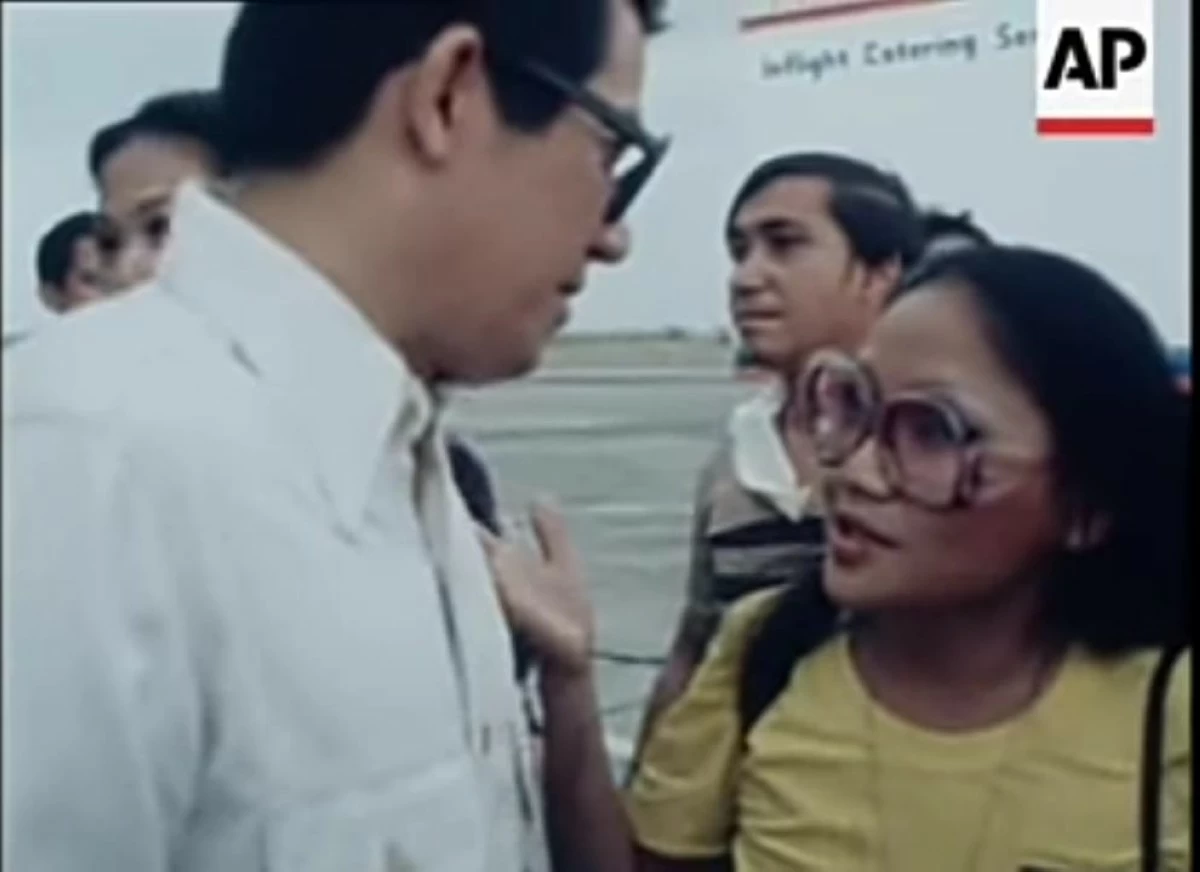
Ninoy Aquino Jr. with Sol Vanzi (Screenshot from AP Archive/Youtube)
As consultant, I answered his questions about food prices, the rice crisis, dollar restrictions, the public school system, public transport, and other concerns. My inputs gave him a sense of how the other half lived.
We communicated regularly by telephone—sometimes he would send a car to pick me up when he wanted to rehearse a privilege speech or important statement. These he did in his satellite office, a suite at the Manila Hotel. His early speeches were exposés against corruption in the Marcos government, hidden wealth, and the “unnecessary” Cultural Center of the Philippines.
His popularity continued to rise, pushing him to the top of the list of opposition candidates for president in the next election. Then came his stern warning: President Ferdinand Marcos was planning to declare Martial Law to continue to stay in power. He feared that opposition leaders would be arrested. True enough, it all came to pass.
After many months in solitary confinement, Ninoy was finally arraigned before a military tribunal. Local and foreign media were allowed to cover the event. I attended as ABC News correspondent. It was the first time in years for Ninoy to see anyone besides family, lawyers, and soldiers.
He paused at the door of the makeshift courtroom and scanned the crowded room for familiar faces. Catching my eye, he smiled, waved, and uttered a faint hello. He had lost so much weight and appeared much younger than before his arrest.
He was allowed out on a holiday furlough, during which he met with international media. The next thing we knew, he had a heart attack and was at the Heart Center. First Lady Imelda Marcos visited him and gave orders to fly him to the US for treatment.
I was among a handful allowed at the tarmac to see him off. His security men allowed me a short interview; he tried to explain what he intended to do once he got well. However, there was not enough time to say what his plans were. One thing was clear: He was grateful to be alive to continue his fight against the Marcos government, which he pursued after his release from the hospital.
By 1982, Marcos was on good terms with US President Ronald Reagan and was invited to Washington for a state visit. My husband Victor and I flew with the Malacanang press corps and stayed at the Holiday Inn for the coverage. To everyone’s surprise, Ninoy showed up for breakfast, knowing it was the official hotel for the media. He headed straight for my table, and I had to lead him to join the big group of Filipino journalists at a long table. He gave me his number and made me promise to meet for lunch or something. I promised.
Before the end of 1982, Ninoy was threatening to come home, as rumors mounted that Marcos was near death following a failed kidney transplant.
Ninoy aired fears of an Imelda-Ver takeover and proceeded with his homecoming plans. By mid-August, he was on the move. All his actions were carefully planned and kept secret. ABC News had an unfair advantage over other journalists—special access through ABC correspondent Ken Kashiwahara, Ninoy’s brother-in-law, who was traveling with Ninoy.
On Aug. 20, 1983, Ninoy and a select group of journalists gathered at a hotel in Taipei for last-minute interviews and to coordinate their movements for the flight to Manila the next day.
I had set up an ABC News bureau at the Manila Hotel and was instructed to call correspondent Jim Laurie at midnight in his Taipei hotel room. When I called, the operator said Jim was in another room, and connected me. Ninoy answered the phone!
It turned out all the media in the group were meeting with Ninoy for last-minute instructions. Ninoy talked to me for 10 minutes and asked if I would be at the Manila International Airport to welcome him home. He even asked if I would work for him at Malacanang.
“Of course,” I said.
“It’s a date, then. See you,” were his last words. Thirteen hours later, he was dead.
The next day, I saw him in a blood-stained shirt, eyes closed but with a serene expression.
He did keep a date, a date with destiny.