ADVERTISEMENT

DOE pushes for waste-to-energy law amid persistent Metro Manila floods

Published Aug 18, 2025 12:27 am  |  Updated Aug 16, 2025 06:53 am
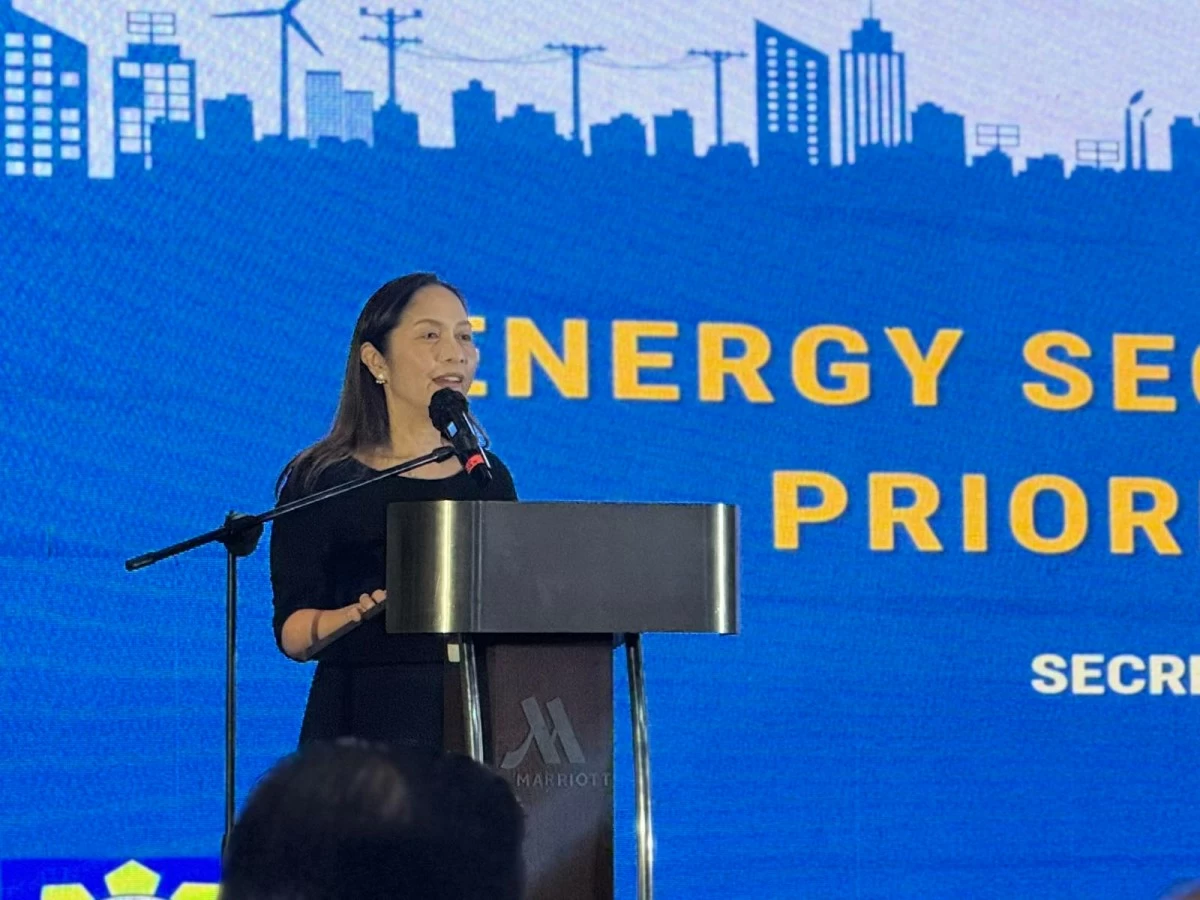
Energy Secretary Sharon Garin
As Metro Manila grapples with persistent flooding during the rainy season, the Department of Energy (DOE) is renewing its focus on waste-to-energy (WTE) as a potential solution to both reduce waste and contribute to the country’s energy supply.
Energy Secretary Sharon Garin told reporters that interest in WTE is seeing a resurgence while the WTE Act, or Senate Bill No. 2267, awaits its second reading in the Senate.
“We pushed for it for the last three years. [It’s] approved by the House, and it’s not yet finished with the Senate,” she said on the sidelines of the AmCham 8th Annual Energy Forum. “With what happened with the flooding, I think [the President] is very supportive of this. Hopefully, the WTE law will be done.”
The WTE Act, filed in May 2023 by Senator Win Gatchalian, then vice chair of the Senate Committee on Energy, aims to establish a national energy policy and a regulatory framework for facilities that would utilize trash as an energy source.
According to Garin, the bill stalled because other pressing issues took legislative priority. She expressed hope that with the support of Senator Pia Cayetano, the new chair of the Senate Committee on Energy, and Senator Gatchalian, the bill will regain momentum.
Garin noted that while a law may not be strictly necessary, it could help fast-track the adoption of WTE technologies, especially in local government units (LGUs) where waste management practices often vary with changes in leadership.
“This will make it more cohesive in the sense that we will cluster them and make a consistent waste supply,” she said. “[This act] will include LGUs to have mandates or responsibilities.”
The DOE chief emphasized that WTE is primarily an environmental initiative, with energy production as a valuable byproduct. “Hopefully, within this term, we can finish this,” she said. “I think now there’s a renewed interest.”
Last week, an Indian engineering company announced its plans to invest in a WTE facility in New Clark City through a partnership with the Bases Conversion and Development Authority (BCDA). Uttamenergy Limited unveiled the $70 million deal to develop the project on a four-hectare area in Capas, Tarlac. The facility is expected to process 600 metric tons of municipal solid waste daily, generating 12 megawatts (MW) of capacity.
Uttamenergy’s WTE consortium will also include Global Heavy Equipment and Construction Corporation and ATD Waste-to-energy Corp.

Related Tags

Department of Energy (DOE) Sharon Garin
ADVERTISEMENT
.most-popular .layout-ratio{ padding-bottom: 79.13%; } @media (min-width: 768px) and (max-width: 1024px) { .widget-title { font-size: 15px !important; } }

{{ articles_filter_1561_widget.title }}

.most-popular .layout-ratio{ padding-bottom: 79.13%; } @media (min-width: 768px) and (max-width: 1024px) { .widget-title { font-size: 15px !important; } }

{{ articles_filter_1562_widget.title }}

.most-popular .layout-ratio{ padding-bottom: 79.13%; } @media (min-width: 768px) and (max-width: 1024px) { .widget-title { font-size: 15px !important; } }

{{ articles_filter_1563_widget.title }}

{{ articles_filter_1564_widget.title }}

.mb-article-details { position: relative; } .mb-article-details .article-body-preview, .mb-article-details .article-body-summary{ font-size: 17px; line-height: 30px; font-family: "Libre Caslon Text", serif; color: #000; } .mb-article-details .article-body-preview iframe , .mb-article-details .article-body-summary iframe{ width: 100%; margin: auto; } .read-more-background { background: linear-gradient(180deg, color(display-p3 1.000 1.000 1.000 / 0) 13.75%, color(display-p3 1.000 1.000 1.000 / 0.8) 30.79%, color(display-p3 1.000 1.000 1.000) 72.5%); position: absolute; height: 200px; width: 100%; bottom: 0; display: flex; justify-content: center; align-items: center; padding: 0; } .read-more-background a{ color: #000; } .read-more-btn { padding: 17px 45px; font-family: Inter; font-weight: 700; font-size: 18px; line-height: 16px; text-align: center; vertical-align: middle; border: 1px solid black; background-color: white; } .hidden { display: none; }
function initializeAllSwipers() { // Get all hidden inputs with cms_article_id document.querySelectorAll('[id^="cms_article_id_"]').forEach(function (input) { const cmsArticleId = input.value; const articleSelector = '#article-' + cmsArticleId + ' .body_images'; const swiperElement = document.querySelector(articleSelector); if (swiperElement && !swiperElement.classList.contains('swiper-initialized')) { new Swiper(articleSelector, { loop: true, pagination: false, navigation: { nextEl: '#article-' + cmsArticleId + ' .swiper-button-next', prevEl: '#article-' + cmsArticleId + ' .swiper-button-prev', }, }); } }); } setTimeout(initializeAllSwipers, 3000); const intersectionObserver = new IntersectionObserver( (entries) => { entries.forEach((entry) => { if (entry.isIntersecting) { const newUrl = entry.target.getAttribute("data-url"); if (newUrl) { history.pushState(null, null, newUrl); let article = entry.target; // Extract metadata const author = article.querySelector('.author-section').textContent.replace('By', '').trim(); const section = article.querySelector('.section-info ').textContent.replace(' ', ' '); const title = article.querySelector('.article-title h1').textContent; // Parse URL for Chartbeat path format const parsedUrl = new URL(newUrl, window.location.origin); const cleanUrl = parsedUrl.host + parsedUrl.pathname; // Update Chartbeat configuration if (typeof window._sf_async_config !== 'undefined') { window._sf_async_config.path = cleanUrl; window._sf_async_config.sections = section; window._sf_async_config.authors = author; } // Track virtual page view with Chartbeat if (typeof pSUPERFLY !== 'undefined' && typeof pSUPERFLY.virtualPage === 'function') { try { pSUPERFLY.virtualPage({ path: cleanUrl, title: title, sections: section, authors: author }); } catch (error) { console.error('ping error', error); } } // Optional: Update document title if (title && title !== document.title) { document.title = title; } } } }); }, { threshold: 0.1 } ); function showArticleBody(button) { const article = button.closest("article"); const summary = article.querySelector(".article-body-summary"); const body = article.querySelector(".article-body-preview"); const readMoreSection = article.querySelector(".read-more-background"); // Hide summary and read-more section summary.style.display = "none"; readMoreSection.style.display = "none"; // Show the full article body body.classList.remove("hidden"); } document.addEventListener("DOMContentLoaded", () => { let loadCount = 0; // Track how many times articles are loaded const offset = [1, 2, 3, 4, 5, 6, 7, 8, 9, 10]; // Offset values const currentUrl = window.location.pathname.substring(1); let isLoading = false; // Prevent multiple calls if (!currentUrl) { console.log("Current URL is invalid."); return; } const sentinel = document.getElementById("load-more-sentinel"); if (!sentinel) { console.log("Sentinel element not found."); return; } function isSentinelVisible() { const rect = sentinel.getBoundingClientRect(); return ( rect.top < window.innerHeight && rect.bottom >= 0 ); } function onScroll() { if (isLoading) return; if (isSentinelVisible()) { if (loadCount >= offset.length) { console.log("Maximum load attempts reached."); window.removeEventListener("scroll", onScroll); return; } isLoading = true; const currentOffset = offset[loadCount]; window.loadMoreItems().then(() => { let article = document.querySelector('#widget_1690 > div:nth-last-of-type(2) article'); intersectionObserver.observe(article) loadCount++; }).catch(error => { console.error("Error loading more items:", error); }).finally(() => { isLoading = false; }); } } window.addEventListener("scroll", onScroll); });

Sign up by email to receive news.