






Manila Bulletin
 Philippines
National
Palace warns: Removing Marcos' tariff powers could hurt price rice response
Philippines
National
Palace warns: Removing Marcos' tariff powers could hurt price rice response
Philippines
National
Palace warns: Removing Marcos' tariff powers could hurt price rice response
Palace warns: Removing Marcos' tariff powers could hurt price rice response
Published Aug 6, 2025 02:30 pm


At A Glance
- Castro said such power is consistent with the Constitution, which allows Congress to authorize the President to act on tariffs in situations that demand policy flexibility.
Malacañang has cautioned lawmakers against supporting a Senate resolution seeking to remove the President’s authority to adjust rice tariffs, saying it could paralyze the government’s ability to act swiftly during price shocks and emergencies.
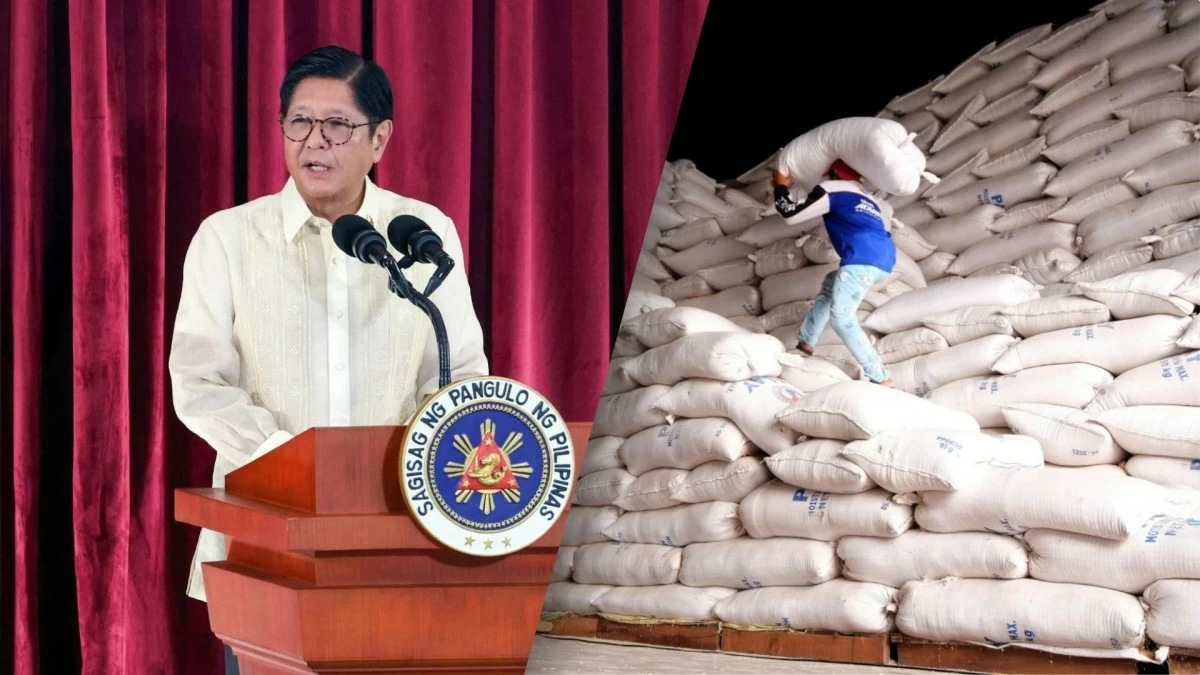
Malacañang/DA photos
Communications Undersecretary Claire Castro said this after senators Francis Pangilinan and Risa Hontiveros filed a joint resolution seeking to terminate the delegated authority of the President to modify tariff rates on rice, citing the negative impact of imposing lowered tariffs on imported rice.
In a press briefing in New Delhi, the Palace Press Officer defended President Marcos’ previous move to temporarily lower tariffs on imported rice, saying it was a necessary step to provide relief to consumers when global prices peaked at $700 per metric ton.
“Kaya po ito in-adjust ang tariff, hindi ito para sa kanya, hindi pansarili, kundi po sa mga mamamayan natin na nahihirapan po talaga na makabili ng murang bigas (The tariff was adjusted not for the President’s personal benefit, but to help our people struggling to afford rice),” she said.
Castro said such power is consistent with the Constitution, which allows Congress to authorize the President to act on tariffs in situations that demand policy flexibility.
“Kapagka po nagkaroon ng aberya, emergency, masyadong mahihirapan po ang Pangulo na i-adjust ang presyo kapagka po natanggal na ang power ng Pangulo mag-adjust ng tariff rates (If an emergency occurs, it would be extremely difficult for the President to adjust prices if his power to change tariff rates is removed),” she said.
Castro also questioned who would take over the responsibility if the power were revoked.
“Hindi naman po siguro kakayanin na rin ng mga mambabatas natin na sila ay makikipag-negotiate sa ibang bansa (I don’t think our lawmakers could be expected to negotiate directly with other countries),” she said.
The Palace official pointed out that the President’s tariff adjustment powers allow the executive branch to respond to fast-changing market conditions that impact food security.
“Ito ay patungkol sa mga presyo na flexible at minsan po ay pabago-bago ang presyo ng produkto na maaaring makaapekto sa taong bayan (This concerns prices that are flexible and often volatile, which can affect the people),” she said.