






Manila Bulletin
 Business
The Economy
Economists: Election spending lifts Q2 growth to 5.6% despite US tariff threat
Business
The Economy
Economists: Election spending lifts Q2 growth to 5.6% despite US tariff threat
Business
The Economy
Economists: Election spending lifts Q2 growth to 5.6% despite US tariff threat
Economists: Election spending lifts Q2 growth to 5.6% despite US tariff threat
By Derco Rosal
Published Aug 4, 2025 12:02 am
|
Updated Aug 2, 2025 02:28 pm


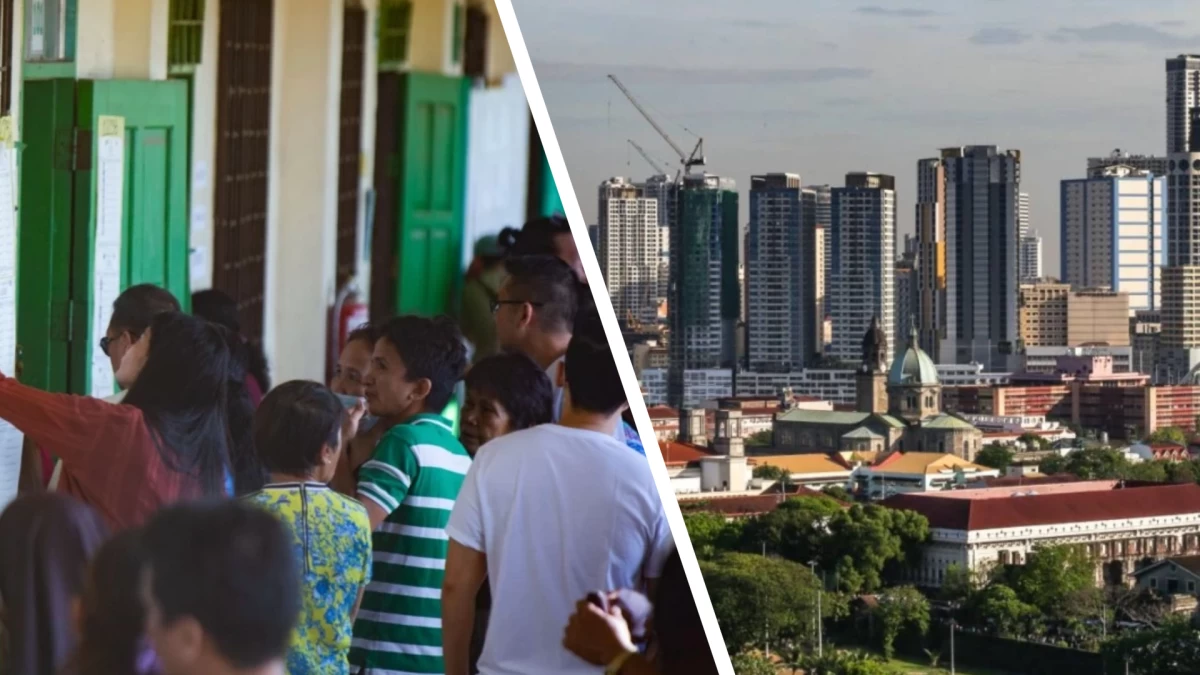
Private-sector economists expect the Philippine economy to have expanded at a faster pace in the second quarter, compared to the first three months, driven by robust household consumption during the midterm election period, even amid external headwinds.
The consensus growth forecast stands at 5.6 percent, based on the median of seven analysts’ estimates. Relative to the previous quarter, the country’s gross domestic product (GDP) growth might have accelerated faster, but year on year, this estimate is nearly one percentage point lower than the 6.5-percent growth in the same quarter last year.
HSBC Association of Southeast Asian Nations (ASEAN) economist Aris Dacanay projected the second-quarter expansion at 5.6 percent, citing a boost from consumption, particularly election-related spending, and goods exports.
“Seasonality was likely at play, with election spending from the May mid-term elections lifting both household and government consumption,” Dacanay said. But he asserted that a 5.6-percent growth is below the local economy’s potential.
Measured against the downscaled growth target of the government of 5.5 percent to 6.5 percent, Dacanay’s, as well as the consensus forecast, would only be a tad higher than the lower end of the goal.
With a higher estimate of 5.8 percent, Emilio S. Neri, Jr., senior vice president and lead economist at the Bank of the Philippine Islands (BPI), also cited election-related spending coupled with easing inflation.
“On the demand side, household consumption likely remained the main growth driver, supported by election-related spending, easing inflation (particularly the sustained decline in rice prices) and continued strength in consumer lending,” Neri said.
Slightly lower than Neri’s forecast, Oikonomia Advisory and Research Inc. economist Reinielle Matt Erece believes the second-quarter GDP will have expanded by 5.7 percent primarily due to “stronger employment figures and narrower trade deficits.”
“The stronger employment figures show stronger economic activity and having more people employed can also mean higher consumer spending, the primary driver of the country's growth,” Erece said.
He added that narrower trade deficits may be due to foreign firms frontloading ahead of United States (US) President Donald Trump’s delayed tariffs. While this temporarily boosted exports, this gain “may drop once tariffs are in full effect and global trade starts to falter.”
Rizal Commercial Banking Corp. (RCBC) chief economist Michael Ricafort provided the highest growth projection at six percent. Like Dacanay and Neri, Ricafort also attributed the expected faster growth to midterm election-related spending.
Despite the downward risks stemming from the higher US reciprocal tariffs on Philippine exports, Ricafort said growth may remain around six percent “due to midterm election-related spending, which could also support consumer spending, which accounts for about 75 percent of GDP.”
Meanwhile, Union Bank of the Philippines (UnionBank) chief economist Ruben Carlo O. Asuncion argued that government spending was limited during the period. Such are among the factors he cited for a lower forecast of 5.2 percent during the April-to-June period.
“While disinflation has helped ease cost pressures and support consumption, overall domestic demand remains cautious due to weak consumer and business sentiment, limited fiscal impulse during the election period, and muted employment quality,” Asuncion said.
For Asuncion, a 5.2-percent growth still “reflects a modest but steady expansion amid a complex macroeconomic environment.”
Moreover, ANZ Research expects moderation during the quarter at 5.3 percent, citing the steep decline in car sales, which was partially offset by consumer goods imports that “have stayed strong.”
Capital Economics senior Asia economist Gareth Leather has projected the local economic output to have grappled during the second quarter, as he sees growth having significantly slowed to five percent.
“After several quarters of strong GDP growth, the economy appears to have experienced a softer patch during the second quarter. A key drag is likely to have come from the external sector. Monthly data point to sharp slowdown in export growth after strong gains in the first quarter,” Leather said.
Domestic demand showed mixed signs, according to Leather. The weaker consumer spending, as evidenced by a drop in retail sales, was partly offset by stronger investment, as seen in the surge in capital goods imports.
Looking ahead, Erece and Ricafort expect a still steady GDP expansion for the entire year, at a range of 5.5 percent to six percent. Growth’s leaning toward the lower end is based on expectations that “trade and investments may start to falter,” said Erece.
While Neri sees a 5.8-percent full-year growth, he said this could still be revised “if delays and damage on production and infrastructure from recent typhoons drag overall performance,” adding that the high 19-percent US tariffs may also need to be considered.