






Manila Bulletin
 Business
Trade & Industry
Philippine goods exports surge to H1 record high ahead of Trump tariffs
Business
Trade & Industry
Philippine goods exports surge to H1 record high ahead of Trump tariffs
Business
Trade & Industry
Philippine goods exports surge to H1 record high ahead of Trump tariffs
Philippine goods exports surge to H1 record high ahead of Trump tariffs
Published Jul 30, 2025 02:04 pm


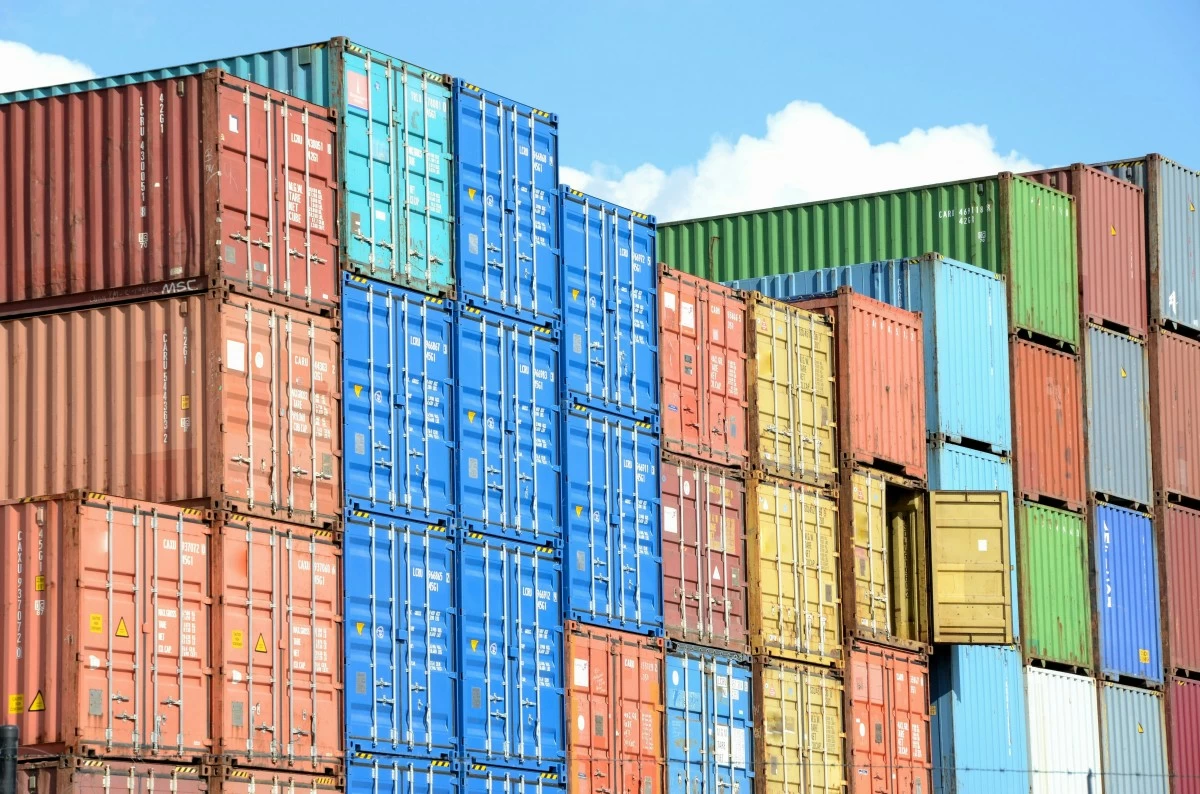
(Unsplash)
Philippine goods exports climbed 13.2 percent year-on-year to a record $41.24 billion in the first six months of 2025 as exporters front-loaded shipments ahead of the 19-percent tariff to be imposed by the United States (US), the country’s top export market.
National Statistician Claire Dennis S. Mapa confirmed to Manila Bulletin on Wednesday, July 30, that the end-June merchandise exports level is the highest first-semester exports since 1991, based on historical Philippine Statistics Authority (PSA) data.
In the month of June alone, sales of Philippine-made products abroad jumped 26.1 percent year-on-year to $7.02 billion, the latest preliminary PSA data showed.
From January to June, the US remained as the Philippines’ No. 1 export destination, with a cumulative $6.6 billion, up 13.2 percent year-on-year. In June, Philippine exports to the US soared 35.2 percent year-on-year to $1.21 billion.
The US is the destination of about 16-17 percent of total exports.
A hastily made visit to Washington by President Ferdinand Marcos Jr. last week to negotiate the 20-percent tariffs earlier threatened by US President Donald Trump slightly brought down the rate to be slapped on Philippine exports to America to 19 percent, taking effect on Aug. 1.
During his “Liberation Day” announcement back in April, Trump wanted to impose a reciprocal tariff of 17 percent on the Philippines, lower than what was agreed upon with Marcos.
The first-half merchandise export performance came despite the Cabinet-level Development Budget Coordinating Committee’s (DBCC) pessimistic expectations last month, projecting goods exports to decline by two percent in 2025 “largely due to slower global demand and heightened trade policy uncertainties.”
Prior to the global trade tensions started by Trump when he returned to the US presidency for a second term, the government had forecast six-percent merchandise exports growth for this year.
Sheana Yue, economist at the think tank Oxford Economics, said in a July 29 report that Asian exports are expected to decelerate in the second half of the year, even as the second quarter posted strong growth.
Across the region, “tariffs above 10 percent are increasingly probable, export price concessions are unlikely to continue, while payback from earlier front-loading will weigh on exports,” Yue said.
“By product type, US tariffs have a pronounced impact on machinery and electronics due to high US reliance on Asia for these products,” she noted.
At end-June, electronic products—the Philippines’ top export commodity accounting for over half of total—grew 5.1 percent year-on-year to $21.69 billion, while June-alone shipments overseas soared 30 percent to $3.89 billion.
In a June 30 report, DBS Group Research said that “besides a payback from export front-loading in the first half of 2025, the impact of the high tariff rate on the [Association of Southeast Asian Nations or ASEAN] bloc’s exports to the US is also likely to be felt.”
“Notwithstanding recent concessions, the landing rate of US tariffs for ASEAN-6 could be two to six times of the average applied MFN [most favored nation] rate in 2024,” the research arm of Singapore-based DBS Bank Ltd. said. ASEAN-6 includes the Philippines, Indonesia, Malaysia, Singapore, Thailand, and Vietnam.
DBS said that as far as US tariffs are concerned, “indications [showed] that the new baseline rate might be around [the] 15- to 20-percent range.”
As for imports, Mapa told Manila Bulletin that the six-month tally of $65.22 billion is the second highest on record for the period, only exceeded by the $68.38-billion worth in 2022, when the economy was reopening from the most stringent Covid-19 pandemic restrictions.
PSA data showed that end-June imports grew six percent year-on-year, supported by the June-alone growth of 10.8 percent year-on-year to $10.98 billion.
China remained as the top source of goods imported into the Philippines, with a six-month value of $18.47 billion, up 18.4 percent year-on-year and more than triple the imports from second-place Japan, worth $5.32 billion during the same period.
In June alone, imports from China climbed by a faster 19.2 percent year-on-year to $3.1 billion, also more than triple of Japan’s $870.15 million.
The share of Philippine imports from China to total inched up to the 28-percent level so far this year from 25-26 percent last year.
Yue said that in the case of Chinese exports to the world, “a significant tariff differential remains between mainland China and Hong Kong with other regional economies despite the de-escalation in May, leading to redirecting trade flows between mainland China and the US,” or trade rerouting.
“The clearest sign is a pronounced shift in Chinese exports transiting via Hong Kong from the US to ASEAN-6 countries,” she said.
Philippine imports from the US, meanwhile, declined by 5.6 percent year-on-year to $3.85 billion in the first half, after sliding by 13.6 percent year-on-year to $569.63 million in June.
The DBCC expects goods imports to grow by 3.5 percent this year “due to resilient domestic economic activity,” despite a downscaled 5.5- to 6.5-percent gross domestic product (GDP) growth target for the year in a mostly consumption-driven economy.
The DBCC’s latest imports growth projection is below the five-percent increase expected previously.