






Manila Bulletin
 Philippines
National
Marcos: World Bank one of PH's steadfast partners amid pressing challenges
Philippines
National
Marcos: World Bank one of PH's steadfast partners amid pressing challenges
Philippines
National
Marcos: World Bank one of PH's steadfast partners amid pressing challenges
Marcos: World Bank one of PH's steadfast partners amid pressing challenges
Published Jul 29, 2025 04:14 pm


President Marcos has cited the role of the World Bank in the Philippines' goal to build critical infrastructure and boost preparedness against climate change and natural disasters.
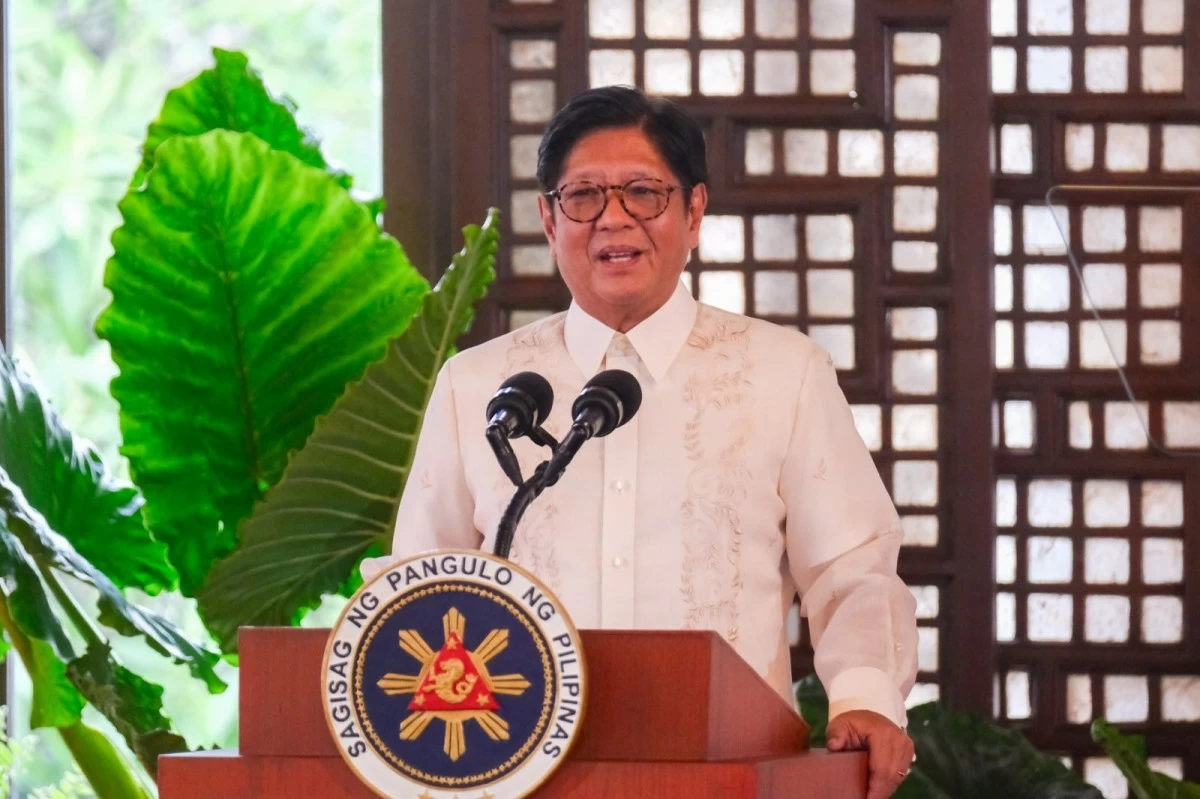
President Ferdinand R. Marcos Jr. leads the launch and ceremonial turnover of the World Bank Group Philippines Country Partnership Framework (CPF) for Fiscal Years 2026–2031 at the Kalayaan Hall, Malacañan Palace on July 29, 2025. (Photo courtesy of PPA/Yummie Dingding)
During the ceremonial turnover of the World Bank Group Philippines Country Partnership Framework (CPF) for Fiscal Years 2025-2031 on Tuesday, July 29, Marcos said none of the government's programs in health, disaster response, digital transformation, and infrastructure would be made possible without the help of the World Bank.
"For eight decades, you have stood with us in confronting our most pressing challenges—from building critical infrastructure to boosting preparedness against climate change and natural disasters," Marcos said in his speech during the event held at the Malacañan Palace.
"Beyond financial assistance, you have provided deep technical expertise, championed the most effective practices, and reignited a collaborative spirit that pushes us to deliver real, lasting impact for Filipinos," he added.
"For all of these and more, thank you. Thank you. Thank you," he conveyed.
Marcos said they are looking forward to the launch of the World Bank Group’s Country Partnership Framework (CPF) for the Philippines for 2025 to 2031.
According to the President, it lays out a clear and strategic path for the next six years.
"It echoes the commitments that I shared yesterday, during the State of the Nation Address: better access to healthcare, stronger support for our students, more jobs and livelihood opportunities for our people," he said.
He emphasized that his administration is prioritizing disaster preparedness through the construction of more evacuation centers, more modern early warning systems, and faster, more coordinated response efforts.
The CPF has three outcome areas that support the Philippine Development Plan 2023–2028, namely health and education, quality jobs in the private sector, and climate change.
Marcos said the government is improving the delivery of public health services, especially in underserved areas—including Bangsamoro Autonomous Region in Muslim Mindanao (BARMM).
He added they are also focused on addressing students’ learning gaps and matching their skills with the market’s needs to ensure that students will grow into future leaders, innovators, and visionaries.
The President further said that they continue to deepen efforts to simplify business regulations, establish stronger infrastructure, and entice more investments.
He reiterated that the government is preparing for the new normal and the effects of global climate change.
"We are modernizing our data systems, expanding social protection, delivering faster, more effective responses in times of crisis," he said.
"We are also redefining resilience to mean learning from our shortcomings and preparing way ahead of time. It is about planning green and sustainable cities, conserving our environment, and bouncing up and forward," he added.
The CPF outlines the strategic approach guiding the World Bank Group’s engagement in the Philippines, prioritizing investments in health and education, private sector jobs, digitization, and economic and social resilience.
The framework aligns with the Philippines’ development goals by ensuring that support is tailored to the most pressing needs and priorities.