






Manila Bulletin
 Philippines
National
'Ibubuhos natin ang lahat-lahat': Marcos vows 'all-out' push in last 3 years
Philippines
National
'Ibubuhos natin ang lahat-lahat': Marcos vows 'all-out' push in last 3 years
Philippines
National
'Ibubuhos natin ang lahat-lahat': Marcos vows 'all-out' push in last 3 years
'Ibubuhos natin ang lahat-lahat': Marcos vows 'all-out' push in last 3 years
Published Jul 28, 2025 05:07 pm


At A Glance
- Marcos said that while the country's economy was performing well on paper, that alone was not enough if ordinary Filipinos continued to struggle.
President Marcos has vowed to go "all out" in the second half of his term, saying his administration would intensify efforts to improve the lives of Filipinos beyond the country’s recent economic gains.
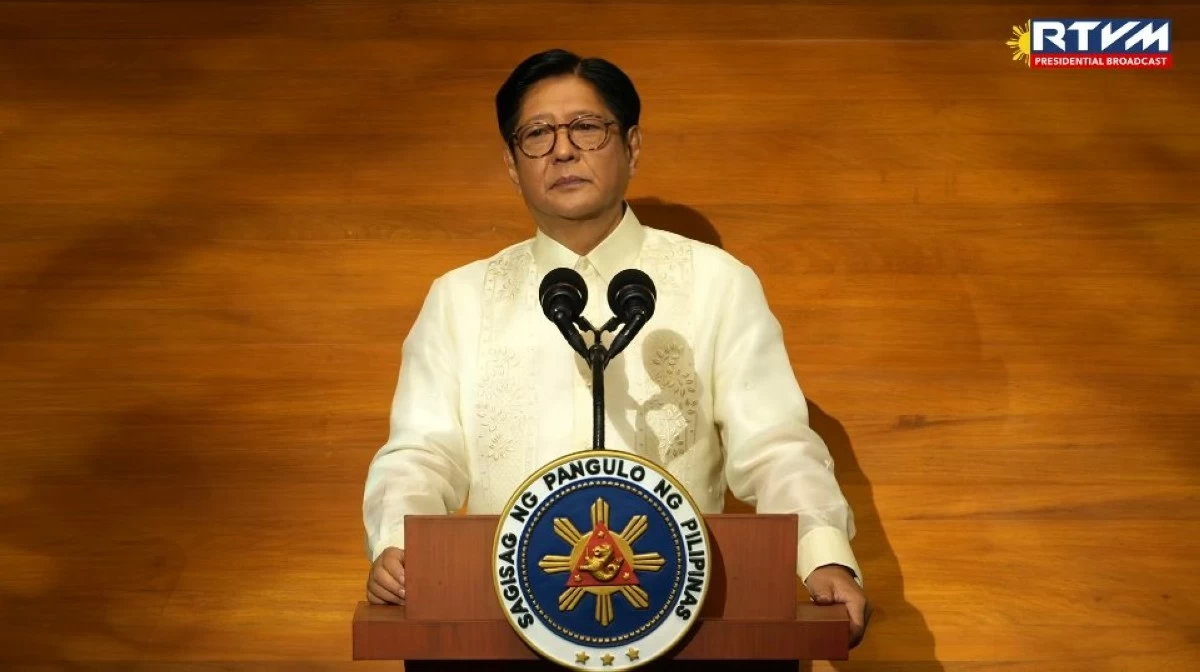
President Ferdinand 'Bongbong' Marcos Jr. (RTVM)
In his fourth State of the Nation Address (SONA) delivered on Monday, July 28, the President reiterated how the result of the May 2025 elections served as a wake-up call to all politicians.
“Bigo at dismayado ang mga tao sa pamahalaan, lalo na sa mga pangunahing serbisyo (The public is disappointed at the government, especially with the basic services),” he said.
“Ang leksyon ay simple: Kailangan pa natin mas lalong galingan. Kailangan pa natin mas lalong bilisan (The lesson is simple: We need to be better and faster),” he added.
Marcos said that while the country’s economy was performing well on paper, that alone was not enough if ordinary Filipinos continued to struggle.
“Kung datos lang ang pag-uusapan, maganda ang ating ekonomiya at tumaas ang kumpiyansa ng mga negosyante. Bumaba ang inflation, at dumami rin ang trabaho (If we talk only of data, our economy is doing well and investor confidence is up. Inflation has dropped and jobs have increased),” he said.
“Ngunit ang lahat ng ito ay palamuti lamang at walang saysay, kung ang ating kababayan naman ay hirap at nabibigatan sa kanilang buhay (But all these are just decorations and meaningless if our people are still burdened in their daily lives),” he added.
With this, the President said he will no longer “beat around the bush” and stressed the urgency of delivering on his administration’s remaining promises.
“Kaya sa huling tatlong taon ng Administrasyon, ibubuhos pa natin ang lahat-lahat (That’s why in the last three years of the Administration, we will give our all),” he said.
“Hindi lamang upang mapantayan, kundi mahigitan pa ang pagbibigay-ginhawa sa ating mga kababayan (Not only to match, but to exceed our efforts to ease the lives of our countrymen),” he added.
Livelihood and job creation
President Marcos placed job creation and livelihood at the center of his development agenda, citing decent employment as the most effective way to combat poverty and hunger.
“Maayos na hanapbuhay talaga ang mabisang pantiyak laban sa kahirapan at laban sa gutom (Decent jobs are truly the most effective safeguard against poverty and hunger),” he said.
“Dumarami ang mga nalilikhang hanapbuhay sa ating bansa ngayon (More and more jobs are being created in our country today),” he added.
To address the needs of the remaining unemployed population, Marcos said government agencies would expand programs to reach the remaining four percent of our labor force who are still unemployed.
He added that the government would continue providing access to capital and business training to help microentrepreneurs build sustainable livelihoods.
“Ipagpapatuloy natin ang pagbibigay ng puhunan sa mas marami pang negosyante para makapagsimula ng maliit na negosyo o microenterprise, sa mababang interest, at walang kolateral (We will continue to provide capital to more entrepreneurs to start small businesses or microenterprises, at low interest and without collateral),” Marcos said.
“Pati na rin ang kapital at proteksyon para sa mga yamang-isip (This includes capital and protection for intellectual property ventures),” he added.
Microenterprises and inclusive growth
According to President Marcos, supporting grassroots entrepreneurship was key to helping poor families achieve self-sufficiency.
“Patuloy tayong magbibigay ng libreng training at puhunan para makapagtayo sila ng sariling negosyo (We will continue providing free training and capital so they can build their own businesses),” he said.
He added that the administration’s goal was to assist up to 2.5 million poor families through livelihood support.
“Hindi tayo titigil hanggang halos 2.5 milyong maralitang pamilya ang natulungan nating magkaroon ng kanilang sariling maliit na negosyo (We will not stop until we’ve helped around 2.5 million poor families establish their own small businesses),” he said.
Marcos also pushed for investments in industries seen as vital to economic growth, such as automotive manufacturing, biotechnology, construction, and energy.
“Palalaguin natin ang mga industriya—mga pabrika ng sasakyan, hulmahan, at electronics, biotechnology, pharmaceuticals, critical minerals, telang Pinoy, Halal, construction, at mga planta ng kuryente (We will grow industries—car factories, molds, electronics, biotechnology, pharmaceuticals, critical minerals, Filipino textiles, Halal products, construction, and power plants),” he said.
Invest in agriculture
Marcos called on Filipino business leaders to channel more investments into the agricultural sector.
“Nananawagan pa rin ako sa ating mga negosyante: Mamuhunan kayo sa ating agrikultura (I continue to call on our business leaders: Invest in our agriculture),” he said.
“The Philippines is ready. Invest in the Filipino,” he added.
Food security
Addressing the long-standing campaign promise to bring rice prices down to P20 per kilo, Marcos said the government had shown it could be done without harming farmers.
He said the rollout of the expanded Kadiwa program, funded with P113 billion, would bring affordable rice and other goods closer to communities across the country.
“Ilulunsad na natin ito sa buong bansa, sa pamamagitan ng daan-daang Kadiwa Stores at Centers sa iba't ibang Iokal na pamahalaan (We will launch this nationwide through hundreds of Kadiwa Stores and Centers in different local governments),” he said.
However, President Marcos issued a stern warning to traders who would take advantage of farmers or manipulating prices.
“Binabalaan ko ang mga trader na magtatangkang mag-manipula ng presyo ng palay at bigas, o manloloko ng mga magsasaka. Hahabulin namin kayo, dahil ang ginagawa ninyo ay economic sabotage (I am warning traders who try to manipulate rice and palay prices, or cheat farmers—we will go after you because what you’re doing is economic sabotage),” he said.
To control meat prices, the President said the government was boosting local pork production and constructing biosecure facilities.
He likewise listed several priority crops the government is promoting: rice, corn, pineapple, banana, mango, coffee, cacao, calamansi, sugarcane, onions, and garlic, among others.
Marcos also reiterated his commitment to revitalizing the coconut sector.
“Milyon-milyong Pilipino ang umaasa sa puno ng niyog bilang pangunahing kabuhayan... itutuloy natin ito hanggang isandaang milyong puno ng niyog ang ating maitatanim sa buong Pilipinas (Millions of Filipinos rely on coconut trees as their main livelihood… we will continue until we plant 100 million coconut trees nationwide),” he said.
He urged Congress to amend the Coconut Farmers and Industry Trust Fund Act “to better suit the needs of farmers.”
Land reform and youth in agriculture
Marcos said the government was accelerating land distribution to ensure generational continuity in farming.
“At para sa susunod na salinlahi ng mga magsasaka, tiyak na magiging kanila na nang tuluyan ang lupang sinasaka nila (For the next generation of farmers, the land they till will finally be theirs),” he said.
“Kasalukuyang pinapabilis ng DAR ang pamamahagi ng mga CLOA at mga E-Titles (The Department of Agrarian Reform is currently fast-tracking the distribution of Certificates of Land Ownership Award and electronic land titles),” he added.
Massive infrastructure push continues
Meanwhile, President Marcos assured Filipinos that his administration’s infrastructure program would remain a priority.
“Asahan ninyo, magpapatuloy ang malawakang programang pang-imprastraktura ng Administrasyon (You can expect that the Administration’s wide-scale infrastructure program will continue),” he said.
He said major projects—including roads, railways, airports, seaports, irrigation, and housing—were being implemented nationwide.
Transport and corruption watch
Marcos specifically mentioned the rehabilitation of the PNR Bicol Line, which was damaged by Typhoon Kristine, and ordered close monitoring of related projects.
“Inaatasan ko ang DOTr at DPWH na bantayang mabuti ang mga proyekto sa kahabaan ng Quezon patulak ng Bicol (I am directing the Department of Transportation and the Department of Public Works and Highways to carefully monitor projects stretching from Quezon to Bicol),” he said.
The President also raised concerns over the condition of the Guadalupe Bridge and warned against poor workmanship and corruption in infrastructure.
“Ang rehabilitasyon din ng Tulay ng Guadalupe ay sukdulan na ring kailangan... Kaligtasan na ng publiko ang nakataya (The rehabilitation of the Guadalupe Bridge is urgently needed… Public safety is at stake),” he said.
With this, President Marcos vowed not to let corruption go unpunished.
“Sa mga proyekto, hindi natin papayagan at palalampasin ang mga katiwalian sa pangangasiwa; ang kapalpakan sa pagdisenyo at sa pagkakagawa; ang mababang kalidad at marupok na mga materyales; ang pagka-antala ng proyekto; at ang kapabayaan sa tamang pagmentina at pagkumpuni (In these projects, we will not allow corruption, design flaws, poor-quality materials, delays, or neglect in maintenance and repair),” he said.