






Manila Bulletin
 Business
Trade & Industry
DOE: Private developers keen on building ports for offshore wind projects
Business
Trade & Industry
DOE: Private developers keen on building ports for offshore wind projects
Business
Trade & Industry
DOE: Private developers keen on building ports for offshore wind projects
DOE: Private developers keen on building ports for offshore wind projects
Published Jul 16, 2025 02:05 pm


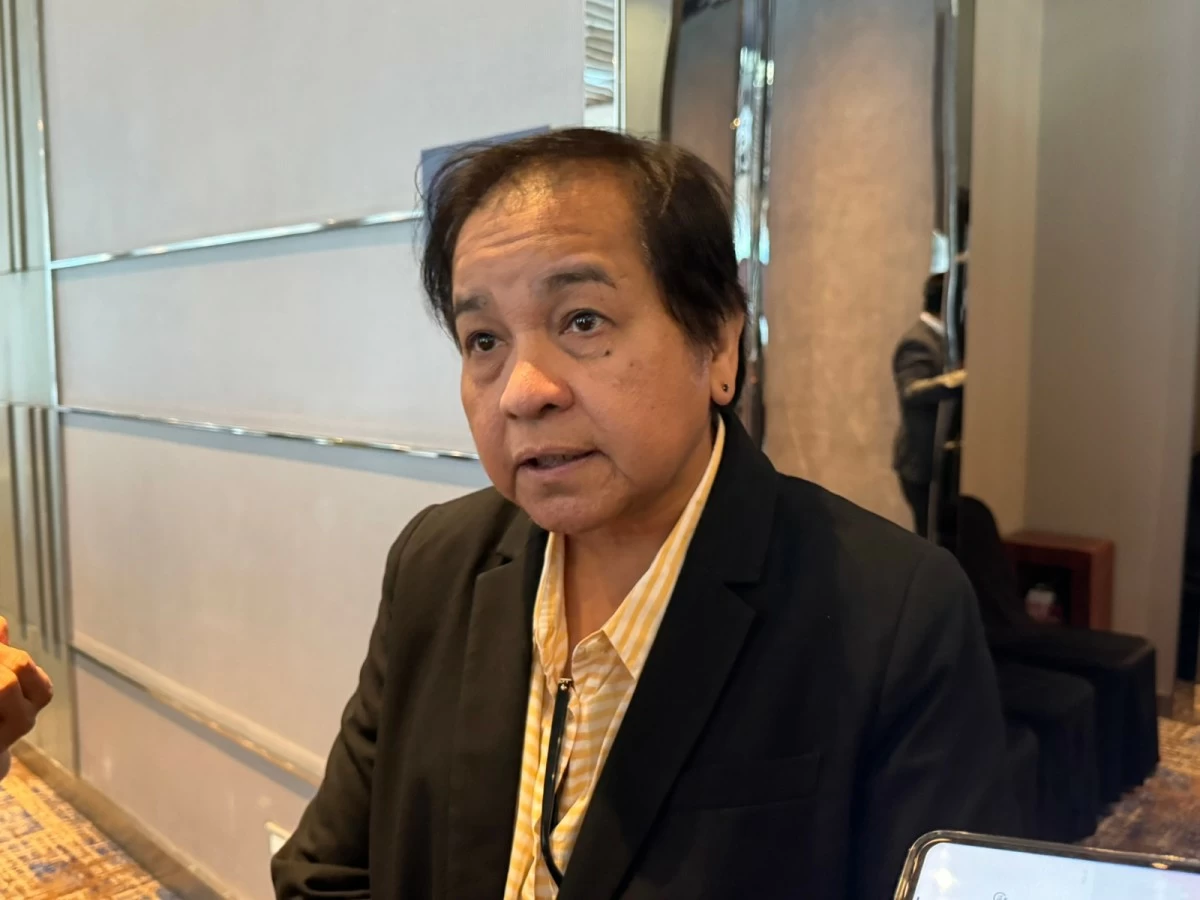
Energy Assistant Secretary Mylene Capongcol
The Department of Energy (DOE) said there is significant interest from private port developers in establishing facilities for incoming offshore wind (OSW) projects under the fifth round of the Green Energy Auction (GEA-5).
Energy Assistant Secretary Mylene Capongcol told reporters that the success of OSW developments, especially the projected 3.3 gigawatts (GW), hinges on port availability.
“We're looking into GEA-5 [to see] if there will be adequate ports,” Capongcol told reporters. “Some have expressed interest in the development of the ports, of course, from the private sector, even with the PPA (Philippine Ports Authority), continuously being engaged by the DOE.”
She added, “In a few months, we'll know the finality. The delivery date for offshore wind is between 2020 and 2030, so it's still a bit long. But of course, that's the requirement for our OSW developers: they should have identified which ports they will construct and stage their equipment.”
While a port feasibility study is ongoing, Capongcol assured that port developments have been considered.
“We're still negotiating with the PPA and private port developers willing to invest...That will cater to the possible 3.3 GW of OSW. But for now, we cannot say the full details because we're working it out,” she stated.
Capongcol also noted that over 80 OSW contracts have been issued, with a majority utilizing floating technologies over bottom-fixed offshore installations.
“Floating is for 50 meters deep and higher. The bottom-fixed is lighter and has readily available technology,” she explained. “But we're not discounting the floating. For now, at least we'll experience and see how offshore wind will be developed.”
Beyond port availability, Capongcol emphasized the critical need for these projects to be connected to the National Grid Corporation of the Philippines (NGCP) grid.
When asked about potential oversubscription in GEA-5 projects, she cautioned, “These will be subject to the grid because you have to integrate it there. Is the grid available? Do you have the same capacity available to connect them? Because remember, OSW is not on land.”
The DOE stressed that these projects require point-to-point dedicated facilities and clearly defined turbine locations. Projects could face force majeure if connection or port access is unavailable, excusing them from contractual obligations.
So far, Capongcol indicated that six projects out of the 3.3 GW capacity show potential for OSW development.
Despite the recent resignation of Energy Regulatory Commission (ERC) Chairperson Monalisa Dimalanta and the retirement of two ERC commissioners, Capongcol assured that the DOE does not anticipate delays in the offshore wind auction.
“We don't see any delays because the ERC has already issued the GEAR prices for GEA-4, but we're still waiting on GEA-5,” she said. “There are directors and other commissioners who are familiar with the GEA GEAR pricing, so it's already there... Except that the final decision has to wait for the commission’s completion.”
The DOE hopes GEA-5 will proceed within the third quarter of this year, following a public consultation on its terms of reference and potential GEAR prices for bidders.