






Manila Bulletin
 Business
Banking & Finance
World Bank commits $350-million loan to boost Philippine agri-MSME financing
Business
Banking & Finance
World Bank commits $350-million loan to boost Philippine agri-MSME financing
Business
Banking & Finance
World Bank commits $350-million loan to boost Philippine agri-MSME financing
World Bank commits $350-million loan to boost Philippine agri-MSME financing
Published Jul 14, 2025 12:00 am
|
Updated Jul 12, 2025 01:26 pm


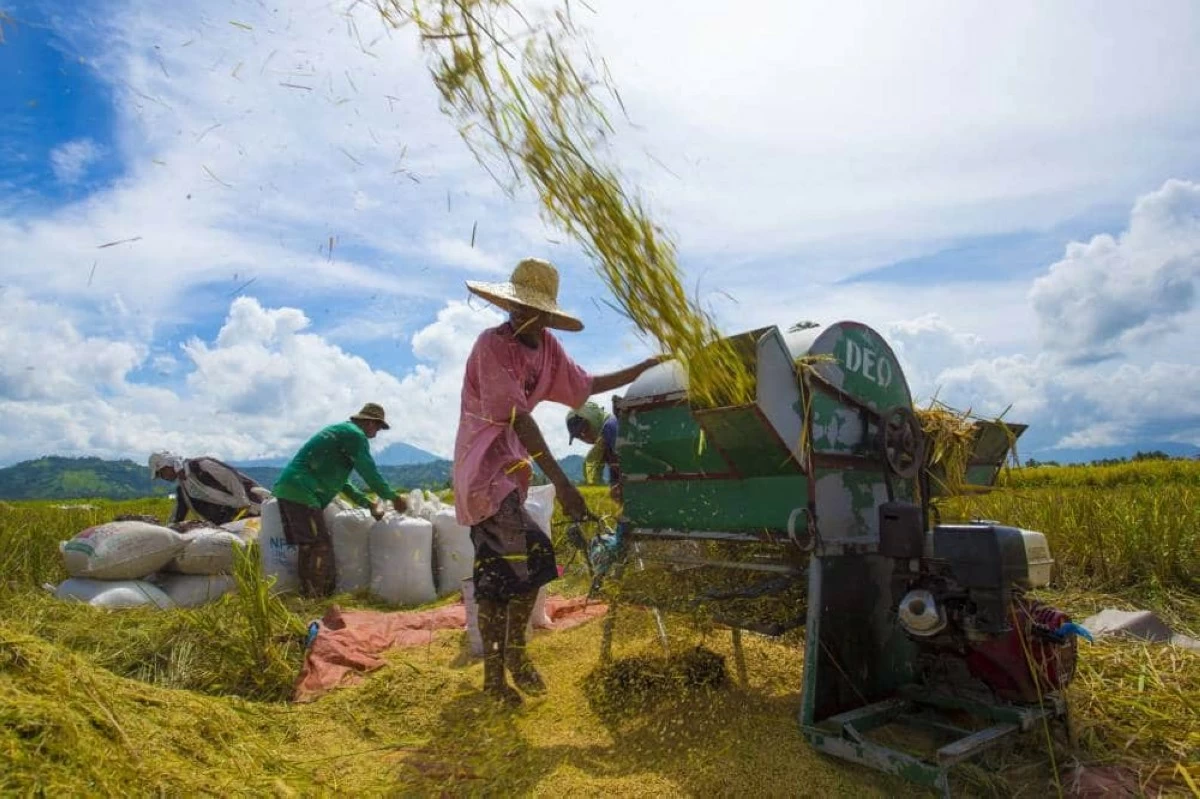
The Washington-based World Bank has committed to lend the Philippines $350 million, or over ₱19 billion, for an upcoming Department of Agriculture (DA) project aimed at extending financing support to small agri-businesses.
A July 11 project information document showed a project cost of $873 million, or more than ₱49 billion, for the DA’s Improving MSME Access to Finance for Productivity and Resilience to Climate Shock project. MSMEs are micro, small, and medium enterprises, which account for over 99 percent of businesses in the country, around two-thirds of total nationwide employment, and more than two-fifths of gross domestic product (GDP).
The remainder of the project cost would be funded by $515 million in unguaranteed commercial financing, plus $8 million from the Global Shield Financing Facility (GSFF), a multi-donor trust fund hosted by the World Bank, serving as its flagship program on climate and disaster risk finance.
As Manila Bulletin reported earlier, this World Bank-backed investment project financing (IPF) is aimed at increasing access to credit and insurance for agri-MSMEs, farmers, and fisherfolk, toward higher firm productivity and resilience to climate shocks.
The World Bank board is expected to approve this loan on March 26, 2026. The Department of Finance (DOF) will borrow on behalf of the Philippine government.
According to the latest information, this project loan is poised to become the first financial sector IPF to be undertaken by the World Bank in the Philippines.
“Component 1 ($230 million) entails a blended-finance credit facility expected to leverage World Bank funds at least 2.5 times. Component 2 ($77.5 million) entails establishing the first agricultural co-insurance pool in the country, enabling private-sector agricultural insurance at scale. Component 3 ($35 million) entails addressing key ecosystem challenges to agricultural credit and insurance. Component 4 ($15 million) is about project management,” the document said.
The World Bank lamented that despite MSMEs’ significant contributions to the economy, they still “face a significant financing gap.”
The lender noted that MSMEs received only 4.9 percent of the Philippines’ total bank loan portfolio, with a funding gap of between $9 billion and $21.5 billion, driven by banks’ risk aversion and MSMEs’ limited collateral or credit history.
Universal and commercial banks (U/KBs) allocate just four percent of their loans to MSMEs—far below the 26-percent share from rural and cooperative banks—with most MSME loans going to wholesale and retail trade, other services, and manufacturing, the World Bank added.
At the same time, the World Bank cited that the agriculture sector—at the forefront of food security, poverty reduction, as well as rural development—is similarly facing a “persistent” financing gap.
According to the World Bank, although agriculture employs about a quarter of the national labor force, its GDP contribution has fallen below 10 percent due to low productivity, climate vulnerability, and limited access to private sector financing, with investment shrinking by six percent annually from 2017 to 2022.
Also, despite a 26.2-percent rise in agricultural loans from 2021 to 2024, they make up only 2.1 percent of total bank lending—far below the mandated quotas of the Agri-Agra Reform Credit Act of 2009 and its 2022 amendment—with rural banks allocating over 10 percent and U/KBs contributing less than five percent, amid persistent high-risk perceptions worsened by events like African swine fever (ASF).
The World Bank also noted that “the provision of agricultural insurance faces multiple challenges, with a public sector-led model achieving a limited number of insured farmers and low insurance coverage,” amid “significant” risks like crop failure, natural calamities, and pests, among others, threatening agri-MSMEs, farmers, as well as fisherfolk.
“The Philippines is among the few remaining countries in the world with a public sector-led provision of agricultural insurance and one of the heaviest subsidized schemes,” the lender pointed out, referring to the DA-attached, state-run Philippine Crop Insurance Corp. (PCIC).
“Although PCIC insured almost 45 percent of farmers and fisherfolk in 2023, its insurance accounts for just five percent of the total value of agricultural production at risk,” the World Bank said.
On the other hand, “private-sector involvement remains minimal due to a lack of access to government subsidies, data limitations, taxes on private insurance premiums, and perceived riskiness of agricultural insurance,” it added.
“Recent climatic events, like the El Niño-induced drought, underscore the need for new insurance products. With existing insurance lacking in coverage, accessibility, and affordability, many farmers remain vulnerable to financial losses, discouraging investments in productivity-enhancing technologies and practices,” according to the World Bank.