






Manila Bulletin
 Philippines
National
'Not the time to regress': Education group backs improvement, not repeal, of K to 12
Philippines
National
'Not the time to regress': Education group backs improvement, not repeal, of K to 12
Philippines
National
'Not the time to regress': Education group backs improvement, not repeal, of K to 12
'Not the time to regress': Education group backs improvement, not repeal, of K to 12
PEAC pushes for urgent reforms amid calls for the program's abolishment
Published Jul 11, 2025 10:18 pm


At A Glance
- Scrapping K to 12 is not the answer, says PEAC
- The group calls for reforms to ensure equity, quality, and opportunity for all Filipino learners
- PEAC urges urgent reforms to K to 12, warns against repeal, and calls for stronger support for learners, teachers, and SHS providers
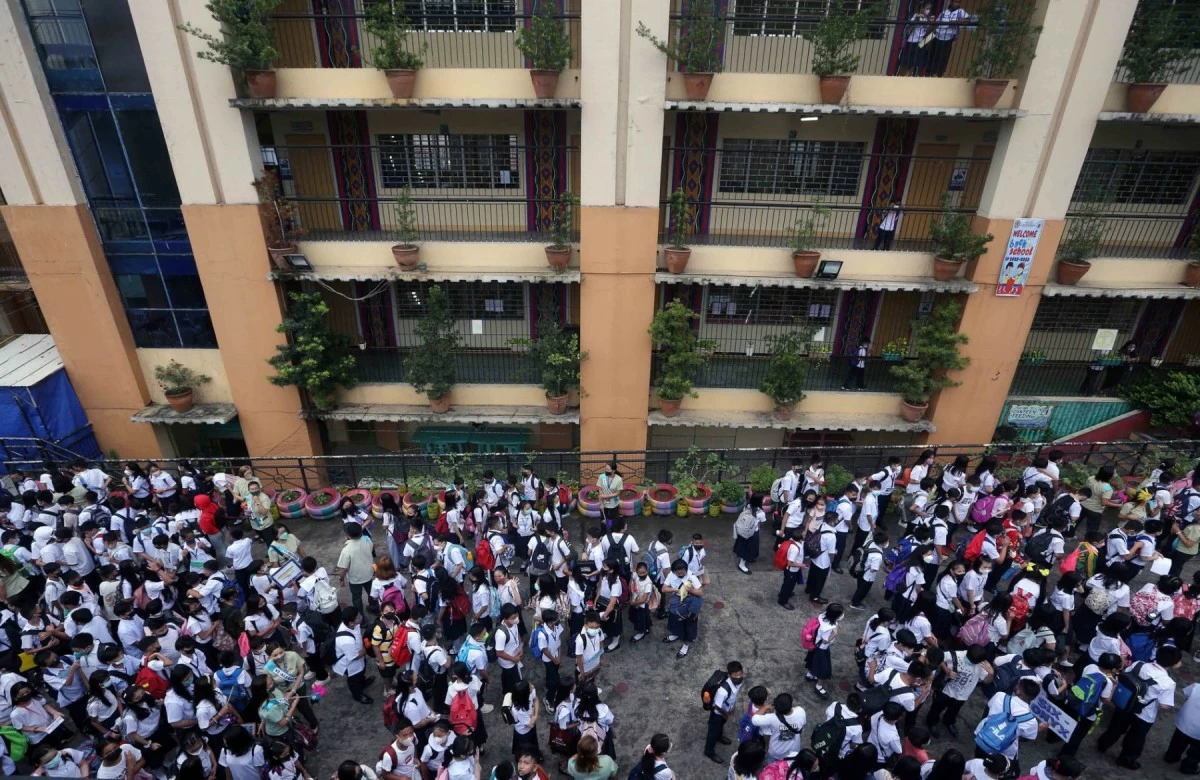
K to 12 reforms in the Philippines: PEAC backs improvement, not repeal, stressing the need for equity, SHS support, and curriculum stability. (MARK BALMORES / MANILA BULLETIN / FILE)
Amid renewed public scrutiny and growing calls for its abolishment, the Private Education Assistance Committee (PEAC) on Friday, July 11, issued a strong appeal to preserve and reform the K to 12 basic education program.
In a statement, PEAC stressed that while frustrations surrounding the program’s implementation are valid, scrapping K to 12 would be a grave mistake that would undo key gains in educational equity and quality.
“We hear the discontent—they are real and valid,” said PEAC Executive Director Doris Ferrer. “But the answer is not to dismantle a policy designed to provide equal opportunities to Filipino learners. The solution is to implement it effectively and efficiently,” she added.
K to 12’s primary intent
PEAC said the K to 12 program was introduced to close long-standing gaps between public and private school students by providing broader access to college preparation, employment pathways, and entrepreneurship training.
“K to 12 is fundamentally a pro-poor policy,” Ferrer said. “To undo it now would be to reverse a critical step toward equity in our education system,” she added.
Ferrer emphasized that before the reform, “only students from private schools had access to more comprehensive programs that better prepared them for different pathways such as college, employment, and entrepreneurship.”
Reforms in three priority areas
PEAC urged the government and stakeholders across the education sector to act urgently on three critical fronts: curriculum stability and credible assessments, quality assurance for Senior High School (SHS) providers, and support mechanisms for learners and teachers.
Curriculum stability and credible assessments, PEAC said, would help standardize and strengthen the K to 12 curriculum while introducing transparent tools to track learning outcomes.
Quality assurance for SHS providers, through the enforcement of stringent quality benchmarks for both public and private institutions, would help ensure consistent learner experiences, PEAC added.
The group noted that enhanced support mechanisms for learners and teachers would address persistent resource gaps through an expanded voucher system and stronger public-private partnerships, particularly in disadvantaged communities.
Repeal risks jobs, wastes investments
PEAC also warned that repealing the K to 12 program would have far-reaching consequences, including the displacement of thousands of trained SHS teachers and the loss of billions in infrastructure and capacity investments made since the program’s rollout in 2012.
“This is not the time to regress,” Ferrer said. “It is the time to prove our resolve to reform, improve, and fulfill the promise of K to 12,” she added.
The bottom line
As debates continue over the future of K to 12, PEAC's message is clear: fix the system, don’t scrap it.
The group stands firm in advocating for evidence-based reforms to strengthen the program's impact, rather than reversing a policy that holds long-term potential for inclusive, globally aligned education in the Philippines.
“Let us build a future-proof education system that every Filipino student and teacher can depend on,” Ferrer added.