






Manila Bulletin
 Philippines
National
Why removing K to 12, Senior High School could hurt poor Filipinos the most
Philippines
National
Why removing K to 12, Senior High School could hurt poor Filipinos the most
Philippines
National
Why removing K to 12, Senior High School could hurt poor Filipinos the most
Why removing K to 12, Senior High School could hurt poor Filipinos the most
PBEd and other education stakeholders warn that removing the reform program is 'more anti-poor,' and are calling for unified action to strengthen its implementation
Published Jul 7, 2025 09:59 pm


At A Glance
- PBEd and its partners warn that removing the SHS program is "more anti-poor"
- They emphasized that education reforms should be strengthened—not dismantled
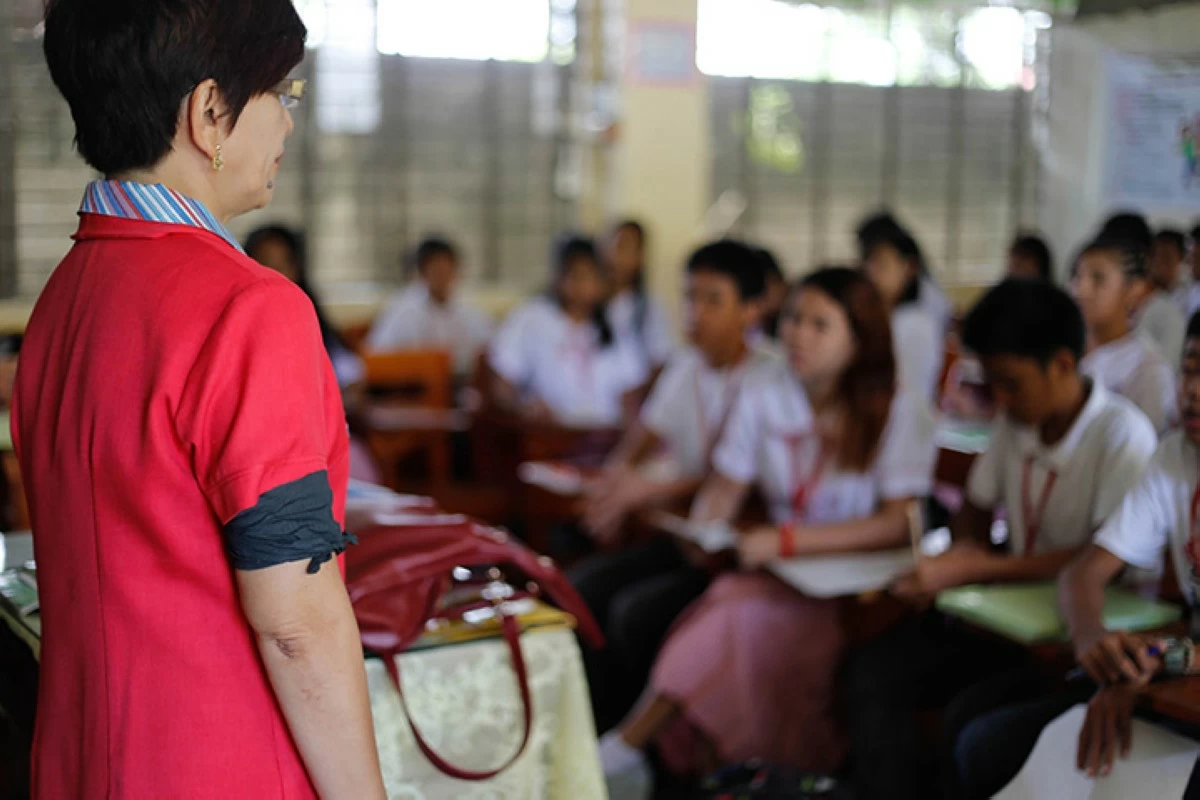
Reforms, not reversal: Removing K to 12 could worsen inequality in the Philippines and hurt poor families the most, according to PBEd and other education advocates. (Manila Bulletin / file photo)
Removing the K to 12 program, particularly its important component --- the Senior High School (SHS) --- would be a “step backward” for Philippine education and would disproportionately harm poor students, according to the Philippine Business for Education (PBEd) and education stakeholders.
Amid calls for the complete abolition of the K to 12 program and the scrapping of the SHS program, PBEd President Chito Salazar on Monday, July 7, warned that such a move would hurt poor students the most.
“Matagal na sinasabi kung bakit tanggalin ang K to 12—kasi extra two years, nahihirapan ang mga magulang at pamilya pero kung aalisin natin ito, mas lalong magiging anti-poor (People have long said we should scrap K to 12 because of the extra two years, which burden parents and families but if we remove it, it will become even more anti-poor),” Salazar said, during the presentation of the 2025 State of Philippine Education report.
Instead of scrapping the system, he urged the government to address learning gaps and implement meaningful improvements to ensure equity and employability for all Filipino learners.
Removal will worsen inequality, hurt poor families
Salazar stressed that removing K to 12 and the SHS program is “more anti-poor” because it eliminates a vital opportunity for students from low-income families to gain skills and certifications that help them find jobs or start small businesses after two additional years of schooling.
While wealthier families can afford to send their children to college, many low-income households rely on the K to 12 program to make their children employable by age 18.
Without those two additional years of specialized training in SHS, poor students are left with fewer options—further widening the inequality gap.
A move that’s ‘more anti-poor’ than you think
Salazar explained that even before K to 12, elite private schools already offered 12 years of education—including kindergarten and a preparatory year—while most public school students only had access up to Grade 10.
Reverting to the old 10-year cycle, he warned, would further widen the gap between rich and poor students.
“So parang sinasabi natin na ang mayayaman, puwede mag-12 years, pero ang mahihirap hanggang 10 years lang. Ganoon ba ang gusto ng gobyerno natin? (So it’s like we’re saying that the rich can study for 12 years, but the poor only get 10. Is that what our government wants?)” he added.
Salazar argued that the two additional years under SHS offer students—especially those from disadvantaged backgrounds—a crucial opportunity to acquire employable skills or pursue further education.
“If they want to go to college or get better jobs, they need the additional two years—that choice should be available to every Filipino family,” he said in a mix of English and Filipino.
Private sector backs K to 12
In a joint statement, the private sector echoed PBEd’s call and affirmed its support for the K to 12 program, while acknowledging its flaws.
Business leaders and civil society organizations reiterated the importance of developing a qualified, competent, and competitive workforce for national development.
They also reaffirmed strong support for the K to 12 basic education program. “Instead of dismantling the program, we call on the government to focus on strengthening its implementation by addressing foundational core skills and aligning education outcomes with the needs of the economy,” the statement read.
The education advocates also urged the Department of Education (DepEd) to invest in improving early grade learning, expand work immersion programs, and collaborate with private institutions to enhance relevance and employability.
Not the system, but the execution
Salazar emphasized that many of the problems blamed on K to 12 stem from poor implementation—not the framework itself.
“Hindi ang K to 12 ang problema. Ang problema ay nagsisimula sa early years—sa K at Grade 3 pa lang, hindi na natututo ang mga bata (K to 12 isn’t the problem. The problem starts in the early years—by Kindergarten and Grade 3, children are already not learning),” Salazar said.
Citing a 2022 World Bank study, PBEd noted that over 90 percent of Filipino Grade 4 students struggle with reading comprehension.
“So bakit natin tatanggalin ang huling pagkakataon ng ating mga estudyante para makahabol? (So why are we taking away our students’ last chance to catch up?),” Salazar asked.
He said that instead of eliminating SHS, the government should treat it as a vital opportunity to remediate students and prepare them for the real world.
While he acknowledged that reforms are still needed, Salazar warned against abandoning what he described as one of the country’s most significant education reforms.
“We don’t expect it to be perfect, but let’s not make the mistake of throwing it away. The burden is on the government to deliver quality education equally to all,” he said.
Meanwhile, the education advocates stressed that the K to 12 program --- besides strengthening core skills --- is designed to “bridge the school-to-work gap and give students practical, preparatory and employable skills.”
“When properly implemented, it equips learners with the competencies needed to succeed in postsecondary education, enter the workforce, or start their own enterprises,” the join statement read. “This is critical in an economy that continues to evolve and where demand for skilled workers is growing,” it added.
Stronger reform over reversal
The success of K to 12, according to education advocates, depends on collective action from the government, private sector, educators, and families.
“The success of K to 12—and the future employability of our youth—relies on shared responsibility. We must collectively commit to making K to 12 work: by closing learning gaps, aligning skills training with industry standards, and supporting every learner’s pathway to gainful employment and lifelong productivity,” they added.