






Manila Bulletin
 Business
The Economy
After CBK privatization, Agus-Pulangi rehab seen up next for private-sector participation
Business
The Economy
After CBK privatization, Agus-Pulangi rehab seen up next for private-sector participation
Business
The Economy
After CBK privatization, Agus-Pulangi rehab seen up next for private-sector participation
After CBK privatization, Agus-Pulangi rehab seen up next for private-sector participation
Published Jul 7, 2025 12:00 am
|
Updated Jul 7, 2025 06:17 am


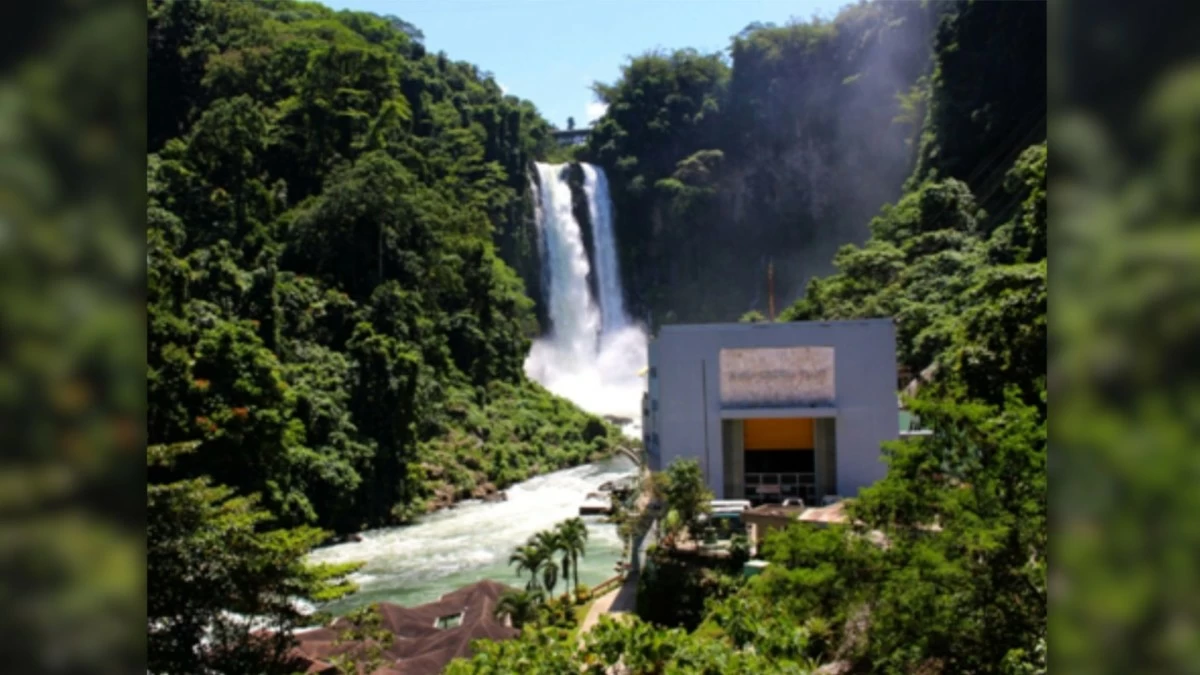
Agus VI Hydroelectric Power Plant (PSALM photo)
After the successful bidding to privatize the Caliraya-Botocan-Kalayaan (CBK) hydroelectric power plants, the government and private-sector players may next look forward to another public-private partnership (PPP) in rehabilitating the decades-old Agus-Pulangi hydropower complex in Mindanao.
Power Sector Assets and Liabilities Management Corp. (PSALM) President and Chief Executive Officer (CEO) Dennis Edward A. Dela Serna told Manila Bulletin over the weekend that the state-run firm “has plans” for the 1,001-megawatt (MW) Agus-Pulangi facilities.
“We are in the process of procuring a transaction advisor (TA). PPP may be the mode, depending on the modes recommended by the TA,” Dela Serna said.
PSALM is procuring a commercial transaction advisor.
A World Bank document published last month showed that PSALM had submitted to the Washington-based multilateral lender an environmental and social commitment plan as part of the requirements to avail of a grant facility for project preparation for a possible PPP scheme for the Agus-Pulangi hydropower complex rehabilitation.
Specifically, the proposed grant would help structure PPP arrangements for the rehabilitation project.
Department of Finance (DOF) Undersecretary Catherine L. Fong, who heads the DOF’s privatization and partnerships group (PPG), told Manila Bulletin that it may take some time before the rehabilitation of Agus-Pulangi under PPP mode pushes through.
Fong noted that the previous Duterte administration had planned to borrow from the World Bank to rehabilitate Agus-Pulangi, but the direction of the current Marcos Jr. administration is toward PPP.
The World Bank Group’s (WBG) private-sector lending arm, International Finance Corp. (IFC), was initially supposed to be the TA before it backed out. The WBG’s current involvement is through the potential grant.
State-run National Power Corp. (NPC) back in 2021 secured a $700,000 grant from the World Bank for Agus-Pulangi rehabilitation project preparation. NPC is the operator, and PSALM is the owner of Agus-Pulangi.
This was in line with the Duterte administration’s plan at the time to rehabilitate Agus-Pulangi before retiring coal-fired plants in Mindanao.
The rehabilitation of Agus-Pulangi was first pitched for possible financing from China before a World Bank loan proposal took shape in 2019, which was later abandoned by the Marcos Jr. administration.
The earlier World Bank-funded project preparation was discontinued and closed in September 2023, after the DOF decided to pursue the Agus-Pulangi rehabilitation project via PPP instead of official development assistance (ODA).
In a report published in September last year, the World Bank said the Agus-Pulangi hydropower complex—consisting of seven run-of-river plants that have been in operation for 25 to 50 years—is now facing serious technical and structural issues.
Due to aging infrastructure and equipment, only 600-700 MW of the installed capacity remains operational, with problems such as cooling system failures and outdated control systems contributing to reduced efficiency and safety risks, the World Bank noted.
Comprehensive modernization of mechanical, electrical, and control systems is needed to restore full capacity and extend the plants’ lifespan by another 30 to 40 years, according to the World Bank.