






Manila Bulletin
 Philippines
National
Marcos activates flood protocols; gov't taps TUPAD beneficiaries for estero cleanup
Philippines
National
Marcos activates flood protocols; gov't taps TUPAD beneficiaries for estero cleanup
Philippines
National
Marcos activates flood protocols; gov't taps TUPAD beneficiaries for estero cleanup
Marcos activates flood protocols; gov't taps TUPAD beneficiaries for estero cleanup
Published Jul 3, 2025 01:13 pm


At A Glance
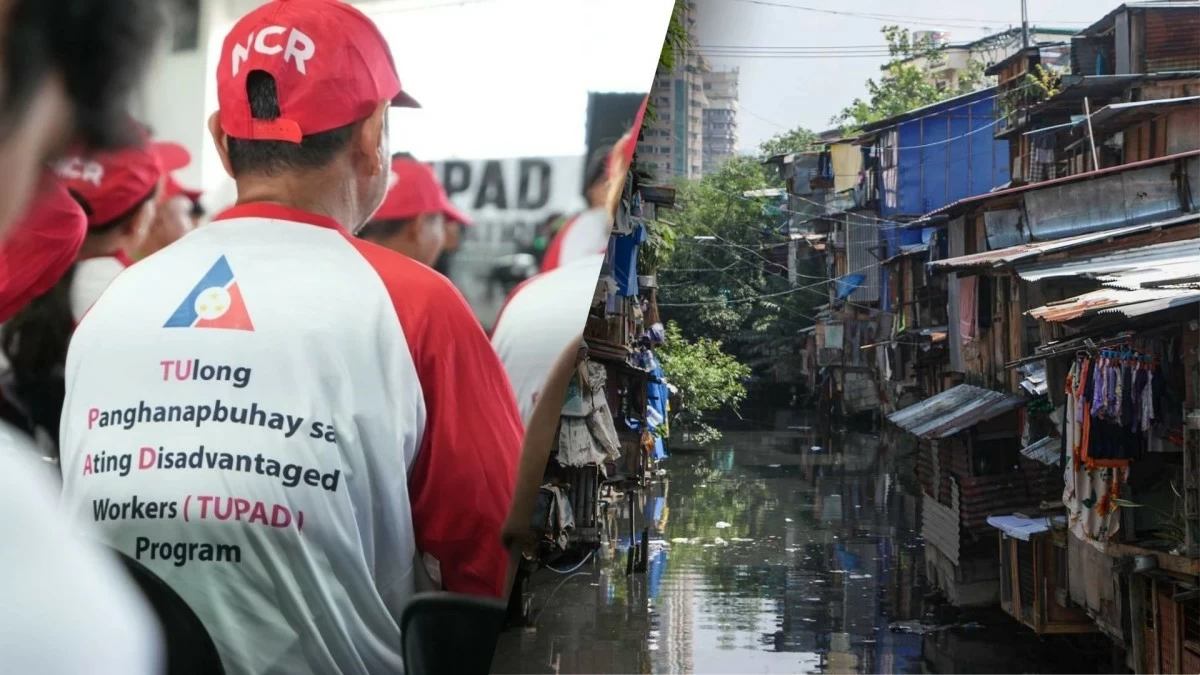
- Castro said the DOLE and the DPWH were also mobilized to assist, with TUPAD beneficiaries enlisted to help clean the waterways.
President Marcos has directed key government agencies to activate disaster preparedness measures as the country braces for incoming rains that may cause flooding, Malacañang said Thursday, July 3.
Photos from Las Piñas PIO and John Louie Abrina/MB
In a press briefing, Communications Undersecretary Claire Castro said the President’s instructions include clearing clogged waterways and strengthening the response capabilities of local disaster offices.
“Pinag-utos na po ng Pangulo na agaran ang paglilinis ng mga drainage dahil ito po ay makakatulong po na maiwasan ang mabilis na pagbaha, lalong-lalo na po dito sa Metro Manila (The President ordered the immediate clearing of drainage systems to prevent rapid flooding, especially in Metro Manila),” she said.
The Palace Press Officer said the Metropolitan Manila Development Authority (MMDA) has already identified 23 priority esteros in the National Capital Region (NCR) and is using modern equipment to expedite cleanup efforts.
She added that the Department of Labor and Employment (DOLE) and the Department of Public Works and Highways (DPWH) were also mobilized to assist, with TUPAD (Tulong Panghanapbuhay sa Ating Disadvantaged/Displaced Workers) beneficiaries enlisted to help clean the waterways.
TUPAD is a short-term employment program of DOLE that provides emergency work for displaced, underemployed, and seasonal workers. Beneficiaries are typically hired for community projects such as cleanup, repair, or rehabilitation activities.
“Maaasahan po natin yung mga TUPAD beneficiaries na tumulong sa paglilinis ng ating mga estero (We can rely on TUPAD beneficiaries for their help in cleaning the esteros),” Castro said.
Meanwhile, the Department of the Interior and Local Government (DILG) has been tasked with ensuring that local government units (LGUs) reinforce their disaster preparedness. This includes activating emergency operations centers, checking evacuation facilities, reviewing contingency plans, and enforcing no-build zones in hazard-prone areas.
Current class suspension system to stay—for now
While DILG Secretary Jonvic Remulla expressed his intention to ask President Marcos to give his department the authority to suspend classes during typhoons for easier coordination, Castro said there was no final decision yet from the Chief Executive.
“Sa ngayon po ay wala pa pong opisyal na sagot ang ating Pangulo patungkol po sa suggestion po ni Secretary Jonvic Remulla (As of now, the President has yet to issue an official response to Secretary Remulla’s suggestion),” she said.
She added that under the current system, it is still the LGU leaders who issue class suspension orders during calamities, a practice that remains until further evaluation.
However, Castro acknowledged concerns from parents and students about delayed class suspension announcements, which sometimes come after children are already at school.
“Mas maganda pong nating itanong ito sa mga liderato po ng mga LGUs. Kung maaari magpagbibigay agad ang mga heads ng LGUs ng mabilisang order... para hindi pa po nakakalabas ang mga bata (It would be best to ask LGU leaders to issue prompt suspension orders so children don’t leave their homes before flooding starts),” she said.
To balance student safety and learning continuity, Castro said the Palace is open to the idea of shifting to online classes on days when on-site schooling is suspended due to inclement weather.
“Siguro dapat makausap din natin ang DepEd (Department of Education), if ever magkakaroon ng no classes, magkaroon din muli ng online classes on that particular day (Maybe DepEd should consider implementing online classes on days when in-person classes are canceled).
Avoid littering to stop floods
Meanwhile, Castro reminded the public to support government efforts by practicing discipline, particularly proper garbage disposal.
“Iwasan na po natin magkalat, magtapon ng mga basura sa mga lugar na mas madalas na bahain (Let’s stop throwing garbage in flood-prone areas),” she said.
“Minsan po tayo rin po ang nagiging dahilan kung bakit mabilis bumaha (Sometimes, we ourselves cause these floods),” she added.