







PH ready for any outcome in US tariff negotiations—Palace
Published Jul 2, 2025 01:00 pm


At A Glance
- In her press briefing, the Palace official said the country is prepared should the ongoing talks between Manila and Washington lead to either retaining, lowering, or increasing the tariff on Filipino imports.
Malacañang said the Philippines is prepared for any scenario as it continues to negotiate a reciprocal tariff agreement with the United States.
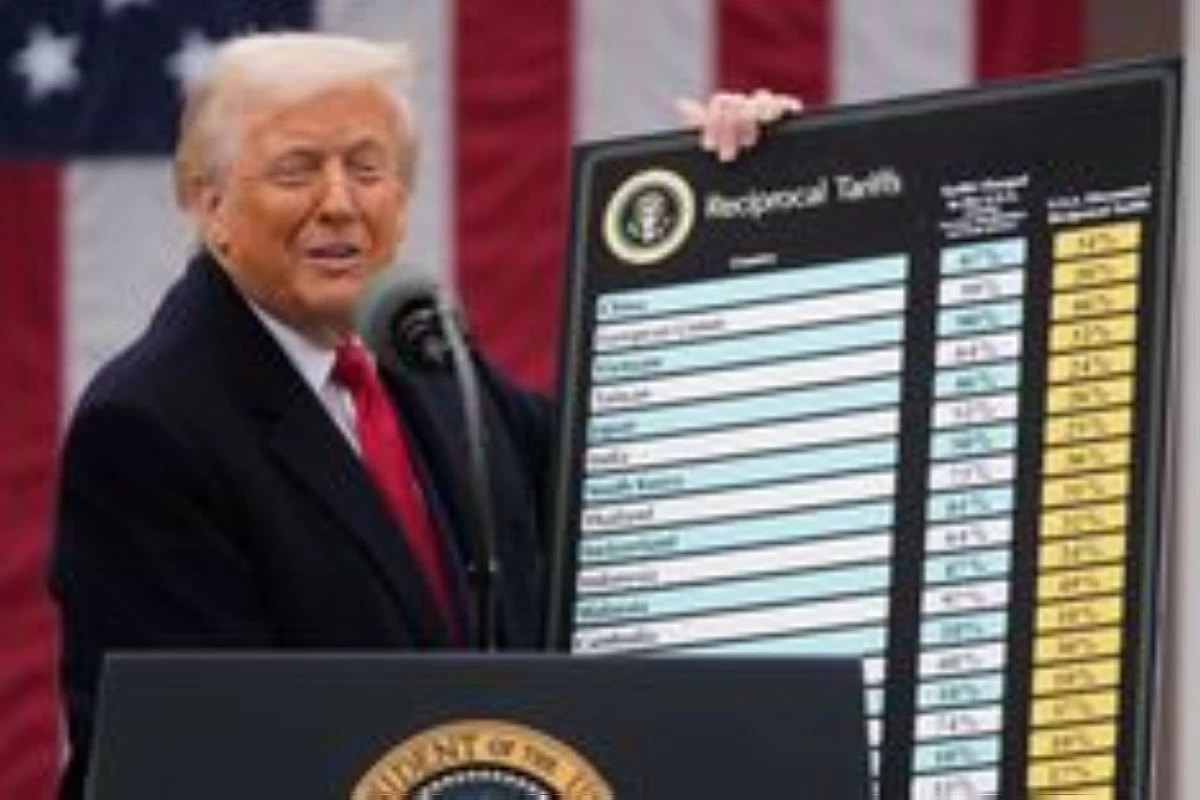
US President Donald Trump (AP)
Communications Undersecretary Claire Castro said this as US President Donald Trump's 90-day pause on the “Liberation Day” tariffs expires on July 9. Trump has imposed a 17 percent tariff on Philippine goods in April.
In her press briefing, the Palace official said the country is prepared should the ongoing talks between Manila and Washington lead to either retaining, lowering, or increasing the tariff on Filipino imports.
“‘Ano’t anuman po ang mangyari dito, kailangan po ang bansa ay handa (Whatever the outcome, the country must be ready),” she said on Wednesday, July 2.
“Kaya ang Pangulo natin at economic team ay lagi pong pinag-aaralan ang mga patungkol dito (That’s why the President and the economic team are constantly reviewing this matter),” she added.
Bilateral talks between the Philippines and the US are ongoing to address the possible effects of Trump’s new tariff policies. While details remain confidential, Castro assured the public that the outcome will be aligned with the country's long-term economic interests.
“Asahan po natin kung anuman po ang magiging resolusyon dito, ito rin po ay para sa ikabubuti ng ating bayan (Whatever the resolution may be, it will be for the benefit of the country),” she said.
During his trip to Malaysia for the 46th Association of Southeast Asian Nations (ASEAN) Summit last month, President Marcos expressed concern over the economic risks posed by the United States’ unilateral tariff regimes, emphasizing the need for a reassessment of ASEAN’s strategic direction.
With the 90-day tariff pause set to expire in July, President Marcos acknowledged the concerns and uncertainties being carefully considered by ASEAN leaders. He said that continued implementation of unilateral tariff measures, if left unaddressed, could pose risks to broader regional and global economic stability.
“Basically, we're just guessing. We don't know what will happen between now and July when the 90 days run out,” he said.
Marcos said that even if tariff measures are eventually reversed, the impact on global business confidence has already been felt.
“Kahit ano pang mangyari (No matter what happens)—we're back to square one tungkol sa tariff. May permanent effect na hindi na mawawala (about the tariff. It has an irreversible permanent effect),” he said.
As a way forward, the President called for stronger regional coordination and deeper economic integration within ASEAN, acknowledging the performance of ASEAN’s economy and the complementarities of their markets within the region.
“We have to depend more on each other, on ASEAN. Malakas naman ang loob namin sa ASEAN member countries. Masigla ang kanilang mga ekonomiya. Masigla ang ating ekonomiya (We are confident in our ASEAN neighbors. We have a robust economy),” Marcos said.
“If we cannot sell to these markets anymore, then let's sell to each other's markets. The best, most solid way forward is to be a reliable partner for each other in ASEAN,” he added.
Earlier this year, President Trump imposed a 10 percent minimum tariff on all imports under the “Reciprocal Trade and Tariffs” policy, heavily impacting Southeast Asia. Cambodia now faces up to 49 percent in duties; Vietnam, 46 percent; and the Philippines, 17 percent.