






Manila Bulletin
 Business
Trade & Industry
DOE names green energy auction winners; offshore wind next
Business
Trade & Industry
DOE names green energy auction winners; offshore wind next
Business
Trade & Industry
DOE names green energy auction winners; offshore wind next
DOE names green energy auction winners; offshore wind next
Published Jun 25, 2025 03:44 pm


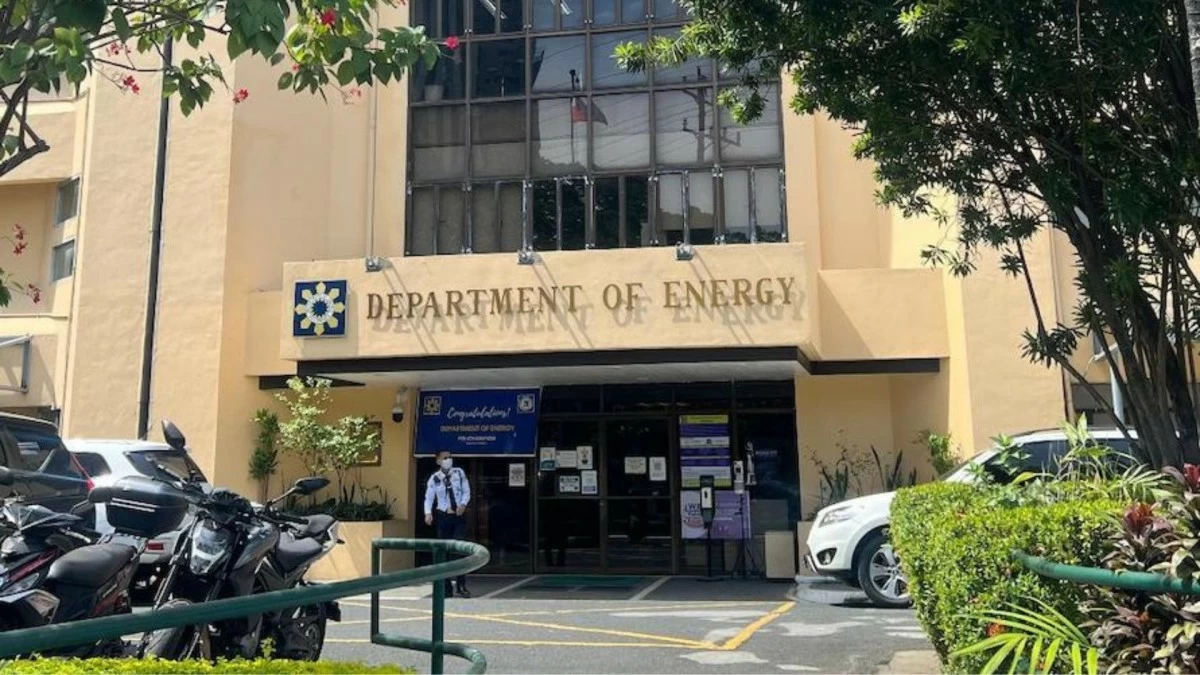
The Department of Energy (DOE) has announced the winners of the third round of its Green Energy Auction (GEA-3), bringing in renewable energy sources including pumped-storage hydropower, impounding hydropower, geothermal, and run-of-river technologies.
In a statement, the DOE said that several developers confirmed their awards on Wednesday, June 25, with projects slated for delivery between 2025 and 2035.
Pan Pacific Renewable Power Phils. Corp. secured awards for five hydropower projects (HPPs). This includes the 150-megawatt (MW) Gened 1 and 150-MW Gened 2 projects, along with a massive 2,000-MW pumped-storage HPP, all to be developed in Apayao.
Coheco Badeo Corp. also won with its 500-MW Kibungan pumped-storage hydropower project. Other pumped-storage winners include Prime Infra-led Olympia Violago Water and Power, Inc. and Ahunan Power, Inc. Olympia Violago will develop the 600-MW Wawa pumped-storage 1 HPP in Rizal, while Ahunan Power will work on the 1,400-MW Pakil pumped-storage HPP in Laguna.
San Miguel Group's San Roque Hydropower, Inc. also snagged awards for three pumped-storage projects: the San Roque Lower East and West plants in Benguet, each with an 800-MW capacity, and the 250-MW Aklan pumped-storage project in Aklan.
For geothermal, Lopez-led Energy Development Corp. (EDC)'s Bac-Man Geothermal Inc. secured wins for its 5.6-MW Bago Binary geothermal plant - Unit 1 in Negros Occidental, and the 21.57-MW Tanawon geothermal power plant - Unit 1 in Sorsogon.
Meanwhile, the DOE is now gearing up for GEA-5, which will exclusively focus on fixed-bottom offshore wind (OSW) technology. Stakeholder dialogues are set to begin soon on the draft guidelines, covering regulatory, technical, and infrastructure considerations to ensure a smooth auction process.
Energy Undersecretary Rowena Guevara, meanwhile, addressed concerns about the initial costs of new renewable energy technologies, such as OSW, during a Media Kapihan on Energy Investment in the Philippines on Wednesday, June 25.
The initial investment for new technologies might sound very high, but eventually it goes down, Guevara told reporters.
She added that the DOE has requested the Independent Electricity Market Operators (IEMOP) to conduct simulations to make sure that our consumers are protected.
Guevara highlighted IEMOP's preliminary price simulations for electricity costs through 2050, factoring in the projected impact of renewable energy technologies from the GEA programs.
From 2026, Luzon, for example, on the average will be ₱4.95 per kilowatt-hour (kWh). By 2050, it will be ₱0.28/kWh, she projected. Visayas will go from about ₱5.28/kWh in 2026 to ₱0.48/kWh by 2050. And lastly, Mindanao is at ₱4.06/kWh and it will go down to ₱0.36/kWh by 2050.