ADVERTISEMENT

Gov't actively seeking new oil sources amid Mideast tensions

Published Jun 24, 2025 03:10 pm
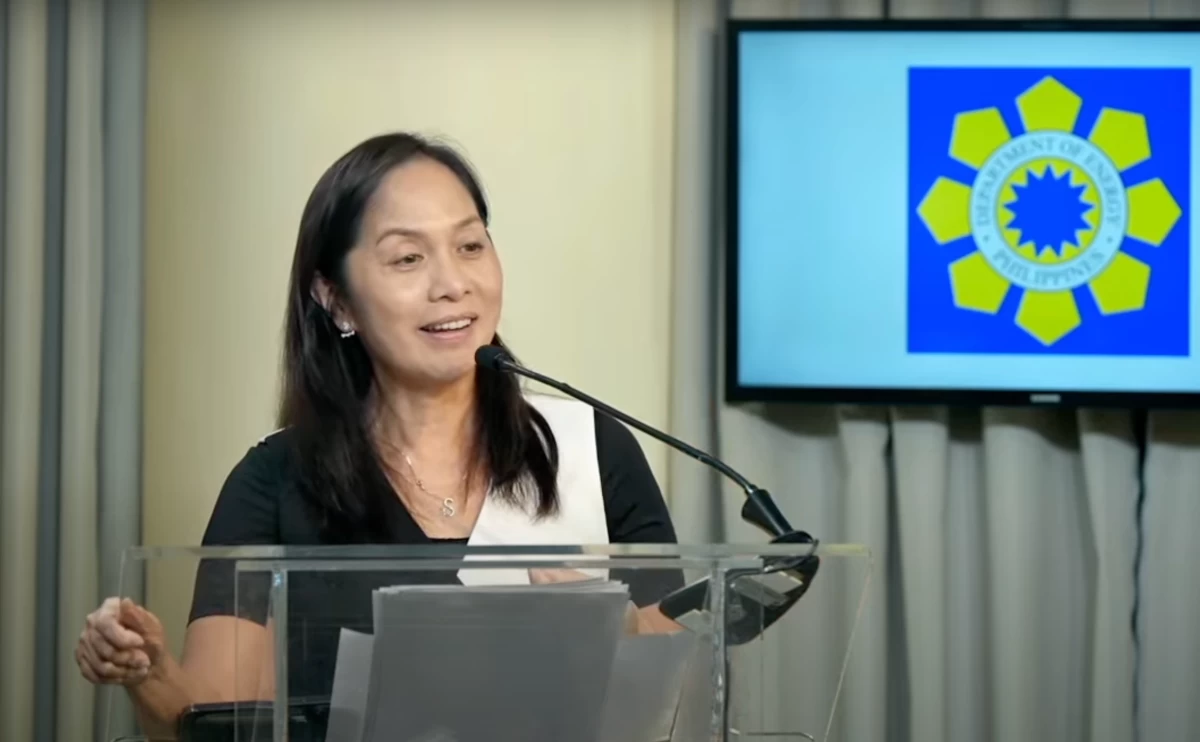
DOE Officer-in-Charge Sharon S. Garin
As the Department of Energy (DOE) grapples with escalating fuel prices driven by tensions in the Middle East, the government is exploring alternative fuel sources to ease the burden on consumers.
During a joint press briefing with the Presidential Communications Office (PCO) on Tuesday, June 24, DOE Officer-in-Charge (OIC) Sharon S. Garin stated that the government can look beyond traditional sources for crude oil.
She noted that while Iran is the third-largest producer within the Organization of the Petroleum Exporting Countries Plus (OPEC+), other options are available.
“There are other OPEC+ [countries] that have in total 5.5 million reserves that they can cover, and if that is not possible, we have other countries like the US [United States], Canada, [and] Brazil. So we have alternatives,” Garin told reporters.
She acknowledged that these alternatives may not be as efficient, but the country has the option to find alternatives.
OPEC+ is a coalition of major oil-producing nations, including some Middle Eastern countries, that collaborate to manage oil production and influence global prices.
Recent strikes between Iran, Israel, and the US have caused Brent crude prices to surge, sparking fears of supply disruptions in the international market, which has in turn impacted oil price adjustments in the Philippines.
Despite these concerns, Garin said that alternative shipping routes exist in addition to diverse sourcing options.
“Actually, Iran is only 1.5 percent of the whole OPEC+ export, because they embargoed oil before. Most of their exports are sent to China,” she explained.
However, while the DOE presented potential alternatives, local oil company Jetti Petroleum cautioned about the potential impact on consumers.
For crude oil, the best source for the country’s sole refinery is still the Middle East, said Leo Bellas, Jetti Petroleum president, in a Viber message.
Bellas noted that importing from other sources is feasible but costly due to increased logistics expenses.
“The cost to bring the crude oil from those other sources will definitely be higher vis-à-vis Middle East. The quality of crude oil varies depending on the source, and can also be a factor if such can be used as feedstock by the refinery in the Philippines,” he explained.
The Jetti president further clarified that the Philippines primarily sources its fuel from Asian refineries, not directly from OPEC+.
“Those refineries have various crude oil sources and may include the US, Canada, and Russia. Refined products from India and the Middle East are also finding homes in Asia, particularly in Singapore,” he added.
Michael Ricafort, chief economist at Rizal Commercial Banking Corp. (RCBC), told Manila Bulletin that while sourcing oil beyond the Middle East would likely lead to higher costs due to transportation and differences in economies of scale or production, it would significantly reduce the risk of supply concerns.
The RCBC economist explained that hedging oil import contracts would prevent spikes and volatility in world oil prices that are determined by external factors, at times, beyond the country’s reasonable control.
EV fleet expected to rise further
Ricafort also suggested that rising petroleum prices could encourage motorists to invest in electric vehicles (EVs), thereby helping reduce the Philippines’ dependence on imported oil.
“Since most vehicles still rely on petroleum, and with the continued increase in vehicle sales correspondingly increasing the need for imported oil/fuels, EVs would be a potential game-changer to reduce reliance on fuel imports,” he stated.
He further elaborated on the benefits of shifting to alternative energy: “Alternative energy sources such as renewable energy (RE) would be preferred in view of the lower cost of RE in recent years due to technological advances and the need to comply with ESG [environmental, social, and governance] standards to shift from coal and other hydrocarbons to RE.”

Related Tags

Department of Energy (DOE) Sharon S. Garin
ADVERTISEMENT
.most-popular .layout-ratio{ padding-bottom: 79.13%; } @media (min-width: 768px) and (max-width: 1024px) { .widget-title { font-size: 15px !important; } }

{{ articles_filter_1561_widget.title }}

.most-popular .layout-ratio{ padding-bottom: 79.13%; } @media (min-width: 768px) and (max-width: 1024px) { .widget-title { font-size: 15px !important; } }

{{ articles_filter_1562_widget.title }}

.most-popular .layout-ratio{ padding-bottom: 79.13%; } @media (min-width: 768px) and (max-width: 1024px) { .widget-title { font-size: 15px !important; } }

{{ articles_filter_1563_widget.title }}

{{ articles_filter_1564_widget.title }}

.mb-article-details { position: relative; } .mb-article-details .article-body-preview, .mb-article-details .article-body-summary{ font-size: 17px; line-height: 30px; font-family: "Libre Caslon Text", serif; color: #000; } .mb-article-details .article-body-preview iframe , .mb-article-details .article-body-summary iframe{ width: 100%; margin: auto; } .read-more-background { background: linear-gradient(180deg, color(display-p3 1.000 1.000 1.000 / 0) 13.75%, color(display-p3 1.000 1.000 1.000 / 0.8) 30.79%, color(display-p3 1.000 1.000 1.000) 72.5%); position: absolute; height: 200px; width: 100%; bottom: 0; display: flex; justify-content: center; align-items: center; padding: 0; } .read-more-background a{ color: #000; } .read-more-btn { padding: 17px 45px; font-family: Inter; font-weight: 700; font-size: 18px; line-height: 16px; text-align: center; vertical-align: middle; border: 1px solid black; background-color: white; } .hidden { display: none; }
function initializeAllSwipers() { // Get all hidden inputs with cms_article_id document.querySelectorAll('[id^="cms_article_id_"]').forEach(function (input) { const cmsArticleId = input.value; const articleSelector = '#article-' + cmsArticleId + ' .body_images'; const swiperElement = document.querySelector(articleSelector); if (swiperElement && !swiperElement.classList.contains('swiper-initialized')) { new Swiper(articleSelector, { loop: true, pagination: false, navigation: { nextEl: '#article-' + cmsArticleId + ' .swiper-button-next', prevEl: '#article-' + cmsArticleId + ' .swiper-button-prev', }, }); } }); } setTimeout(initializeAllSwipers, 3000); const intersectionObserver = new IntersectionObserver( (entries) => { entries.forEach((entry) => { if (entry.isIntersecting) { const newUrl = entry.target.getAttribute("data-url"); if (newUrl) { history.pushState(null, null, newUrl); let article = entry.target; // Extract metadata const author = article.querySelector('.author-section').textContent.replace('By', '').trim(); const section = article.querySelector('.section-info ').textContent.replace(' ', ' '); const title = article.querySelector('.article-title h1').textContent; // Parse URL for Chartbeat path format const parsedUrl = new URL(newUrl, window.location.origin); const cleanUrl = parsedUrl.host + parsedUrl.pathname; // Update Chartbeat configuration if (typeof window._sf_async_config !== 'undefined') { window._sf_async_config.path = cleanUrl; window._sf_async_config.sections = section; window._sf_async_config.authors = author; } // Track virtual page view with Chartbeat if (typeof pSUPERFLY !== 'undefined' && typeof pSUPERFLY.virtualPage === 'function') { try { pSUPERFLY.virtualPage({ path: cleanUrl, title: title, sections: section, authors: author }); } catch (error) { console.error('ping error', error); } } // Optional: Update document title if (title && title !== document.title) { document.title = title; } } } }); }, { threshold: 0.1 } ); function showArticleBody(button) { const article = button.closest("article"); const summary = article.querySelector(".article-body-summary"); const body = article.querySelector(".article-body-preview"); const readMoreSection = article.querySelector(".read-more-background"); // Hide summary and read-more section summary.style.display = "none"; readMoreSection.style.display = "none"; // Show the full article body body.classList.remove("hidden"); } document.addEventListener("DOMContentLoaded", () => { let loadCount = 0; // Track how many times articles are loaded const offset = [1, 2, 3, 4, 5, 6, 7, 8, 9, 10]; // Offset values const currentUrl = window.location.pathname.substring(1); let isLoading = false; // Prevent multiple calls if (!currentUrl) { console.log("Current URL is invalid."); return; } const sentinel = document.getElementById("load-more-sentinel"); if (!sentinel) { console.log("Sentinel element not found."); return; } function isSentinelVisible() { const rect = sentinel.getBoundingClientRect(); return ( rect.top < window.innerHeight && rect.bottom >= 0 ); } function onScroll() { if (isLoading) return; if (isSentinelVisible()) { if (loadCount >= offset.length) { console.log("Maximum load attempts reached."); window.removeEventListener("scroll", onScroll); return; } isLoading = true; const currentOffset = offset[loadCount]; window.loadMoreItems().then(() => { let article = document.querySelector('#widget_1690 > div:nth-last-of-type(2) article'); intersectionObserver.observe(article) loadCount++; }).catch(error => { console.error("Error loading more items:", error); }).finally(() => { isLoading = false; }); } } window.addEventListener("scroll", onScroll); });

Sign up by email to receive news.