ADVERTISEMENT

DOE unveils offshore wind guidebook to streamline development

Published Jun 23, 2025 10:58 am  |  Updated Jun 23, 2025 01:16 pm
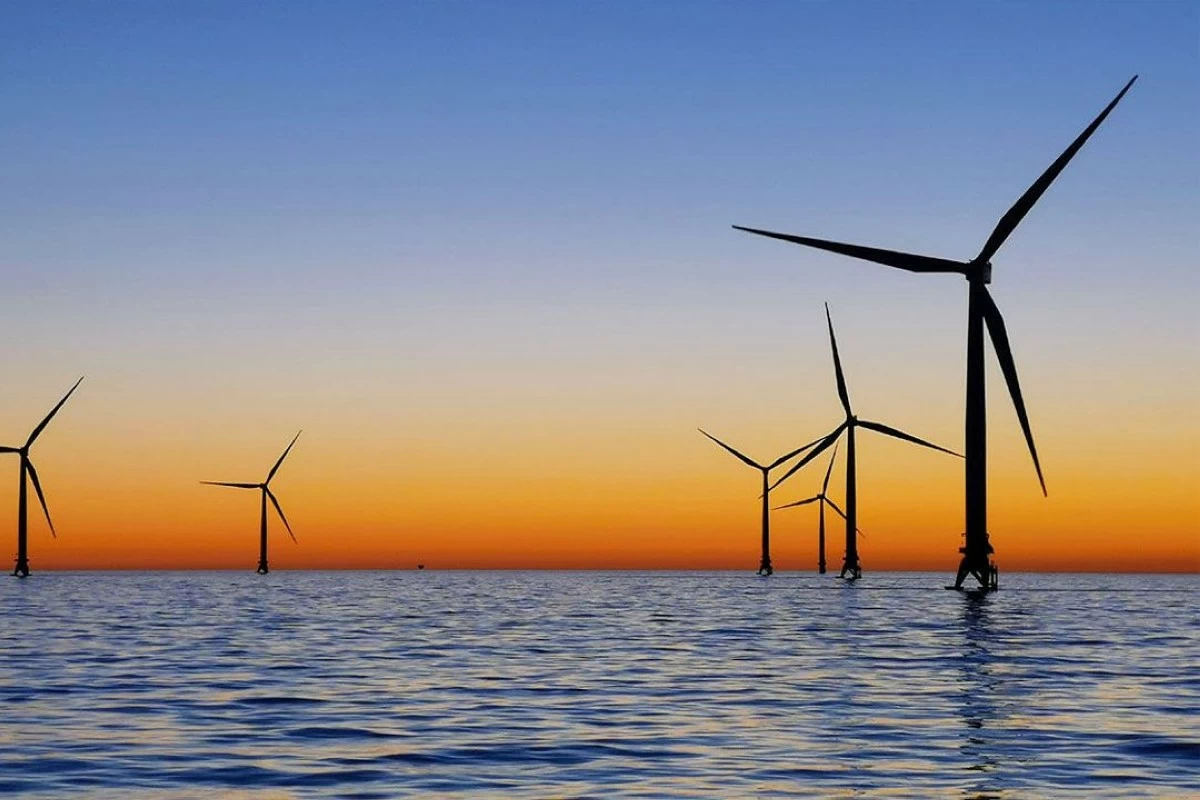
The Department of Energy (DOE), in collaboration with the Southeast Asia Energy Transition Partnership (ETP), has released a guidebook to assist developers and other government agencies in pursuing offshore wind (OSW) projects in the Philippines.
In a statement on Monday, June 23, the DOE unveiled the “Compendium: Guidebook to Permitting and Consenting for Offshore Wind Energy in the Philippines,” which outlines the OSW’s full project cycle, from early site assessments and feasibility studies for construction, operation, as well as decommissioning.
It also highlights various roles of agencies such as the Department of Environment and Natural Resources (DENR), Maritime Industry Authority (MARINA), the Department of Transportation (DOTr), the National Mapping and Resource Information Authority (NAMRIA), Philippine Coast Guard (PCG), and the National Commission on Indigenous Peoples (NCIP).
Aside from developers, this guidebook is said to cover marine spatial planning, environmental impact assessments, and community consultations. This includes how to secure Environmental Compliance Certificates (ECCs), conduct maritime and biodiversity surveys, and obtain Free, Prior, and Informed Consent (FPIC) for indigenous-based sites.
DOE officer-in-charge Sharon S. Garin believed that the guidebook’s timely release is a game-changer, as she stated that “it transforms a complicated process into one that is streamlined, more transparent, and easier to follow for both government and investors.”
Energy Undersecretary Rowena Cristina Guevara added that the guidelines would further highlight efficiency and accountability for stakeholders.
“We fast-track processes, but never at the expense of environmental and community safeguards. The compendium ensures that good governance and clean energy go hand-in-hand,” she said.
With 92 service contracts awarded that represent 65 gigawatts (GW) worth of OSW capacity, the DOE is anticipating an estimated 178 GW that would position the country in more clean energy development.
Moreover, the DOE also expects that this would minimize processing times, red tape incidents, and boost investor confidence.
“It is now publicly accessible on the DOE and ETP websites and will soon be fully operationalized through the EVOSS platform,” it said.
Last week, the Makati Business Club (MBC) and the Embassy of the Kingdom of the Netherlands addressed potential challenges facing offshore wind (OSW) developments.
They cited various problems such as the lack of ready port infrastructure, grid integration and transmission woes, concerns on how the seabed could be utilized for these projects, as well as misaligned pricing mechanisms.
However, the MBC and the Netherlands embassy remain positive as they hope that the sectors will address these challenges.
“There was broad agreement that the Philippines can meet its OSW goals- but only if government and industry act together, with clarity, consistency, and urgency. International financial institutions were also mentioned as potential partners to help fill financing gaps for early-stage projects,” it said.

Related Tags

Department of Energy (DOE)
ADVERTISEMENT
.most-popular .layout-ratio{ padding-bottom: 79.13%; } @media (min-width: 768px) and (max-width: 1024px) { .widget-title { font-size: 15px !important; } }

{{ articles_filter_1561_widget.title }}

.most-popular .layout-ratio{ padding-bottom: 79.13%; } @media (min-width: 768px) and (max-width: 1024px) { .widget-title { font-size: 15px !important; } }

{{ articles_filter_1562_widget.title }}

.most-popular .layout-ratio{ padding-bottom: 79.13%; } @media (min-width: 768px) and (max-width: 1024px) { .widget-title { font-size: 15px !important; } }

{{ articles_filter_1563_widget.title }}

{{ articles_filter_1564_widget.title }}

.mb-article-details { position: relative; } .mb-article-details .article-body-preview, .mb-article-details .article-body-summary{ font-size: 17px; line-height: 30px; font-family: "Libre Caslon Text", serif; color: #000; } .mb-article-details .article-body-preview iframe , .mb-article-details .article-body-summary iframe{ width: 100%; margin: auto; } .read-more-background { background: linear-gradient(180deg, color(display-p3 1.000 1.000 1.000 / 0) 13.75%, color(display-p3 1.000 1.000 1.000 / 0.8) 30.79%, color(display-p3 1.000 1.000 1.000) 72.5%); position: absolute; height: 200px; width: 100%; bottom: 0; display: flex; justify-content: center; align-items: center; padding: 0; } .read-more-background a{ color: #000; } .read-more-btn { padding: 17px 45px; font-family: Inter; font-weight: 700; font-size: 18px; line-height: 16px; text-align: center; vertical-align: middle; border: 1px solid black; background-color: white; } .hidden { display: none; }
function initializeAllSwipers() { // Get all hidden inputs with cms_article_id document.querySelectorAll('[id^="cms_article_id_"]').forEach(function (input) { const cmsArticleId = input.value; const articleSelector = '#article-' + cmsArticleId + ' .body_images'; const swiperElement = document.querySelector(articleSelector); if (swiperElement && !swiperElement.classList.contains('swiper-initialized')) { new Swiper(articleSelector, { loop: true, pagination: false, navigation: { nextEl: '#article-' + cmsArticleId + ' .swiper-button-next', prevEl: '#article-' + cmsArticleId + ' .swiper-button-prev', }, }); } }); } setTimeout(initializeAllSwipers, 3000); const intersectionObserver = new IntersectionObserver( (entries) => { entries.forEach((entry) => { if (entry.isIntersecting) { const newUrl = entry.target.getAttribute("data-url"); if (newUrl) { history.pushState(null, null, newUrl); let article = entry.target; // Extract metadata const author = article.querySelector('.author-section').textContent.replace('By', '').trim(); const section = article.querySelector('.section-info ').textContent.replace(' ', ' '); const title = article.querySelector('.article-title h1').textContent; // Parse URL for Chartbeat path format const parsedUrl = new URL(newUrl, window.location.origin); const cleanUrl = parsedUrl.host + parsedUrl.pathname; // Update Chartbeat configuration if (typeof window._sf_async_config !== 'undefined') { window._sf_async_config.path = cleanUrl; window._sf_async_config.sections = section; window._sf_async_config.authors = author; } // Track virtual page view with Chartbeat if (typeof pSUPERFLY !== 'undefined' && typeof pSUPERFLY.virtualPage === 'function') { try { pSUPERFLY.virtualPage({ path: cleanUrl, title: title, sections: section, authors: author }); } catch (error) { console.error('ping error', error); } } // Optional: Update document title if (title && title !== document.title) { document.title = title; } } } }); }, { threshold: 0.1 } ); function showArticleBody(button) { const article = button.closest("article"); const summary = article.querySelector(".article-body-summary"); const body = article.querySelector(".article-body-preview"); const readMoreSection = article.querySelector(".read-more-background"); // Hide summary and read-more section summary.style.display = "none"; readMoreSection.style.display = "none"; // Show the full article body body.classList.remove("hidden"); } document.addEventListener("DOMContentLoaded", () => { let loadCount = 0; // Track how many times articles are loaded const offset = [1, 2, 3, 4, 5, 6, 7, 8, 9, 10]; // Offset values const currentUrl = window.location.pathname.substring(1); let isLoading = false; // Prevent multiple calls if (!currentUrl) { console.log("Current URL is invalid."); return; } const sentinel = document.getElementById("load-more-sentinel"); if (!sentinel) { console.log("Sentinel element not found."); return; } function isSentinelVisible() { const rect = sentinel.getBoundingClientRect(); return ( rect.top < window.innerHeight && rect.bottom >= 0 ); } function onScroll() { if (isLoading) return; if (isSentinelVisible()) { if (loadCount >= offset.length) { console.log("Maximum load attempts reached."); window.removeEventListener("scroll", onScroll); return; } isLoading = true; const currentOffset = offset[loadCount]; window.loadMoreItems().then(() => { let article = document.querySelector('#widget_1690 > div:nth-last-of-type(2) article'); intersectionObserver.observe(article) loadCount++; }).catch(error => { console.error("Error loading more items:", error); }).finally(() => { isLoading = false; }); } } window.addEventListener("scroll", onScroll); });

Sign up by email to receive news.