ADVERTISEMENT

At Yamazato's Sushi Counter, Chef Sato's craft shines for World Sushi Day

On the eve of World Sushi Day, we take a seat at Hotel Okura Manila's famed sushi counter

Published Jun 17, 2025 07:47 am
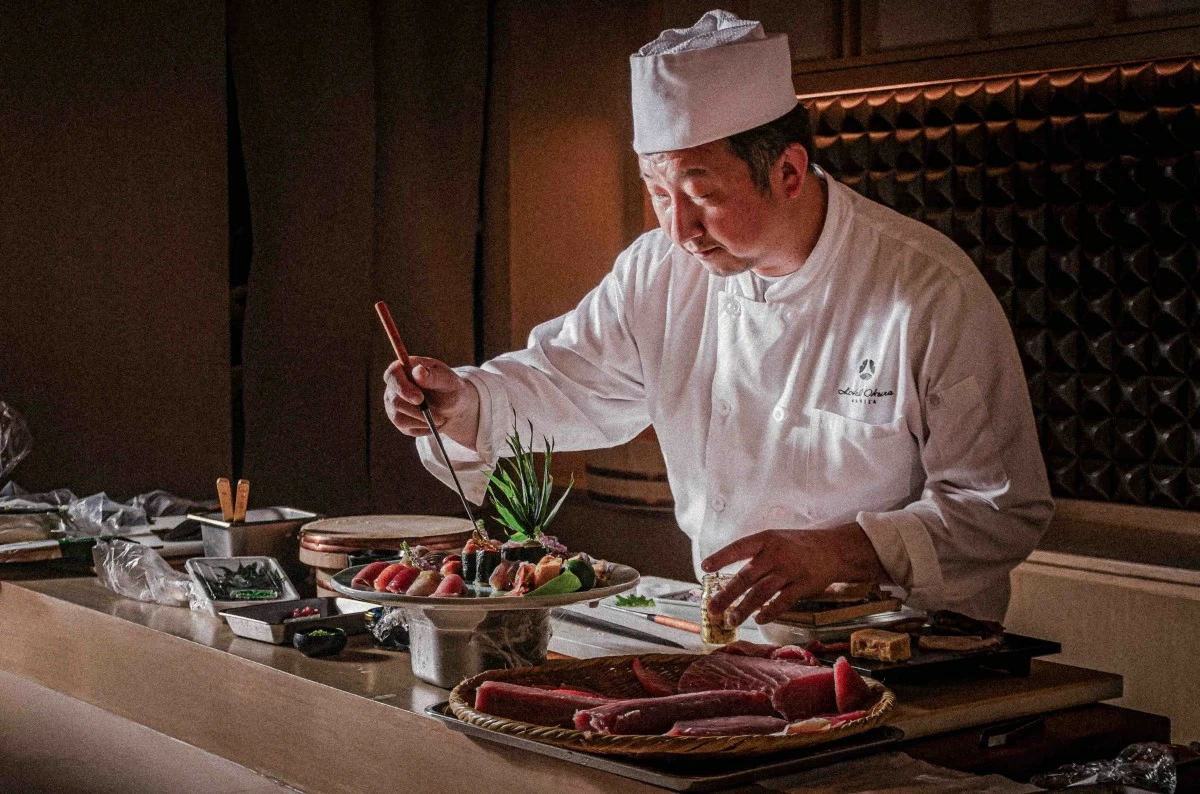
CHEF Ikuma Sato
CHEF Ikuma Sato
The first thing you notice is the quiet. There is no clatter or rush. Only the soft sound of a knife against the board and the faint sizzle as a flame briefly kisses a piece of fish. The man behind the counter, Chef Ikuma Sato, bows before his tools, before the ingredients, before the day begins.
At Yamazato, the Japanese fine-dining restaurant of Hotel Okura Manila at Newport World Resorts, tradition speaks softly but firmly. The Sushi Counter is a stage, and Sato is its quiet master. In Japan, such a chef is called an itamae, meaning the craftsman who prepares and presents sushi at the board. The itamae shapes not only the food but also the experience.
With World Sushi Day coming tomorrow, we look back at a recent lunch at this counter — a timely tribute to a centuries-old craft and to the man who brings it to life piece by piece.
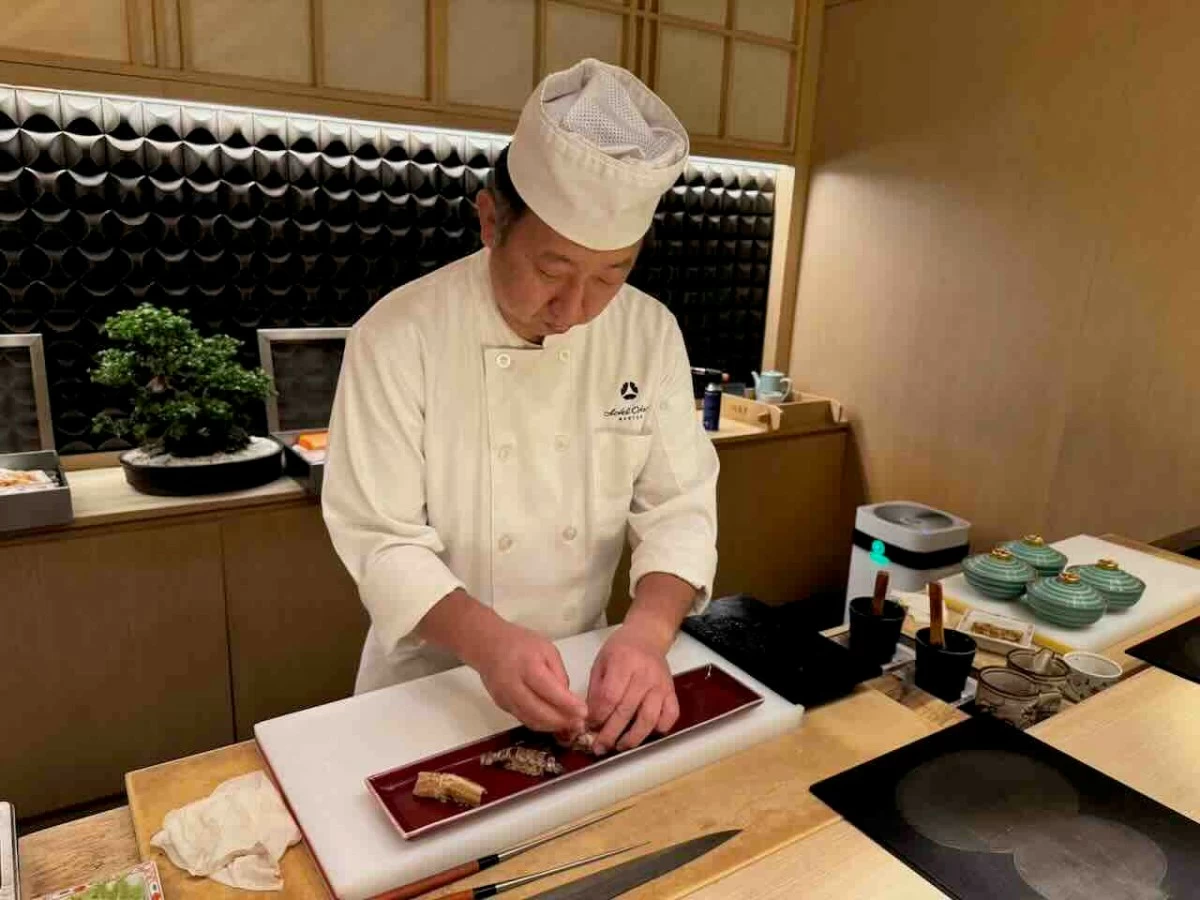
MASTER AT WORK Chef Ikuma Sato works his magic at Yamazato’s Sushi Counter
Sato’s hands moved with grace. His fingers pressed rice and fish together. His eyes glanced up at us to sense our mood and pace. “The flow depends on the guest,” he said. His English was warm and easy. His smile came quickly and sincerely. He watched as we ate, nodding when we followed his advice. “With your hands,” he said. “One bite.” His laugh, light and genuine, filled the quiet like sunlight in a room.
There was no barrier between us and the chef. Only the counter of pale wood, polished and clean, and Sato’s quiet confidence. He has been making sushi for more than 25 years. He started at a local restaurant in Japan right after college. His journey took him across Europe, to Switzerland and Hong Kong, before bringing him to Manila. This is his first time in the Philippines, but he says he feels at home. “My sister married a Filipino,” he said. “So I feel at home here.”
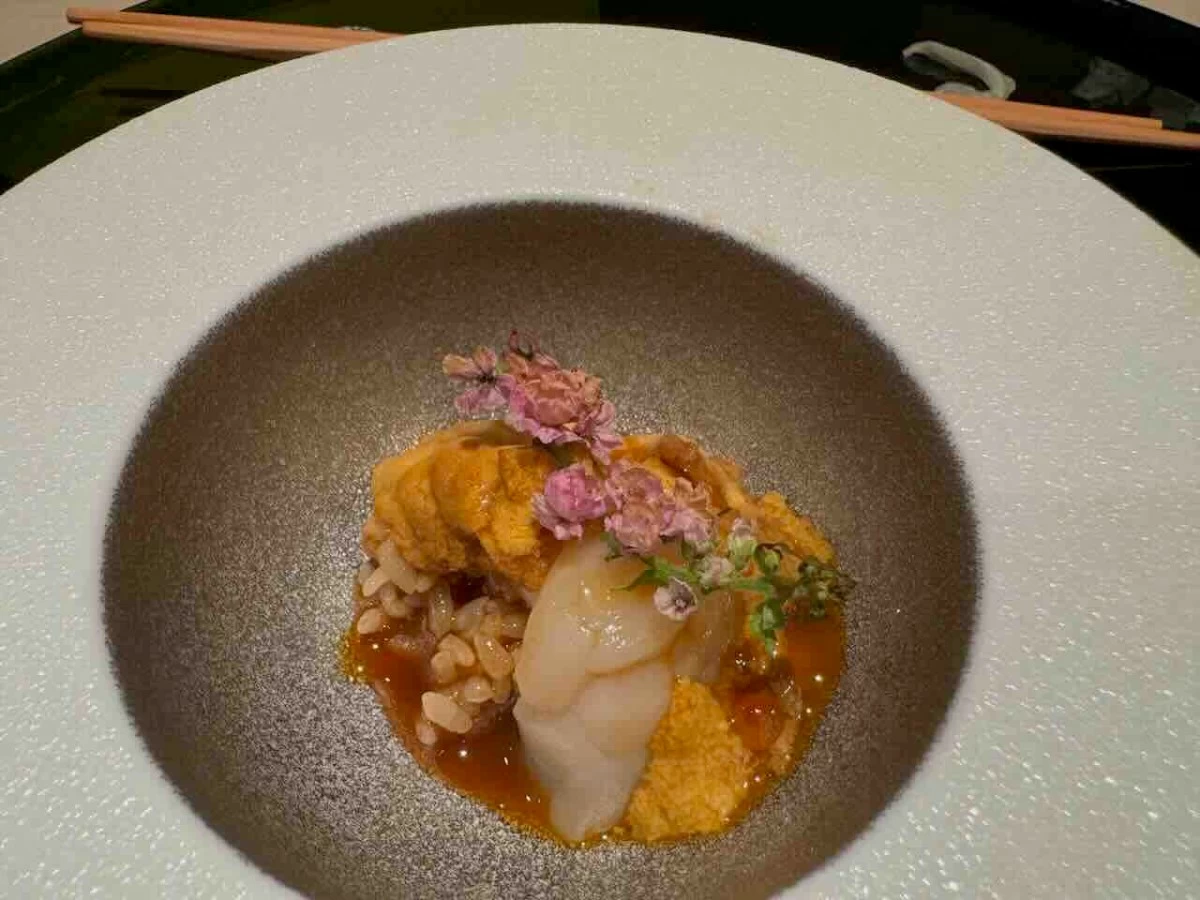
The meal began with a small dish of the day. Duck breast dusted with sansho pepper, its richness lifted by the spice. Izaki fish hidden in oba leaves, the herb’s aroma mingling with the sea. Sea urchin, creamy and cold. Unagi with cucumber followed, sharpened by a bright tosazu sauce. A tiny squid, tender and flavored with handmade soy sauce, came with a slice of egg omelet.
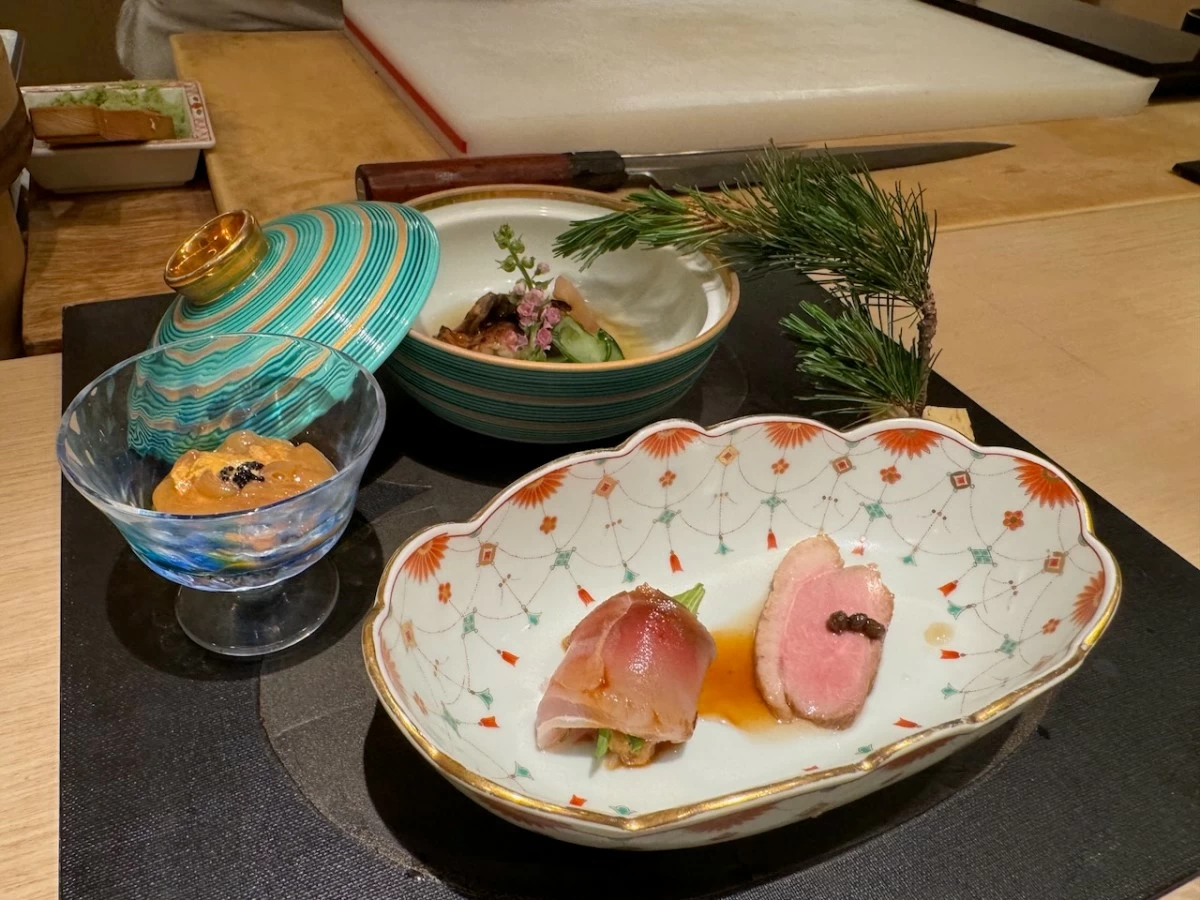
STARTER SET The 'Small Dish of the Day'—Duck breast with sansho pepper, Izaki fish wrapped in oba leaves, and sea urchin
Then the nigiri began. Chutoro, medium-fatty tuna from Kagoshima, rich and clean. Shimeaji, bright and sharp. Salmon, smooth and familiar. Seabream, delicate and subtle. Sato shaped each piece with care and set it before us, often with a quiet instruction or a small joke.
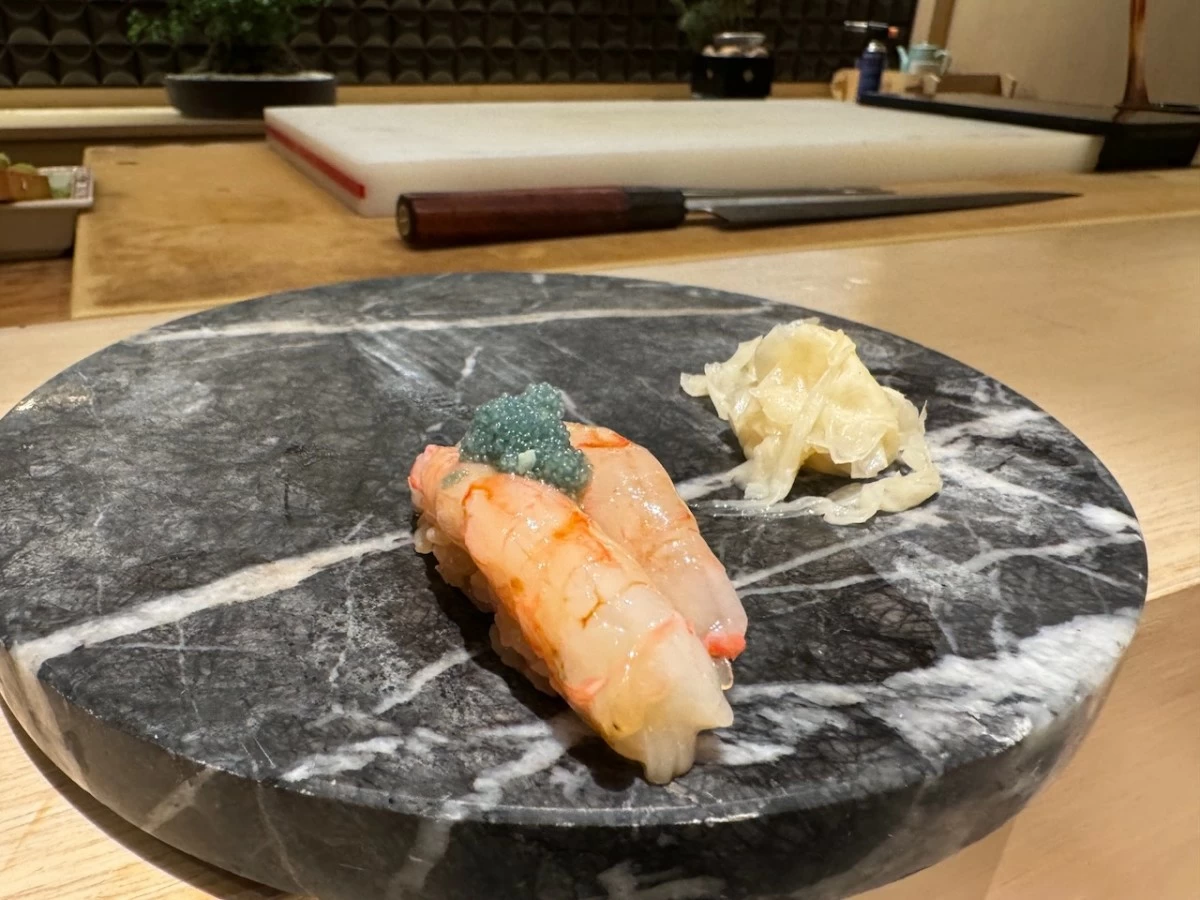
Amaebi, sweet shrimp, tasted of the sea at its gentlest. The hand roll, filled with chutoro, sea urchin, spring onion, and ikura, was briny and fresh all at once. Scallop with sea urchin came with a rich egg yolk sauce. Anago, the saltwater eel, was finished with a touch of sansho pepper. Kanpyo, simmered gourd, gave a clean, earthy end.
Chawan mushi, soft and warm, soothed the palate. Miso soup, simple and honest, felt like a bow in liquid form. Dessert was ice cream of the day and fresh fruit. Nothing more was needed.
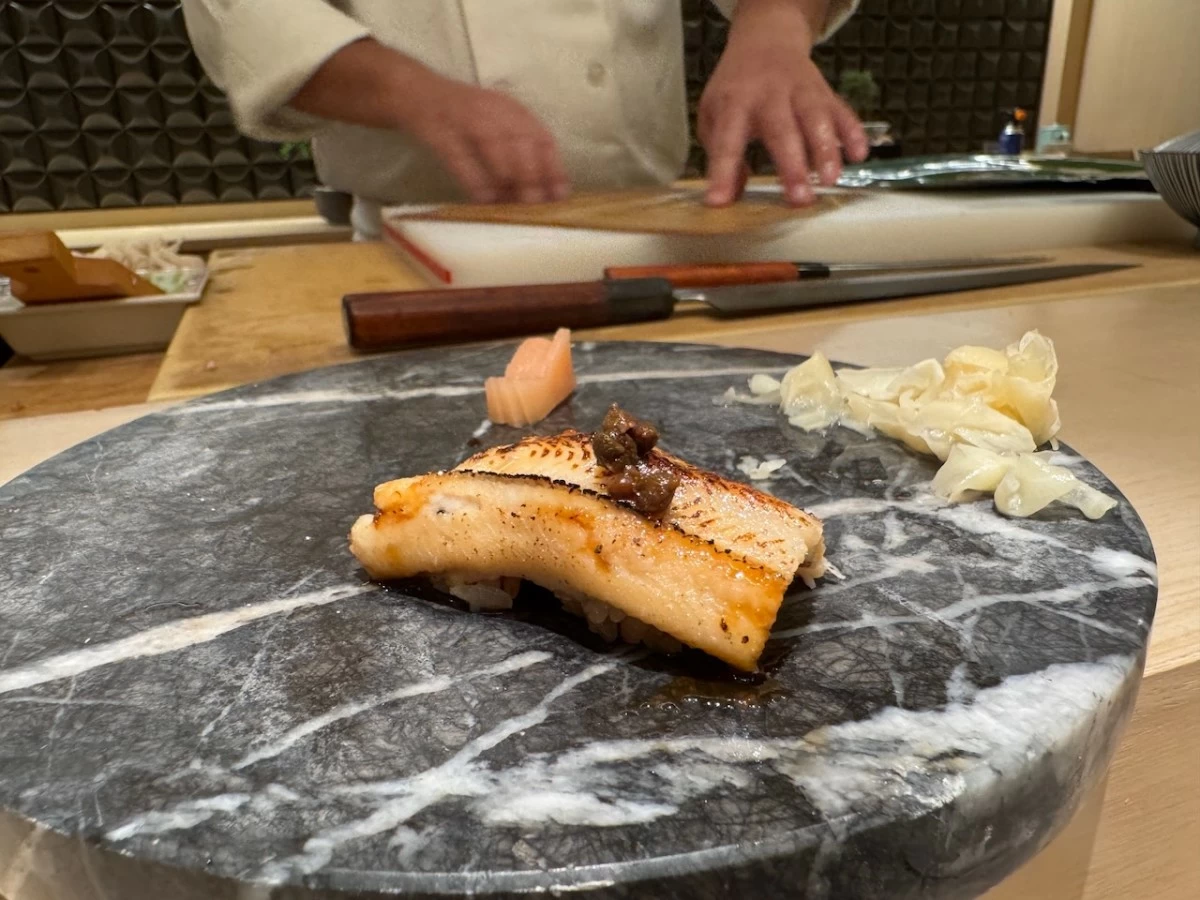
SEA HARMONY Japanese small squid with sea urchin, paired with handmade soy sauce and egg omelet on the side
Sato spoke of his favorite fish, the bluefin tuna. “The wild ones keep moving. They’re hard to catch. They’re delicate,” he said. It is a fish that demands respect, and Sato gives it.
What makes the Sushi Counter special is not just the fish or the precision. It is the encounter. Sato watches, listens, and adjusts the pace. “At the counter, it becomes personal,” he said. And it did.
Sato is one of three masters at Yamazato. Executive Chef Keiichiro Fujino has more than 40 years of experience. He curates seasonal kaiseki menus that honor the multi-course traditions of Japan. At the teppanyaki counter, Chef Katsuji Kato turns wagyu and seafood into dishes that combine spectacle and substance. Together they bring the spirit of Yamazato, born in Tokyo and known in Amsterdam as Europe’s first Michelin-starred Japanese restaurant, to Manila.
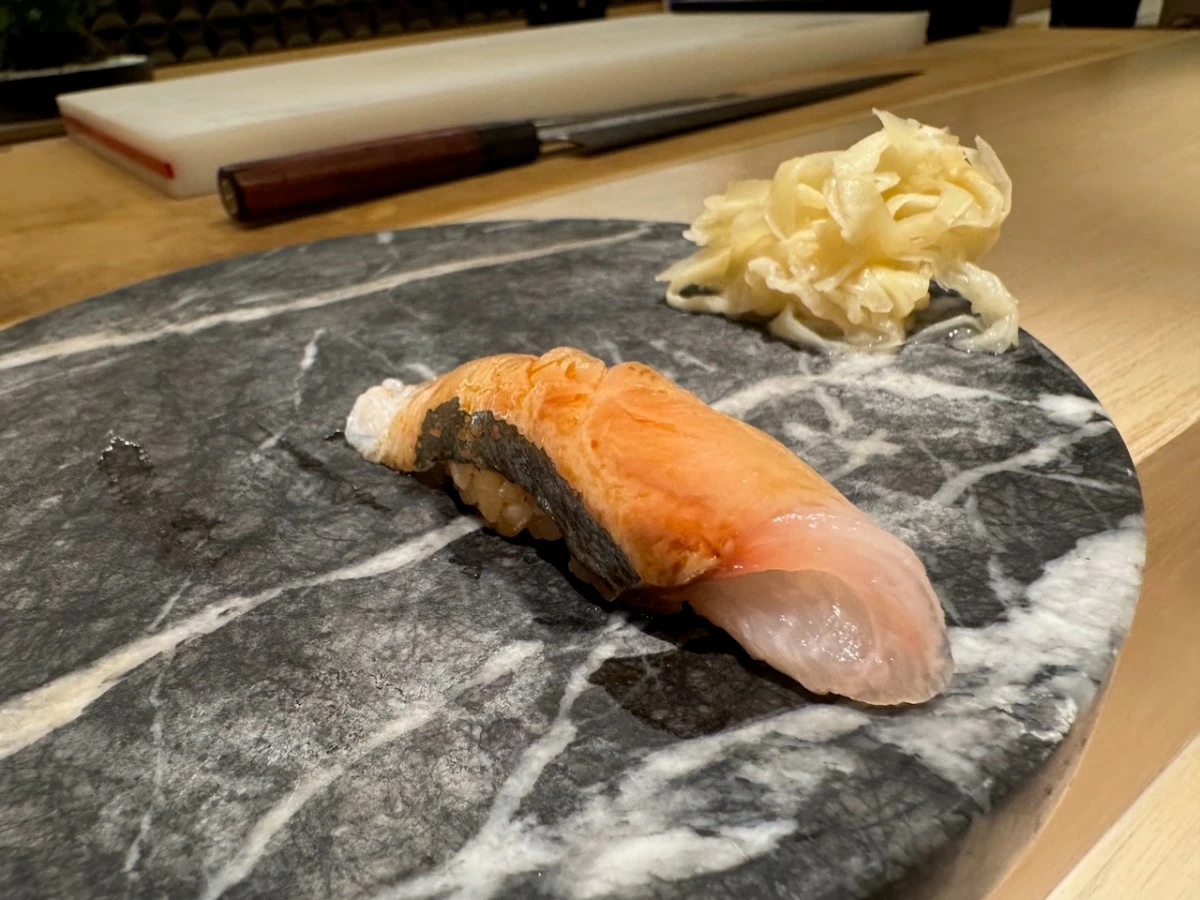
The space suits the food. The counter glows softly in the light. The air is calm. The pace is measured. Time seems to slow.
World Sushi Day is tomorrow, and will soon pass, but its spirit lives at Yamazato’s Sushi Counter every day. With each piece of sushi, Sato tells a story of grace, tradition, and the simple joy of feeding people well.
ADVERTISEMENT
.most-popular .layout-ratio{ padding-bottom: 79.13%; } @media (min-width: 768px) and (max-width: 1024px) { .widget-title { font-size: 15px !important; } }

{{ articles_filter_1561_widget.title }}

.most-popular .layout-ratio{ padding-bottom: 79.13%; } @media (min-width: 768px) and (max-width: 1024px) { .widget-title { font-size: 15px !important; } }

{{ articles_filter_1562_widget.title }}

.most-popular .layout-ratio{ padding-bottom: 79.13%; } @media (min-width: 768px) and (max-width: 1024px) { .widget-title { font-size: 15px !important; } }

{{ articles_filter_1563_widget.title }}

{{ articles_filter_1564_widget.title }}

.mb-article-details { position: relative; } .mb-article-details .article-body-preview, .mb-article-details .article-body-summary{ font-size: 17px; line-height: 30px; font-family: "Libre Caslon Text", serif; color: #000; } .mb-article-details .article-body-preview iframe , .mb-article-details .article-body-summary iframe{ width: 100%; margin: auto; } .read-more-background { background: linear-gradient(180deg, color(display-p3 1.000 1.000 1.000 / 0) 13.75%, color(display-p3 1.000 1.000 1.000 / 0.8) 30.79%, color(display-p3 1.000 1.000 1.000) 72.5%); position: absolute; height: 200px; width: 100%; bottom: 0; display: flex; justify-content: center; align-items: center; padding: 0; } .read-more-background a{ color: #000; } .read-more-btn { padding: 17px 45px; font-family: Inter; font-weight: 700; font-size: 18px; line-height: 16px; text-align: center; vertical-align: middle; border: 1px solid black; background-color: white; } .hidden { display: none; }
function initializeAllSwipers() { // Get all hidden inputs with cms_article_id document.querySelectorAll('[id^="cms_article_id_"]').forEach(function (input) { const cmsArticleId = input.value; const articleSelector = '#article-' + cmsArticleId + ' .body_images'; const swiperElement = document.querySelector(articleSelector); if (swiperElement && !swiperElement.classList.contains('swiper-initialized')) { new Swiper(articleSelector, { loop: true, pagination: false, navigation: { nextEl: '#article-' + cmsArticleId + ' .swiper-button-next', prevEl: '#article-' + cmsArticleId + ' .swiper-button-prev', }, }); } }); } setTimeout(initializeAllSwipers, 3000); const intersectionObserver = new IntersectionObserver( (entries) => { entries.forEach((entry) => { if (entry.isIntersecting) { const newUrl = entry.target.getAttribute("data-url"); if (newUrl) { history.pushState(null, null, newUrl); let article = entry.target; // Extract metadata const author = article.querySelector('.author-section').textContent.replace('By', '').trim(); const section = article.querySelector('.section-info ').textContent.replace(' ', ' '); const title = article.querySelector('.article-title h1').textContent; // Parse URL for Chartbeat path format const parsedUrl = new URL(newUrl, window.location.origin); const cleanUrl = parsedUrl.host + parsedUrl.pathname; // Update Chartbeat configuration if (typeof window._sf_async_config !== 'undefined') { window._sf_async_config.path = cleanUrl; window._sf_async_config.sections = section; window._sf_async_config.authors = author; } // Track virtual page view with Chartbeat if (typeof pSUPERFLY !== 'undefined' && typeof pSUPERFLY.virtualPage === 'function') { try { pSUPERFLY.virtualPage({ path: cleanUrl, title: title, sections: section, authors: author }); } catch (error) { console.error('ping error', error); } } // Optional: Update document title if (title && title !== document.title) { document.title = title; } } } }); }, { threshold: 0.1 } ); function showArticleBody(button) { const article = button.closest("article"); const summary = article.querySelector(".article-body-summary"); const body = article.querySelector(".article-body-preview"); const readMoreSection = article.querySelector(".read-more-background"); // Hide summary and read-more section summary.style.display = "none"; readMoreSection.style.display = "none"; // Show the full article body body.classList.remove("hidden"); } document.addEventListener("DOMContentLoaded", () => { let loadCount = 0; // Track how many times articles are loaded const offset = [1, 2, 3, 4, 5, 6, 7, 8, 9, 10]; // Offset values const currentUrl = window.location.pathname.substring(1); let isLoading = false; // Prevent multiple calls if (!currentUrl) { console.log("Current URL is invalid."); return; } const sentinel = document.getElementById("load-more-sentinel"); if (!sentinel) { console.log("Sentinel element not found."); return; } function isSentinelVisible() { const rect = sentinel.getBoundingClientRect(); return ( rect.top < window.innerHeight && rect.bottom >= 0 ); } function onScroll() { if (isLoading) return; if (isSentinelVisible()) { if (loadCount >= offset.length) { console.log("Maximum load attempts reached."); window.removeEventListener("scroll", onScroll); return; } isLoading = true; const currentOffset = offset[loadCount]; window.loadMoreItems().then(() => { let article = document.querySelector('#widget_1690 > div:nth-last-of-type(2) article'); intersectionObserver.observe(article) loadCount++; }).catch(error => { console.error("Error loading more items:", error); }).finally(() => { isLoading = false; }); } } window.addEventListener("scroll", onScroll); });

Sign up by email to receive news.