ADVERTISEMENT

World Bank urges enhancements of Philippine building code

Published Jun 12, 2025 05:00 pm
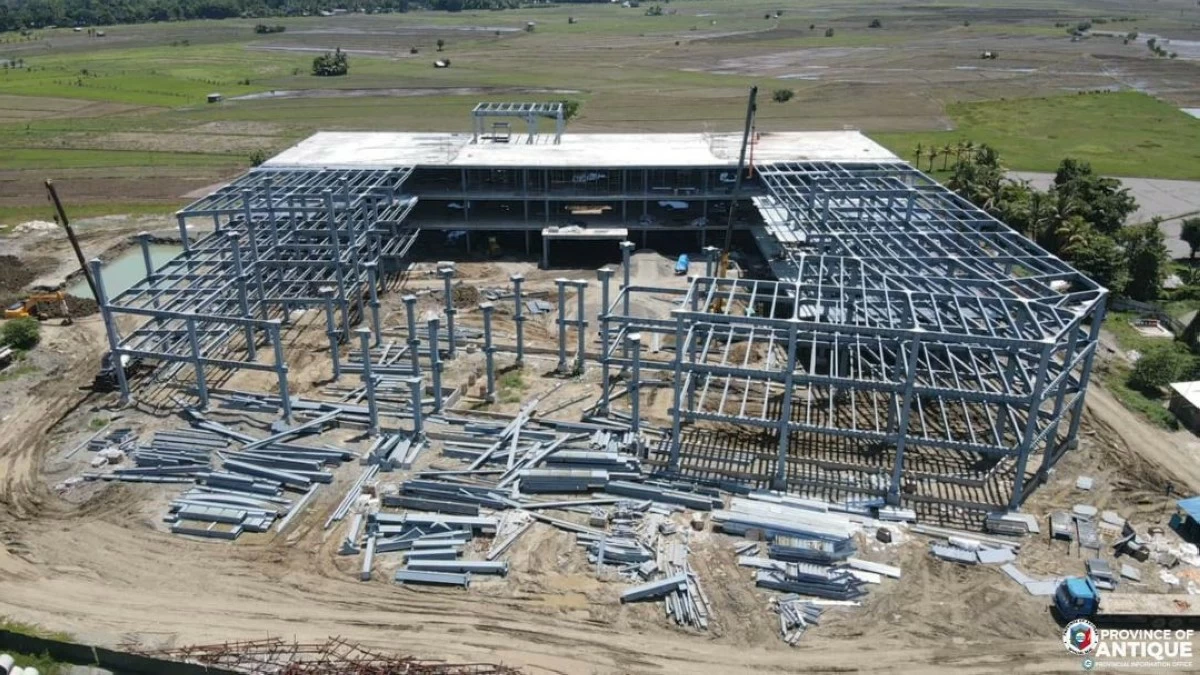
AN aerial view of the construction of the new government center for Antique in the capital town San Jose de Buenavista.  (Antique PIO)
AN aerial view of the construction of the new government center for Antique in the capital town San Jose de Buenavista. (Antique PIO)

The World Bank is urging the Philippines and many other developing nations to improve not only building standards but also their implementation.

According to a June 10 World Bank report titled A Global Assessment of Building Codes: Current Status and Evolving Needs to Promote Resilient, Green, and Inclusive Buildings,” a comprehensive analysis of building codes across 22 countries, including the Philippines, showed that “in many of the countries assessed, there is a need to update codes, as they were last updated over a decade ago.”

The Philippines and Ghana were cited for having structural design building code documents published in the past decade, while the majority of countries in the report had even older documents.

“The findings also show a wide range of coverage in the key areas related to the code implementation environment... Priority areas where there are gaps, even in countries with more complete coverage, include processes to ensure building inspections and optimized building control processes to target resources toward higher-risk buildings. These countries include Chile, El Salvador, [and] Mexico with respect to inspections, and the Philippines, South Africa, and Indonesia with respect to optimized processes,” the World Bank said.

“For example, country experts observed that, in the Philippines and Indonesia, although inspection requirements exist, a lack of resources in building control authorities, in some cases, prevents inspections of common types of smaller-scale buildings from being carried out in practice,” it added.

Also, the World Bank flagged that “no retaining wall design provisions were included in the building codes for the Philippines and Nepal.”

While the Philippine building design code was last updated in 2015 and included “complete procedures to develop country-specific wind and seismic design criteria based on country-specific maps,” the World Bank said more can be done to improve it.

“Areas where the structural design provisions could be strengthened include additional provisions for the design of retaining walls, provisions for the design of seismic isolation systems, and inclusion of design provisions for confined masonry buildings and vernacular timber building types,” the World Bank said.

“The code lacks simplified structural design provisions for the design and construction of common, small-scale building types. For existing buildings, there is a need to develop provisions for assessment and retrofit, as well as to clarify requirements for building modifications and changes of occupancy,” it added.

In addition, “further advancements in the regulations could be made for provisions to address resilience to strong wind events and flooding,” it said.

Overall, the World Bank said that “the Philippines has a well-established building regulatory framework that contains building design codes addressing key aspects related to structural safety, green building, and accessibility, as well as building control regulations for implementation.”

“The Philippines’ building control framework establishes clearly defined processes, aided by an online permit system available in various municipalities and easy online access to legal documents. The inspection framework is well defined and integrates the participation of various stakeholders such as fire services. An appeal process and dispute resolution mechanism are in place to address conflict,” the World Bank said.

For instance, “the codes for some countries, such as Indonesia, Peru, the Philippines, and Vanuatu, include relatively complete design provisions for diaphragms,” the report said.

Specifically, the World Bank cited the Philippines, which faces a comparatively higher level of seismic risk, for updating seismic hazard maps on a regular basis.

Battered by a string of strong typhoons each year, the Philippines was also named by the World Bank among a few countries having relatively more comprehensive coverage in wind design topic areas among those exposed to risk from cyclonic wind events.

“Among the countries assessed, Colombia, Mongolia, and the Philippines have the most comprehensive coverage across all wind design topics,” the World Bank said.

“For example, the National Structural Code of the Philippines (NSCP-2015) has a section for the design of roof cladding and other façade components for wind effects, including load procedures for determining wind pressures for a specific site depending on the wind speed, building height, and roof shape,” the report noted.

The Philippines is also among the countries considered to be in the process of developing their green building code provisions, as the World Bank noted that the country already introduced green building regulations during the past decade.

“Mandatory green building provisions tend to apply to buildings of a certain size and scale, as is the case for Peru, Colombia, Ghana, the Philippines, and Indonesia,” it noted.

However, the World Bank said the Philippines green building code still has “some gaps in provisions, including for green roofs, building orientation, renewables, use of recycled materials and low embodied energy design.”

Another positive: “Colombia, the Philippines, Samoa, Tonga, and Vanuatu state in their universal accessibility regulations that people with cognitive impairment need to be considered,” the World Bank said.

In the Philippine building code, the World Bank noted that “for universal accessibility, the code covers most key topics, and provisions are mandatory for public buildings and spaces of public use as well as for changes of occupancy to existing public buildings.”

Related Tags

World Bank National Structural Code of the Philippines (NSCP) building code
ADVERTISEMENT
.most-popular .layout-ratio{ padding-bottom: 79.13%; } @media (min-width: 768px) and (max-width: 1024px) { .widget-title { font-size: 15px !important; } }

{{ articles_filter_1561_widget.title }}

.most-popular .layout-ratio{ padding-bottom: 79.13%; } @media (min-width: 768px) and (max-width: 1024px) { .widget-title { font-size: 15px !important; } }

{{ articles_filter_1562_widget.title }}

.most-popular .layout-ratio{ padding-bottom: 79.13%; } @media (min-width: 768px) and (max-width: 1024px) { .widget-title { font-size: 15px !important; } }

{{ articles_filter_1563_widget.title }}

{{ articles_filter_1564_widget.title }}

.mb-article-details { position: relative; } .mb-article-details .article-body-preview, .mb-article-details .article-body-summary{ font-size: 17px; line-height: 30px; font-family: "Libre Caslon Text", serif; color: #000; } .mb-article-details .article-body-preview iframe , .mb-article-details .article-body-summary iframe{ width: 100%; margin: auto; } .read-more-background { background: linear-gradient(180deg, color(display-p3 1.000 1.000 1.000 / 0) 13.75%, color(display-p3 1.000 1.000 1.000 / 0.8) 30.79%, color(display-p3 1.000 1.000 1.000) 72.5%); position: absolute; height: 200px; width: 100%; bottom: 0; display: flex; justify-content: center; align-items: center; padding: 0; } .read-more-background a{ color: #000; } .read-more-btn { padding: 17px 45px; font-family: Inter; font-weight: 700; font-size: 18px; line-height: 16px; text-align: center; vertical-align: middle; border: 1px solid black; background-color: white; } .hidden { display: none; }
function initializeAllSwipers() { // Get all hidden inputs with cms_article_id document.querySelectorAll('[id^="cms_article_id_"]').forEach(function (input) { const cmsArticleId = input.value; const articleSelector = '#article-' + cmsArticleId + ' .body_images'; const swiperElement = document.querySelector(articleSelector); if (swiperElement && !swiperElement.classList.contains('swiper-initialized')) { new Swiper(articleSelector, { loop: true, pagination: false, navigation: { nextEl: '#article-' + cmsArticleId + ' .swiper-button-next', prevEl: '#article-' + cmsArticleId + ' .swiper-button-prev', }, }); } }); } setTimeout(initializeAllSwipers, 3000); const intersectionObserver = new IntersectionObserver( (entries) => { entries.forEach((entry) => { if (entry.isIntersecting) { const newUrl = entry.target.getAttribute("data-url"); if (newUrl) { history.pushState(null, null, newUrl); let article = entry.target; // Extract metadata const author = article.querySelector('.author-section').textContent.replace('By', '').trim(); const section = article.querySelector('.section-info ').textContent.replace(' ', ' '); const title = article.querySelector('.article-title h1').textContent; // Parse URL for Chartbeat path format const parsedUrl = new URL(newUrl, window.location.origin); const cleanUrl = parsedUrl.host + parsedUrl.pathname; // Update Chartbeat configuration if (typeof window._sf_async_config !== 'undefined') { window._sf_async_config.path = cleanUrl; window._sf_async_config.sections = section; window._sf_async_config.authors = author; } // Track virtual page view with Chartbeat if (typeof pSUPERFLY !== 'undefined' && typeof pSUPERFLY.virtualPage === 'function') { try { pSUPERFLY.virtualPage({ path: cleanUrl, title: title, sections: section, authors: author }); } catch (error) { console.error('ping error', error); } } // Optional: Update document title if (title && title !== document.title) { document.title = title; } } } }); }, { threshold: 0.1 } ); function showArticleBody(button) { const article = button.closest("article"); const summary = article.querySelector(".article-body-summary"); const body = article.querySelector(".article-body-preview"); const readMoreSection = article.querySelector(".read-more-background"); // Hide summary and read-more section summary.style.display = "none"; readMoreSection.style.display = "none"; // Show the full article body body.classList.remove("hidden"); } document.addEventListener("DOMContentLoaded", () => { let loadCount = 0; // Track how many times articles are loaded const offset = [1, 2, 3, 4, 5, 6, 7, 8, 9, 10]; // Offset values const currentUrl = window.location.pathname.substring(1); let isLoading = false; // Prevent multiple calls if (!currentUrl) { console.log("Current URL is invalid."); return; } const sentinel = document.getElementById("load-more-sentinel"); if (!sentinel) { console.log("Sentinel element not found."); return; } function isSentinelVisible() { const rect = sentinel.getBoundingClientRect(); return ( rect.top < window.innerHeight && rect.bottom >= 0 ); } function onScroll() { if (isLoading) return; if (isSentinelVisible()) { if (loadCount >= offset.length) { console.log("Maximum load attempts reached."); window.removeEventListener("scroll", onScroll); return; } isLoading = true; const currentOffset = offset[loadCount]; window.loadMoreItems().then(() => { let article = document.querySelector('#widget_1690 > div:nth-last-of-type(2) article'); intersectionObserver.observe(article) loadCount++; }).catch(error => { console.error("Error loading more items:", error); }).finally(() => { isLoading = false; }); } } window.addEventListener("scroll", onScroll); });

Sign up by email to receive news.