ADVERTISEMENT

World Bank retains 5.3% growth forecast for 2025 amid uncertainties

Published Jun 11, 2025 05:11 pm

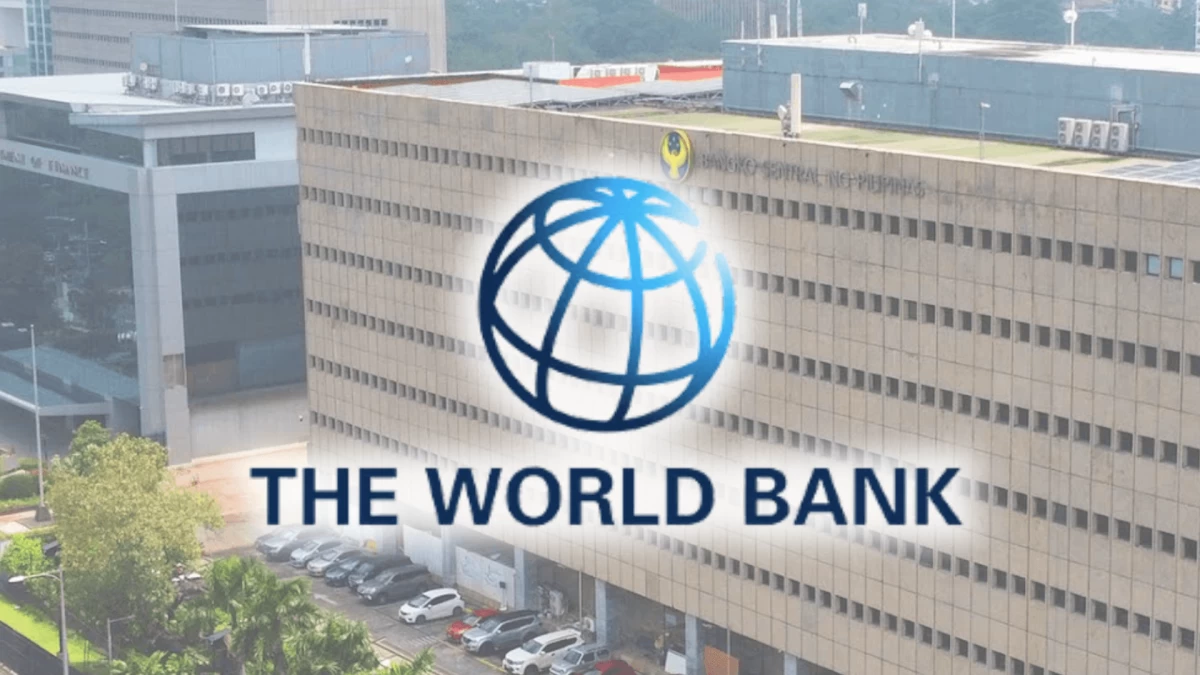
Washington-based World Bank has retained its below-target 5.3 percent growth forecast for the Philippines in 2025 as heightened policy uncertainties and softer business and consumer confidence continue to weigh on investment, exports, and consumption across the region, including the Philippines.

Based on the multilateral lender’s latest issue of global economic prospects published in June, growth in the East Asia and the Pacific (EAP) is seen to decelerate to 4.5 percent this year from five percent in 2024.

For the Philippines, the World Bank has projected annual economic growth to remain below six percent until 2027.

Among the cited reasons for these forecasts are the “direct effects of higher trade barriers and the indirect effects of heightened policy uncertainty, a weaker global growth outlook, and softer confidence.”

The report stated that these factors “weigh on investment, exports, and consumption in the region,” noting that EAP economies are “more exposed to trade policy shifts due to their high trade openness.”

In its April report, the World Bank forecasted that the Philippine gross domestic product (GDP) would expand by only 5.3 percent this year, before increasing to 5.4 percent next year.

If the World Bank’s latest projections for the Philippines materialize, they would be the lowest growth rates since 2021, when the economy recovered after gradually reopening from the most stringent Covid-19 lockdowns that dragged the country to its worst post-war recession in 2020.

In its latest country partnership framework (CPF) for the Philippines, the World Bank Group (WBG) has projected the country’s GDP to gradually rise to 5.7 percent in 2028, 5.8 percent in both 2029 and 2030, and 5.9 percent by 2031.

Still, all these expansion rates would fall below six percent. The government is targeting more ambitious six-to-eight-percent annual economic growth for the next two years.

In the first quarter of the year, the GDP expanded modestly 5.4 percent, slightly faster than the 5.3 percent in the previous quarter, but lower than the 5.7 percent in the same period in 2024. It also fell significantly short of the government’s six percent growth target to eight percent.

A month ago, the national government earlier said the economy remains strong, asserting that its first-quarter growth, though not fully meeting expectations, still ranked among the fastest in Asia.

Early data showed the Philippines tied with China as the second fastest-growing economy in Asia, behind Vietnam’s 6.9 percent, and ahead of Indonesia (4.9 percent), Malaysia (4.4 percent), and Thailand (2.8 percent projected).

Related Tags

World Bank Philippine economy
ADVERTISEMENT
.most-popular .layout-ratio{ padding-bottom: 79.13%; } @media (min-width: 768px) and (max-width: 1024px) { .widget-title { font-size: 15px !important; } }

{{ articles_filter_1561_widget.title }}

.most-popular .layout-ratio{ padding-bottom: 79.13%; } @media (min-width: 768px) and (max-width: 1024px) { .widget-title { font-size: 15px !important; } }

{{ articles_filter_1562_widget.title }}

.most-popular .layout-ratio{ padding-bottom: 79.13%; } @media (min-width: 768px) and (max-width: 1024px) { .widget-title { font-size: 15px !important; } }

{{ articles_filter_1563_widget.title }}

{{ articles_filter_1564_widget.title }}

.mb-article-details { position: relative; } .mb-article-details .article-body-preview, .mb-article-details .article-body-summary{ font-size: 17px; line-height: 30px; font-family: "Libre Caslon Text", serif; color: #000; } .mb-article-details .article-body-preview iframe , .mb-article-details .article-body-summary iframe{ width: 100%; margin: auto; } .read-more-background { background: linear-gradient(180deg, color(display-p3 1.000 1.000 1.000 / 0) 13.75%, color(display-p3 1.000 1.000 1.000 / 0.8) 30.79%, color(display-p3 1.000 1.000 1.000) 72.5%); position: absolute; height: 200px; width: 100%; bottom: 0; display: flex; justify-content: center; align-items: center; padding: 0; } .read-more-background a{ color: #000; } .read-more-btn { padding: 17px 45px; font-family: Inter; font-weight: 700; font-size: 18px; line-height: 16px; text-align: center; vertical-align: middle; border: 1px solid black; background-color: white; } .hidden { display: none; }
function initializeAllSwipers() { // Get all hidden inputs with cms_article_id document.querySelectorAll('[id^="cms_article_id_"]').forEach(function (input) { const cmsArticleId = input.value; const articleSelector = '#article-' + cmsArticleId + ' .body_images'; const swiperElement = document.querySelector(articleSelector); if (swiperElement && !swiperElement.classList.contains('swiper-initialized')) { new Swiper(articleSelector, { loop: true, pagination: false, navigation: { nextEl: '#article-' + cmsArticleId + ' .swiper-button-next', prevEl: '#article-' + cmsArticleId + ' .swiper-button-prev', }, }); } }); } setTimeout(initializeAllSwipers, 3000); const intersectionObserver = new IntersectionObserver( (entries) => { entries.forEach((entry) => { if (entry.isIntersecting) { const newUrl = entry.target.getAttribute("data-url"); if (newUrl) { history.pushState(null, null, newUrl); let article = entry.target; // Extract metadata const author = article.querySelector('.author-section').textContent.replace('By', '').trim(); const section = article.querySelector('.section-info ').textContent.replace(' ', ' '); const title = article.querySelector('.article-title h1').textContent; // Parse URL for Chartbeat path format const parsedUrl = new URL(newUrl, window.location.origin); const cleanUrl = parsedUrl.host + parsedUrl.pathname; // Update Chartbeat configuration if (typeof window._sf_async_config !== 'undefined') { window._sf_async_config.path = cleanUrl; window._sf_async_config.sections = section; window._sf_async_config.authors = author; } // Track virtual page view with Chartbeat if (typeof pSUPERFLY !== 'undefined' && typeof pSUPERFLY.virtualPage === 'function') { try { pSUPERFLY.virtualPage({ path: cleanUrl, title: title, sections: section, authors: author }); } catch (error) { console.error('ping error', error); } } // Optional: Update document title if (title && title !== document.title) { document.title = title; } } } }); }, { threshold: 0.1 } ); function showArticleBody(button) { const article = button.closest("article"); const summary = article.querySelector(".article-body-summary"); const body = article.querySelector(".article-body-preview"); const readMoreSection = article.querySelector(".read-more-background"); // Hide summary and read-more section summary.style.display = "none"; readMoreSection.style.display = "none"; // Show the full article body body.classList.remove("hidden"); } document.addEventListener("DOMContentLoaded", () => { let loadCount = 0; // Track how many times articles are loaded const offset = [1, 2, 3, 4, 5, 6, 7, 8, 9, 10]; // Offset values const currentUrl = window.location.pathname.substring(1); let isLoading = false; // Prevent multiple calls if (!currentUrl) { console.log("Current URL is invalid."); return; } const sentinel = document.getElementById("load-more-sentinel"); if (!sentinel) { console.log("Sentinel element not found."); return; } function isSentinelVisible() { const rect = sentinel.getBoundingClientRect(); return ( rect.top < window.innerHeight && rect.bottom >= 0 ); } function onScroll() { if (isLoading) return; if (isSentinelVisible()) { if (loadCount >= offset.length) { console.log("Maximum load attempts reached."); window.removeEventListener("scroll", onScroll); return; } isLoading = true; const currentOffset = offset[loadCount]; window.loadMoreItems().then(() => { let article = document.querySelector('#widget_1690 > div:nth-last-of-type(2) article'); intersectionObserver.observe(article) loadCount++; }).catch(error => { console.error("Error loading more items:", error); }).finally(() => { isLoading = false; }); } } window.addEventListener("scroll", onScroll); });

Sign up by email to receive news.