ADVERTISEMENT

Kamuning Bakery Café revives ancient Chinese rice dish with a Filipino heart

The cafe's Machang is not just food. It is memory steamed in rice.

Published May 30, 2025 06:25 pm
Machang
Machang
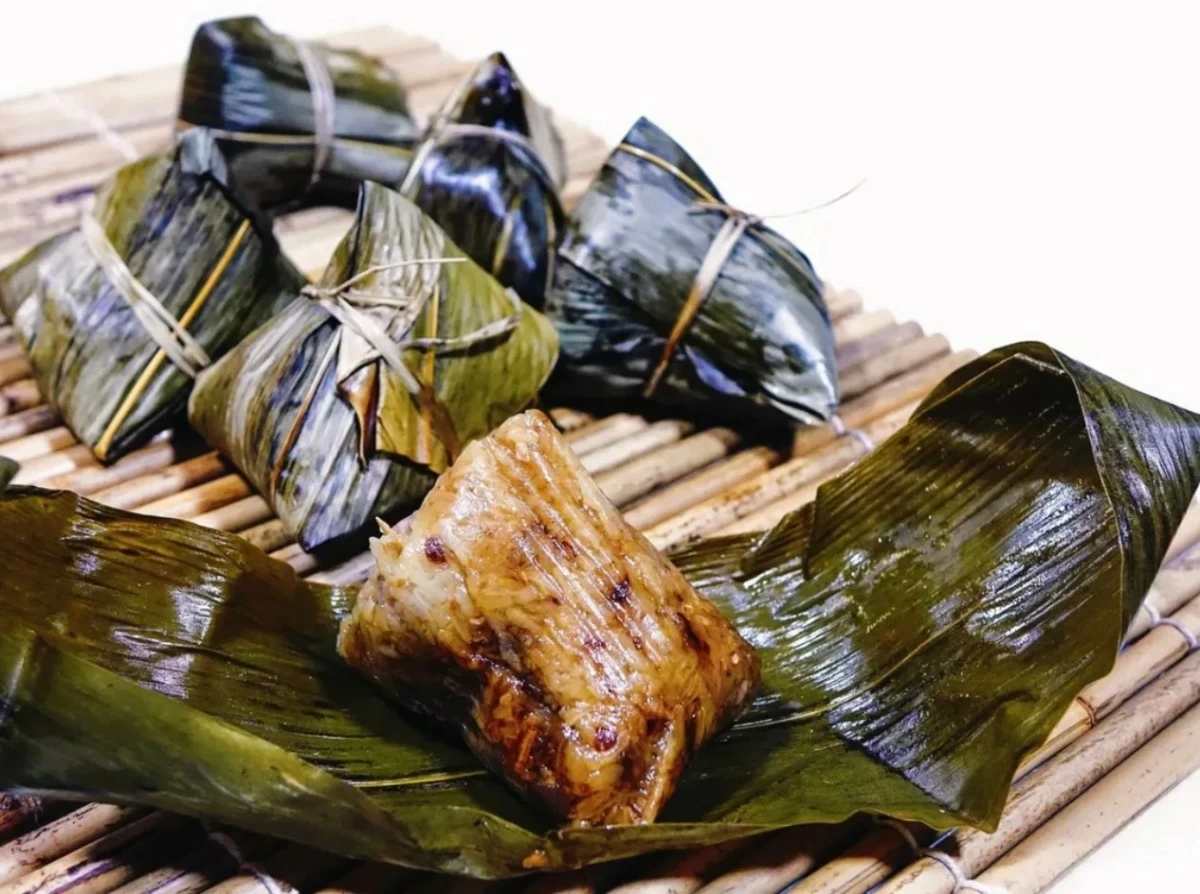
On the corner of Judge Jimenez and K-1st Street in Barangay Kamuning, a bamboo-wrapped parcel carries the weight of centuries. Inside is Machang, a savory glutinous rice dumpling with roots stretching back more than 2,000 years to ancient China. In Quezon City, it is reborn by Kamuning Bakery Café, a neighborhood institution founded in 1939.
The café’s Machang is not just food. It is memory steamed in rice. Owner Wilson Lee Flores began crafting the dumplings on June 25, 2020, during the stillness of the pandemic lockdown. Most restaurants were closed. From an heirloom recipe passed down by his late mother, a teacher and poet, Wilson revived a dish once made to honor the Chinese poet-statesman Qu Yuan.

The dish traces its origin to the Dragon Boat Festival, a centuries-old tradition held on the fifth day of the fifth lunar month. In ancient China, Qu Yuan, known for his loyalty and eloquence, drowned himself in the Miluo River in protest of political corruption. Villagers, grieving and desperate to preserve his body, threw sticky rice wrapped in leaves into the river to feed the fish and ward them off. That offering became zongzi, which later evolved into regional variations like Machang. Chinese migrants brought this culinary tradition to Southeast Asia, including the Philippines, where it became known by its Hokkien name.
Kamuning Bakery Café now keeps that legacy alive in the heart of Quezon City. Each week, it prepares three varieties by hand:
Double Pork Machang: Pork belly and shiitake mushrooms
Chicken and Pork Machang: Tender chicken, pork belly, and mushrooms
Taochang: Pork, chicken, mushrooms, and beans for a heartier option
Wrapped in bamboo or lotus leaves, the dumplings are steamed for 20 minutes before serving. Some enjoy them plain. Others add ketchup or hot sauce for a local twist.
International media have taken notice. National Geographic, Netflix, and CCTV have featured Kamuning’s cooks preparing Machang, turning humble food into living heritage. While others relied on delivery apps and cloud kitchens, Kamuning leaned into tradition.

Wilson's Machang has become more than a dish. It is poetry wrapped in leaves. It speaks of resilience. It tastes like history, shaped by hand.
Kamuning Bakery Café accepts orders by Viber or text and welcomes walk-in customers. In a city that never stops, Machang offers something that does. Quiet, warm, and made to be remembered.
ADVERTISEMENT
.most-popular .layout-ratio{ padding-bottom: 79.13%; } @media (min-width: 768px) and (max-width: 1024px) { .widget-title { font-size: 15px !important; } }

{{ articles_filter_1561_widget.title }}

.most-popular .layout-ratio{ padding-bottom: 79.13%; } @media (min-width: 768px) and (max-width: 1024px) { .widget-title { font-size: 15px !important; } }

{{ articles_filter_1562_widget.title }}

.most-popular .layout-ratio{ padding-bottom: 79.13%; } @media (min-width: 768px) and (max-width: 1024px) { .widget-title { font-size: 15px !important; } }

{{ articles_filter_1563_widget.title }}

{{ articles_filter_1564_widget.title }}

.mb-article-details { position: relative; } .mb-article-details .article-body-preview, .mb-article-details .article-body-summary{ font-size: 17px; line-height: 30px; font-family: "Libre Caslon Text", serif; color: #000; } .mb-article-details .article-body-preview iframe , .mb-article-details .article-body-summary iframe{ width: 100%; margin: auto; } .read-more-background { background: linear-gradient(180deg, color(display-p3 1.000 1.000 1.000 / 0) 13.75%, color(display-p3 1.000 1.000 1.000 / 0.8) 30.79%, color(display-p3 1.000 1.000 1.000) 72.5%); position: absolute; height: 200px; width: 100%; bottom: 0; display: flex; justify-content: center; align-items: center; padding: 0; } .read-more-background a{ color: #000; } .read-more-btn { padding: 17px 45px; font-family: Inter; font-weight: 700; font-size: 18px; line-height: 16px; text-align: center; vertical-align: middle; border: 1px solid black; background-color: white; } .hidden { display: none; }
function initializeAllSwipers() { // Get all hidden inputs with cms_article_id document.querySelectorAll('[id^="cms_article_id_"]').forEach(function (input) { const cmsArticleId = input.value; const articleSelector = '#article-' + cmsArticleId + ' .body_images'; const swiperElement = document.querySelector(articleSelector); if (swiperElement && !swiperElement.classList.contains('swiper-initialized')) { new Swiper(articleSelector, { loop: true, pagination: false, navigation: { nextEl: '#article-' + cmsArticleId + ' .swiper-button-next', prevEl: '#article-' + cmsArticleId + ' .swiper-button-prev', }, }); } }); } setTimeout(initializeAllSwipers, 3000); const intersectionObserver = new IntersectionObserver( (entries) => { entries.forEach((entry) => { if (entry.isIntersecting) { const newUrl = entry.target.getAttribute("data-url"); if (newUrl) { history.pushState(null, null, newUrl); let article = entry.target; // Extract metadata const author = article.querySelector('.author-section').textContent.replace('By', '').trim(); const section = article.querySelector('.section-info ').textContent.replace(' ', ' '); const title = article.querySelector('.article-title h1').textContent; // Parse URL for Chartbeat path format const parsedUrl = new URL(newUrl, window.location.origin); const cleanUrl = parsedUrl.host + parsedUrl.pathname; // Update Chartbeat configuration if (typeof window._sf_async_config !== 'undefined') { window._sf_async_config.path = cleanUrl; window._sf_async_config.sections = section; window._sf_async_config.authors = author; } // Track virtual page view with Chartbeat if (typeof pSUPERFLY !== 'undefined' && typeof pSUPERFLY.virtualPage === 'function') { try { pSUPERFLY.virtualPage({ path: cleanUrl, title: title, sections: section, authors: author }); } catch (error) { console.error('ping error', error); } } // Optional: Update document title if (title && title !== document.title) { document.title = title; } } } }); }, { threshold: 0.1 } ); function showArticleBody(button) { const article = button.closest("article"); const summary = article.querySelector(".article-body-summary"); const body = article.querySelector(".article-body-preview"); const readMoreSection = article.querySelector(".read-more-background"); // Hide summary and read-more section summary.style.display = "none"; readMoreSection.style.display = "none"; // Show the full article body body.classList.remove("hidden"); } document.addEventListener("DOMContentLoaded", () => { let loadCount = 0; // Track how many times articles are loaded const offset = [1, 2, 3, 4, 5, 6, 7, 8, 9, 10]; // Offset values const currentUrl = window.location.pathname.substring(1); let isLoading = false; // Prevent multiple calls if (!currentUrl) { console.log("Current URL is invalid."); return; } const sentinel = document.getElementById("load-more-sentinel"); if (!sentinel) { console.log("Sentinel element not found."); return; } function isSentinelVisible() { const rect = sentinel.getBoundingClientRect(); return ( rect.top < window.innerHeight && rect.bottom >= 0 ); } function onScroll() { if (isLoading) return; if (isSentinelVisible()) { if (loadCount >= offset.length) { console.log("Maximum load attempts reached."); window.removeEventListener("scroll", onScroll); return; } isLoading = true; const currentOffset = offset[loadCount]; window.loadMoreItems().then(() => { let article = document.querySelector('#widget_1690 > div:nth-last-of-type(2) article'); intersectionObserver.observe(article) loadCount++; }).catch(error => { console.error("Error loading more items:", error); }).finally(() => { isLoading = false; }); } } window.addEventListener("scroll", onScroll); });

Sign up by email to receive news.