







Each year, from May 28 to June 12, a familiar sight returns to cities, towns, and quiet neighborhoods across the Philippines. Flags are hoisted from windows and rooftops. They line public buildings and street corners. They flutter above schoolyards and government halls. This two-week stretch isn’t marked by fanfare alone—it is an act of national remembrance.
The banner we call ours
From revolution to ritual, the Philippine flag carries a nation's memory
Published May 28, 2025 05:08 pm


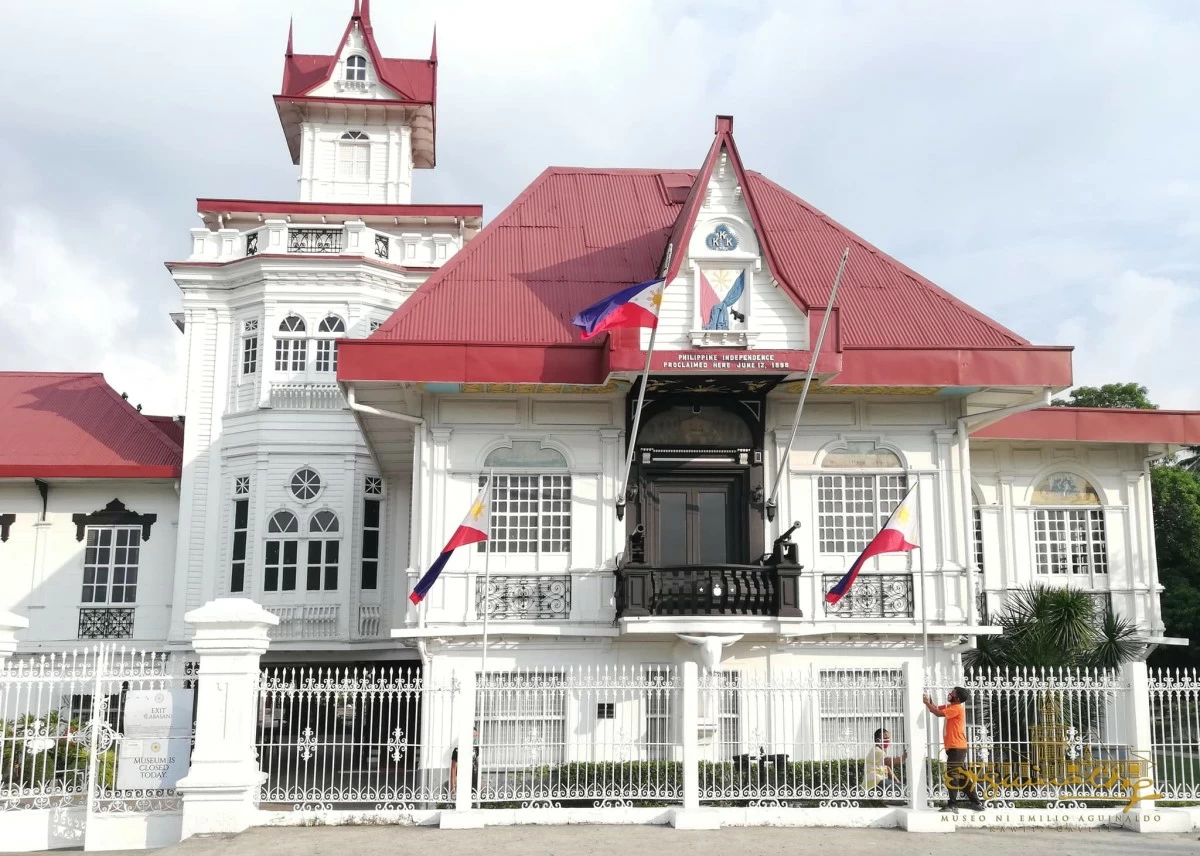
For Filipinos, the flag is more than cloth. It carries the weight of history, a record of struggle, and the promise of what the nation still hopes to become.
The story begins with a battle in Cavite.
On May 28, 1898, Gen. Emilio Aguinaldo led Filipino revolutionary forces to victory against Spanish troops in Alapan, Imus. After the battle, he unfurled a flag that had never before flown on Philippine soil. It was hand-sewn by Marcela Agoncillo, her daughter Lorenza, and Delfina Herbosa Natividad during Aguinaldo’s exile in Hong Kong. The flag was new, but its message was clear: This was a call for a country of its own.
The flag bore symbols that reached far beyond design. The white triangle stood for liberty, equality, and fraternity—ideals borrowed from other revolutions. The blue stripe stood for peace and justice; the red for courage and the blood already shed in the fight for freedom. In the triangle’s center, a golden sun with eight rays marked the provinces that first rose against colonial rule. Three stars symbolized the three major island groups—Luzon, Visayas, and Mindanao—each one distinct, yet bound to the others.

On June 12, 1898, Aguinaldo raised the same flag again, this time from the balcony of his home in Kawit, Cavite. A local marching band played the “Marcha Filipina Magdalo” as the declaration of independence was read before a gathered crowd. Though the Philippines would continue to face foreign occupation—first by the Americans, later by the Japanese—the moment stood as a claim of identity, a refusal to remain unseen.
In the decades that followed, the flag remained a symbol of that claim. But the date of independence shifted.
For years, the nation celebrated Independence Day on July 4, the day in 1946 when the United States formally recognized Philippine sovereignty. While legally significant, the July 4 celebration placed emphasis on an external handover rather than internal resolve. That changed in 1962 when President Diosdado Macapagal issued Proclamation No. 28, moving the observance to June 12 to commemorate the original act of Filipino-led liberation.
The decision reframed the national narrative. It signaled that the fight for freedom did not begin—or end—with foreign acknowledgment. It began with Filipinos standing their ground.
Three decades later, in 1994, President Fidel V. Ramos reinforced the act of remembering. Through Executive Order No. 179, he declared May 28 to June 12 as the official period for displaying the national flag. The order called on citizens to raise flags in their homes, workplaces, schools, and public spaces. It was a simple act, but one meant to connect the daily life of modern Filipinos with the past.
This initiative gained legal permanence through Republic Act No. 8491, known as the Flag and Heraldic Code of the Philippines. Signed into law in 1998, the measure set out rules on how to properly display, fold, and handle the flag. It prohibited its use as clothing, made guidelines for times of mourning, and outlined the solemnity with which the flag must be treated. The law recognized that symbols lose meaning without care.
Today, the flag is still raised each Monday morning in schools across the country. Government employees stand to salute it before meetings. Soldiers greet it with full honors. Children place their hands over their hearts while singing the national anthem, often not knowing the full weight of the cloth in front of them—but feeling something just the same.
In Cavite, ceremonies at the Aguinaldo Shrine reenact the moment of June 12. Speeches are given. Wreaths are laid. Students in costume walk the same grounds where the first flag once rose. These public rituals bring history close, allowing a younger generation to witness more than just a lesson in textbooks.
Even outside the Philippines, the flag stands as a beacon. At embassies and consulates, the flag is raised in front of expatriate communities, overseas workers, and diplomats. For many Filipinos abroad, the sight of it brings back memories of home, of family, of streets and towns they may not have seen in years.
And beyond ceremonies, the flag lives in small, unspoken ways. It appears on stickers and pins, on murals in underpasses, and in profile pictures during national holidays. It is displayed by choice, not decree. It speaks without sound.
One of the oldest surviving flags from the revolution is kept at the Gen. Emilio Aguinaldo Museum in Baguio. The colors have faded. The fabric is too fragile to be flown again. But it remains a symbol of defiance, of belief, of beginnings.
New flags rise each year across the country. In Manila’s plazas. In schoolyards in Mindanao. In fishing towns in the Visayas. They are raised not just in remembrance but in commitment—to the idea of a country that still defines itself, still moves forward.
In a world of shifting values and symbols, the Philippine flag remains steady. It is not just a banner. It is a story stitched with courage. A memory passed hand to hand. And a quiet promise, lifted by wind and will, that the nation it represents is still worth fighting for.