ADVERTISEMENT

Philippine economic growth to stay below 6% until 2031—World Bank

Published May 28, 2025 12:00 am  |  Updated May 27, 2025 04:32 pm

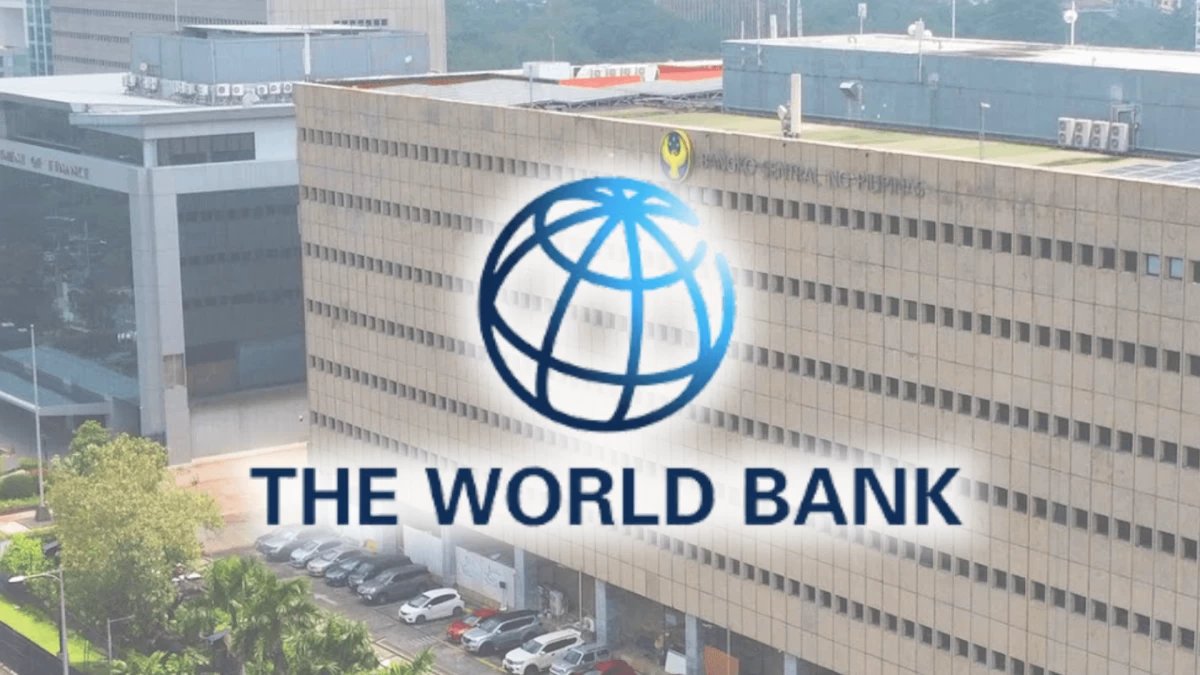
The Philippines' annual economic growth is expected by the World Bank Group (WBG) to remain below six percent this year until 2031.

Its newest country partnership framework (CPF) for the Philippines, covering fiscal years (FYs) 2026 to 2031, showed that the WBG forecasts Philippine gross domestic product (GDP) growth of 5.3 percent for this year, 5.4 percent for next year, and 5.5 percent for 2027—all below the more ambitious six- to eight-percent target of the Marcos Jr. administration for the second half of its term.

"The average GDP growth forecast for 2025 to 2027 is expected at 5.4 percent. Risks are mostly tilted downside and include potential retaliation by main global players that may affect global growth further, probably hitting domestic growth," the WBG said, referring to the lingering world trade uncertainty caused by United States (US) President Donald Trump's tariff spree.

"Increased uncertainty could trigger instability in financial markets and capital flight," it added.

On the flipside, "the Philippines may benefit from improved margins of preference for key export products, and from lower global commodity prices (tied to lower global growth), and absent any external pressures, the prospect of continued monetary policy rate normalization" in the next three years, the WBG said.

This year, its projected 5.3-percent GDP growth rate—poised to be the slowest pace of expansion since the Philippine economy gradually reopened from the most stringent Covid-19 restrictions—was attributed by the WBG to "the direct impacts of the higher tariffs and trade policy uncertainty on demand for exports, the effects of increased global policy uncertainty on investment demand, and the indirect effects on export and investment demand through lower global growth."

But on the upside, "these negative effects are dampened as the Philippines is mostly integrated in services rather than merchandise value chains (that have been most affected by trade policy barriers), and as public investment and private investment in non-tradables is expected to remain robust," the WBG added.

Philippine GDP growth is seen picking up gradually to 5.7 percent in 2028, 5.8 percent both in 2029 and 2030, and 5.9 percent in 2031.

The WBG forecasts headline inflation to be in the range of three to 3.2 percent from 2025 to 2031—within the targeted two- to four-percent annual consumer price increases deemed conducive to economic growth.

As the Marcos Jr. administration embarks on fiscal consolidation to narrow the yawning budget deficit and lower the share of public debt to the economy following massive borrowings at the height of the pandemic, the WBG projected the fiscal deficit narrowing gradually from 5.7 percent of GDP in 2024 to 5.4 percent in 2025, 4.9 percent in 2026, 4.4 percent in 2027, 4.1 percent in 2028, 3.9 percent in 2029, 3.7 percent in 2030, and 3.6 percent in 2031.

The national government's debt-to-GDP ratio was also expected to go down from 60.7 percent last year to 60.2 percent this year, 59.7 percent next year, 59.6 percent in 2027, 59.1 percent in 2028, 58.9 percent in 2029, 58.6 percent in 2030, and 58.1 percent in 2031.

The WBG has committed to "continue [supporting] domestic revenue mobilization, including assistance to the Philippines' comprehensive tax reform program (CTRP), which aims to advance fiscal consolidation through improved revenue generation and spending efficiency."

Related Tags

World Bank Group (WBG) gross domestic product (GDP) growth inflation rate budget deficit debt-to-gross domestic product (GDP) ratio
ADVERTISEMENT
.most-popular .layout-ratio{ padding-bottom: 79.13%; } @media (min-width: 768px) and (max-width: 1024px) { .widget-title { font-size: 15px !important; } }

{{ articles_filter_1561_widget.title }}

.most-popular .layout-ratio{ padding-bottom: 79.13%; } @media (min-width: 768px) and (max-width: 1024px) { .widget-title { font-size: 15px !important; } }

{{ articles_filter_1562_widget.title }}

.most-popular .layout-ratio{ padding-bottom: 79.13%; } @media (min-width: 768px) and (max-width: 1024px) { .widget-title { font-size: 15px !important; } }

{{ articles_filter_1563_widget.title }}

{{ articles_filter_1564_widget.title }}

.mb-article-details { position: relative; } .mb-article-details .article-body-preview, .mb-article-details .article-body-summary{ font-size: 17px; line-height: 30px; font-family: "Libre Caslon Text", serif; color: #000; } .mb-article-details .article-body-preview iframe , .mb-article-details .article-body-summary iframe{ width: 100%; margin: auto; } .read-more-background { background: linear-gradient(180deg, color(display-p3 1.000 1.000 1.000 / 0) 13.75%, color(display-p3 1.000 1.000 1.000 / 0.8) 30.79%, color(display-p3 1.000 1.000 1.000) 72.5%); position: absolute; height: 200px; width: 100%; bottom: 0; display: flex; justify-content: center; align-items: center; padding: 0; } .read-more-background a{ color: #000; } .read-more-btn { padding: 17px 45px; font-family: Inter; font-weight: 700; font-size: 18px; line-height: 16px; text-align: center; vertical-align: middle; border: 1px solid black; background-color: white; } .hidden { display: none; }
function initializeAllSwipers() { // Get all hidden inputs with cms_article_id document.querySelectorAll('[id^="cms_article_id_"]').forEach(function (input) { const cmsArticleId = input.value; const articleSelector = '#article-' + cmsArticleId + ' .body_images'; const swiperElement = document.querySelector(articleSelector); if (swiperElement && !swiperElement.classList.contains('swiper-initialized')) { new Swiper(articleSelector, { loop: true, pagination: false, navigation: { nextEl: '#article-' + cmsArticleId + ' .swiper-button-next', prevEl: '#article-' + cmsArticleId + ' .swiper-button-prev', }, }); } }); } setTimeout(initializeAllSwipers, 3000); const intersectionObserver = new IntersectionObserver( (entries) => { entries.forEach((entry) => { if (entry.isIntersecting) { const newUrl = entry.target.getAttribute("data-url"); if (newUrl) { history.pushState(null, null, newUrl); let article = entry.target; // Extract metadata const author = article.querySelector('.author-section').textContent.replace('By', '').trim(); const section = article.querySelector('.section-info ').textContent.replace(' ', ' '); const title = article.querySelector('.article-title h1').textContent; // Parse URL for Chartbeat path format const parsedUrl = new URL(newUrl, window.location.origin); const cleanUrl = parsedUrl.host + parsedUrl.pathname; // Update Chartbeat configuration if (typeof window._sf_async_config !== 'undefined') { window._sf_async_config.path = cleanUrl; window._sf_async_config.sections = section; window._sf_async_config.authors = author; } // Track virtual page view with Chartbeat if (typeof pSUPERFLY !== 'undefined' && typeof pSUPERFLY.virtualPage === 'function') { try { pSUPERFLY.virtualPage({ path: cleanUrl, title: title, sections: section, authors: author }); } catch (error) { console.error('ping error', error); } } // Optional: Update document title if (title && title !== document.title) { document.title = title; } } } }); }, { threshold: 0.1 } ); function showArticleBody(button) { const article = button.closest("article"); const summary = article.querySelector(".article-body-summary"); const body = article.querySelector(".article-body-preview"); const readMoreSection = article.querySelector(".read-more-background"); // Hide summary and read-more section summary.style.display = "none"; readMoreSection.style.display = "none"; // Show the full article body body.classList.remove("hidden"); } document.addEventListener("DOMContentLoaded", () => { let loadCount = 0; // Track how many times articles are loaded const offset = [1, 2, 3, 4, 5, 6, 7, 8, 9, 10]; // Offset values const currentUrl = window.location.pathname.substring(1); let isLoading = false; // Prevent multiple calls if (!currentUrl) { console.log("Current URL is invalid."); return; } const sentinel = document.getElementById("load-more-sentinel"); if (!sentinel) { console.log("Sentinel element not found."); return; } function isSentinelVisible() { const rect = sentinel.getBoundingClientRect(); return ( rect.top < window.innerHeight && rect.bottom >= 0 ); } function onScroll() { if (isLoading) return; if (isSentinelVisible()) { if (loadCount >= offset.length) { console.log("Maximum load attempts reached."); window.removeEventListener("scroll", onScroll); return; } isLoading = true; const currentOffset = offset[loadCount]; window.loadMoreItems().then(() => { let article = document.querySelector('#widget_1690 > div:nth-last-of-type(2) article'); intersectionObserver.observe(article) loadCount++; }).catch(error => { console.error("Error loading more items:", error); }).finally(() => { isLoading = false; }); } } window.addEventListener("scroll", onScroll); });

Sign up by email to receive news.