







DOE: EV charging access sees steady growth


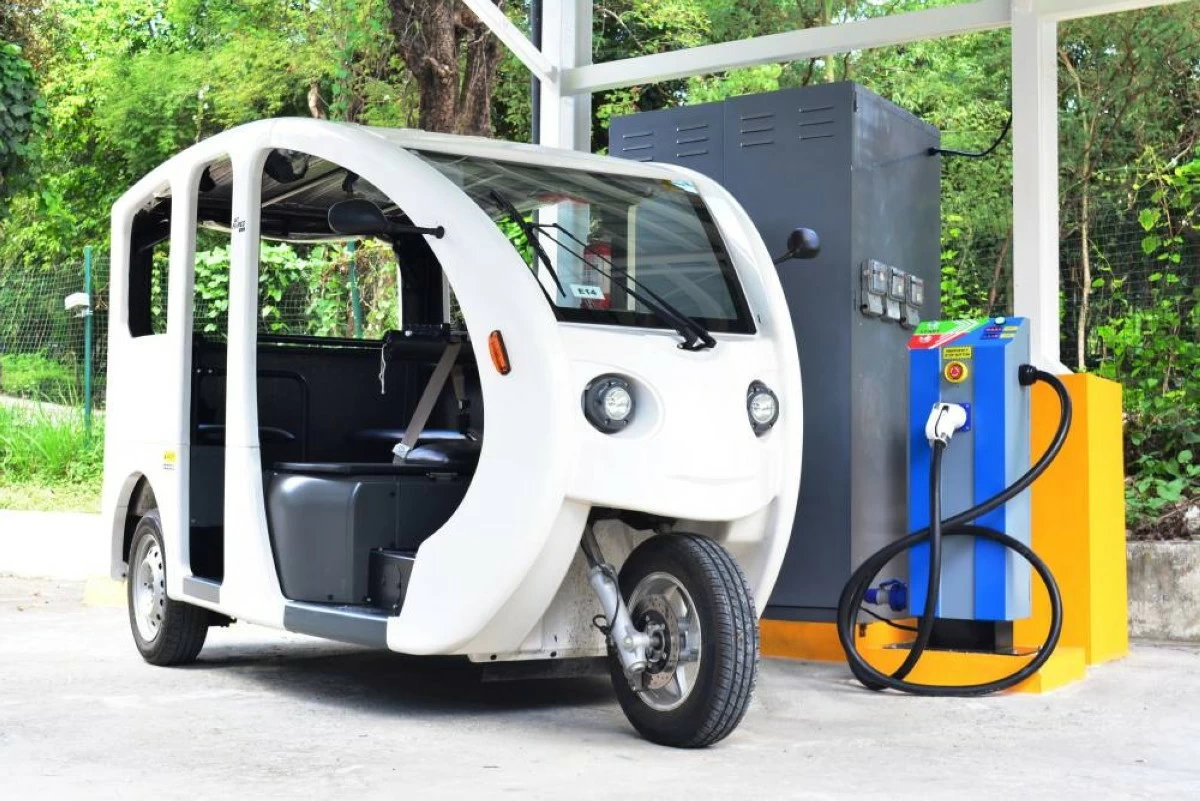
The race to expand the electric vehicle (EV) fleet is underway, with the Department of Energy (DOE) reporting that the number of commercial charging stations is nearing 1,000 nationwide.
Throughout the month of May, there are about 992 commercial chargers registered with the DOE, while there are about 482 battery swapping facilities that allow EV users to switch their nearly drained battery with a fully charged one.
So far, there are about 147 government-accredited EV charging station (EVCS) providers, which include those in the operations, service, and supply groups.
More EV charging providers are expected to help meet the growing demand for sustainable transportation by increasing accessibility for EV users and potentially welcoming lower costs through market competition.
Additional access to EV charging points could also encourage motorists to consider alternative and sustainable transportation, as hybrids and EVs have been exempted from coding schemes under the Electric Vehicle Industry Development Act (EVIDA).
By the end of the first quarter of this year, the DOE recorded 912 public EV charging stations, which is about 13 percent of the government’s target to establish 7,000 facilities by 2028.
The DOE has also made the implementing guidelines for EV charging stations available on its website to ensure compliance among stakeholders.
On the other hand, with the recent increase in accessible charging units, motorists using petroleum-based vehicles have experienced a slight decrease in visits to gas stations this week.
Diesel has dropped by ₱0.20 per liter, while Kerosene has also gone down by ₱0.40 per liter.
Gasoline price, however, will feel a ₱0.10-per-liter pinch by the last week of May.
Based on the recent DOE data on prevailing retail prices, gasoline prices ranged from ₱52.50 to ₱62.12 per liter, while diesel was at ₱54.15 per liter.
Kerosene also stood at ₱68. 92 per liter.