






With School Year (SY) 2025–2026 set to begin on June 16, the Department of Education (DepEd) is ramping up efforts to address infrastructure backlogs, hire new teachers, and implement curriculum reforms amid persistent challenges in the Philippine education system.
Manila Bulletin
 Philippines
National
DepEd prepares for SY 2025–2026: Tackling classroom shortages, boosting reforms
Philippines
National
DepEd prepares for SY 2025–2026: Tackling classroom shortages, boosting reforms
Philippines
National
DepEd prepares for SY 2025–2026: Tackling classroom shortages, boosting reforms
DepEd prepares for SY 2025–2026: Tackling classroom shortages, boosting reforms
Despite the pending resignation, DepEd Secretary Sonny Angara says school opening preparations are going well
Published May 28, 2025 01:12 pm


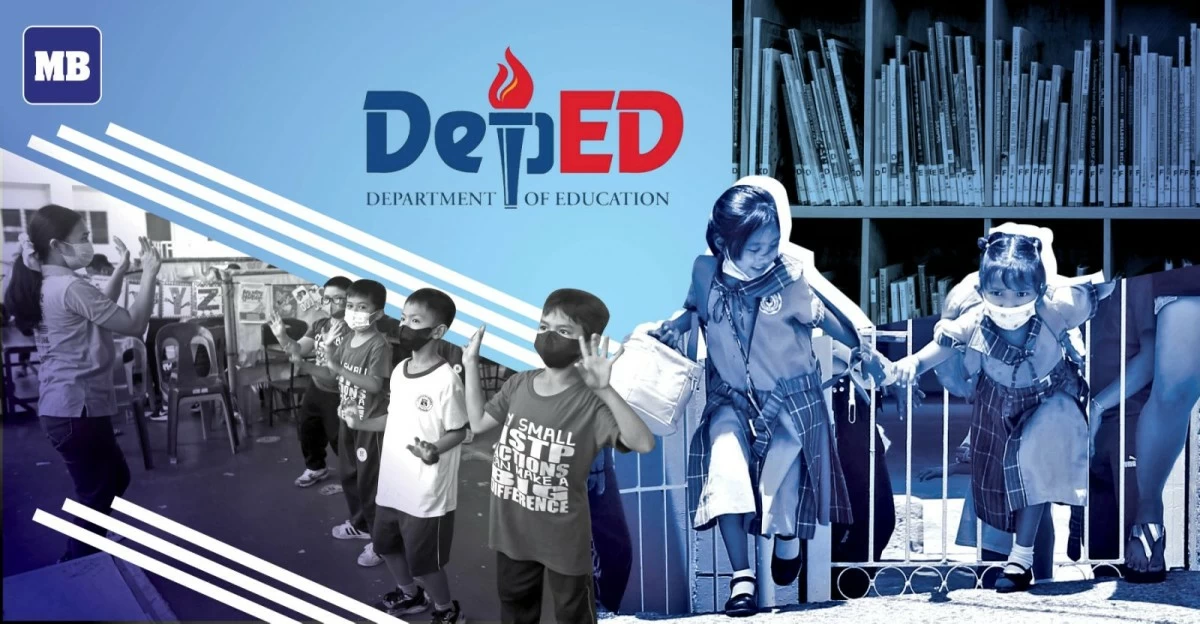
Amid existing and emerging challenges in the education system, the Department of Education (DepEd) said it is preparing for the opening of School Year (SY) 2025–2026, which is set for June 16, 2025.((DepEd / MB Visual Content Group)
In a media interview this week, Education Secretary Sonny Angara said DepEd is pushing forward with preparations despite long-standing issues such as classroom shortages and limited resources.
“Ok naman (It’s going well),” Angara said when asked about readiness for the school opening.
‘Brigada Eskwela’ 2025: Community support for school prep
DepEd is set to launch Brigada Eskwela 2025 a week before classes resume. The annual initiative mobilizes volunteers—including teachers, parents, and local groups—to clean and repair schools.
“Brigada Eskwela” helps ensure that schools are ready to welcome students.
Over 165,000-classroom backlog
Angara revealed that the classroom shortage has ballooned to over 165,000, especially in urban areas such as Region IV-A and the National Capital Region (NCR).
At current funding levels, he noted, closing the gap could take up to 30 years.
“Hindi nakakayanan ng current budget (The current budget cannot accommodate it),” Angara said.
To accelerate infrastructure development, DepEd is exploring the revival of the Public-Private Partnership (PPP) model with a 10-year payment plan.
Among its most recent initiatives to address the massive classroom shortage is a partnership with the social enterprise HOPE and a coalition of leading brands to launch “Generation HOPE” —an innovative campaign aimed at empowering consumers to support education and nation-building through meaningful marketing initiatives.
READ:
Hiring of 16,000 new teachers in 2025
DepEd is expediting the hiring of 16,000 new teachers by the end of 2025 to support the growing student population.
This is part of the 20,000 teaching positions funded under the Fiscal Year 2025 General Appropriations Act (GAA).
“Malaking bagay ito (This is a big deal),” Angara said, emphasizing the need to improve student-teacher ratios, especially in Kindergarten and Grades 1–6.
READ:
Shift systems, online learning address overcrowding
Due to the classroom shortage, many public schools continue to operate on double or triple shifts, with some students attending classes only on selected days.
“Meron tayong mga lugar na yung mga bata, hindi pumapasok araw-araw dahil wala silang classrooms (We have areas where children don’t attend school every day because there are no classrooms),” Angara noted.
To minimize learning disruption, DepEd is working to improve internet access for independent learners, particularly in Senior High School (SHS).
“Yung mga kailangan talaga na nasa classrooms—yung Nursery, Kindergarten, Grade 1—yung mga kailangan pa lang matuto magbasa at magsulat, yun talaga kailangan sa classroom (Those who truly need to be in classrooms—Nursery, Kindergarten, Grade 1—the ones just learning to read and write, they absolutely need to be in a classroom setting),” he added.
New Senior High School curriculum pilot in 2025
This school year, DepEd is piloting a revised SHS curriculum in several hundred schools.
Angara said the key reforms include fewer subjects over two years, flexible learning tracks aligned with student interests, and a stronger focus on career readiness and specialization.
“In Senior High School before, there were 33 subjects in two years. We’ve reduced that,” he said.
“What’s important is that we’re not boxing students in. They now have the freedom to explore their interests before committing to a specific track like Business or Science,” he added.
Pilot schools were selected based on their readiness in terms of faculty, facilities, and curriculum, Angara noted.
Public consultations, he said, showed a positive reception to these changes—especially from students, who appreciated having more freedom to pursue their interests.
On Angara’s courtesy resignation
Angara confirmed he has submitted a courtesy resignation in compliance with President Marcos’ directive.
When asked for updates, he replied, “Di ko pa alam (I don’t know yet).”
READ: