ADVERTISEMENT

Mesa ni Misis proves healthy meals start at home

The Manila Bulletin Sustainability Focus Session highlighted health and mindful eating

Published May 23, 2025 08:25 am  |  Updated May 23, 2025 05:09 pm
Juana Manahan-Yupangco, founder of Mesa ni Misis, shares how simple, plant-based meals can be a powerful first step toward lasting health. (Photos courtesy of Manila Bulletin Sustainability Focus Session)
Taking care of your health starts with what’s on your plate. Eating well is one of the most effective ways to stay strong, prevent disease, and maintain a good quality of life. In a time when fast and processed foods dominate, turning to simple, plant-based meals can be a powerful step toward lasting wellness.
That’s where Mesa ni Misis comes in. This nonprofit champions healthy eating by promoting plant-based meals made with local vegetables—many of them underused or forgotten. Through community-based programs, Mesa ni Misis helps make affordable, nutritious food accessible to more Filipino families, especially in areas where healthy options are limited.
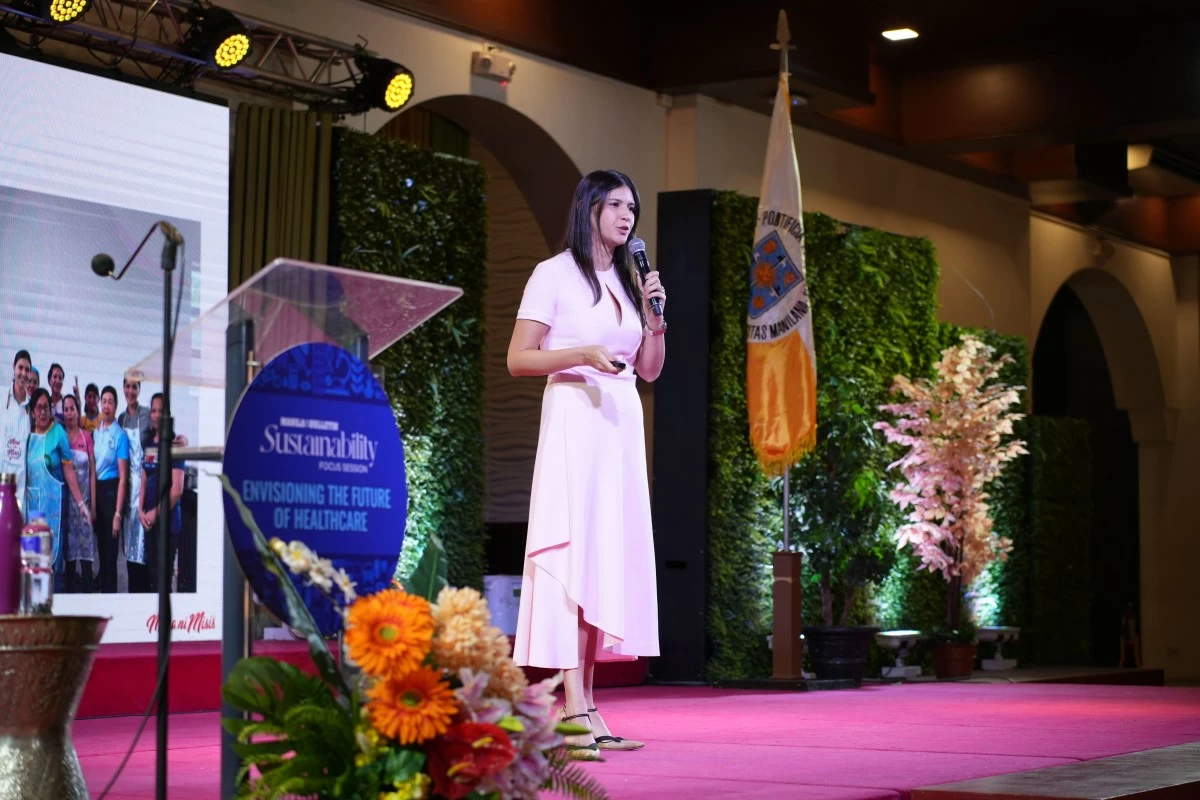
At the recent Manila Bulletin Sustainability Focus Session, which centered on solutions for primary healthcare in underserved areas, Mesa ni Misis founder Juana Manahan-Yupangco emphasized the vital role of food in wellness. Speaking to healthcare officials and students, she urged them to look beyond clinics and campuses—and start where health truly begins: at home. Many illnesses like diabetes and hypertension, she noted, can be prevented or managed through proper, plant-based nutrition.
“Health doesn't start here at your school—it really starts at home, with our moms and our caregivers. But the truth is, most of the people who provide food and are our primary source of nutrition don’t know anything about it. That knowledge isn’t available to our moms, yet they’re the ones responsible for nourishing our families,” shared Manahan-Yupangco. “That is my focus. That’s why we’re called Mesa ni Misis—to teach the moms and the caregivers about nutrition without scaring them with all the tables and things like that.”
She recalled being struck by the steep cost of basic medicines, something that hit even harder after giving birth, when she struggled to heal from her wounds. “What about the people who can’t afford it?” she remembered thinking, a moment that would later shape her advocacy. On her helper’s advice, she bathed in guava leaf water—an age-old remedy her doctor had initially discouraged. But within two days, her wounds healed.

The experience opened her eyes to the value of traditional knowledge and the need to make natural, accessible healing options more widely known, planting the seeds for what would become Mesa ni Misis.
In recent years, the movement has worked to make healthy eating more accessible by incorporating native vegetables into everyday meals. From local feeding programs to cooking workshops, Mesa ni Misis aims to shift how we view food and health. A key initiative involves training barangay health workers to promote nutritious, affordable, and underutilized vegetables at the community level.
A project in Ormoc is one of Manahan-Yupangco’s latest initiatives, running programs that adapt the Planetary Health Diet—a flexible, plant-forward approach that balances human health and environmental sustainability—to the Filipino context across different regions. She emphasized that sourcing locally is essential to this effort, which is why she frequently visits markets to connect with what’s available.

“My background is in cooking. It’s being a mom and it’s shopping. So I love visiting local markets to see what’s available. That’s the only way I can teach people what to cook and how to use their local produce. This is the anchor of what I do—I go around,” she said.
Her message was clear: Nutrition deserves the same attention as medical treatment. Healthy, locally sourced food can serve as the first line of defense against disease. To further support this message, Mesa ni Misis has begun working with local government units (LGUs) to embed nutrition education into existing public health and wellness programs.
As the session concluded, Mesa ni Misis reinforced a powerful message: Sustainable health doesn’t start in hospitals, it begins in our kitchens, with the choices we make every day.

Related Tags

Mesa ni Misis Manila Bulletin Sustainability Focus Session Juana Manahan-Yupangco
ADVERTISEMENT
.most-popular .layout-ratio{ padding-bottom: 79.13%; } @media (min-width: 768px) and (max-width: 1024px) { .widget-title { font-size: 15px !important; } }

{{ articles_filter_1561_widget.title }}

.most-popular .layout-ratio{ padding-bottom: 79.13%; } @media (min-width: 768px) and (max-width: 1024px) { .widget-title { font-size: 15px !important; } }

{{ articles_filter_1562_widget.title }}

.most-popular .layout-ratio{ padding-bottom: 79.13%; } @media (min-width: 768px) and (max-width: 1024px) { .widget-title { font-size: 15px !important; } }

{{ articles_filter_1563_widget.title }}

{{ articles_filter_1564_widget.title }}

.mb-article-details { position: relative; } .mb-article-details .article-body-preview, .mb-article-details .article-body-summary{ font-size: 17px; line-height: 30px; font-family: "Libre Caslon Text", serif; color: #000; } .mb-article-details .article-body-preview iframe , .mb-article-details .article-body-summary iframe{ width: 100%; margin: auto; } .read-more-background { background: linear-gradient(180deg, color(display-p3 1.000 1.000 1.000 / 0) 13.75%, color(display-p3 1.000 1.000 1.000 / 0.8) 30.79%, color(display-p3 1.000 1.000 1.000) 72.5%); position: absolute; height: 200px; width: 100%; bottom: 0; display: flex; justify-content: center; align-items: center; padding: 0; } .read-more-background a{ color: #000; } .read-more-btn { padding: 17px 45px; font-family: Inter; font-weight: 700; font-size: 18px; line-height: 16px; text-align: center; vertical-align: middle; border: 1px solid black; background-color: white; } .hidden { display: none; }
function initializeAllSwipers() { // Get all hidden inputs with cms_article_id document.querySelectorAll('[id^="cms_article_id_"]').forEach(function (input) { const cmsArticleId = input.value; const articleSelector = '#article-' + cmsArticleId + ' .body_images'; const swiperElement = document.querySelector(articleSelector); if (swiperElement && !swiperElement.classList.contains('swiper-initialized')) { new Swiper(articleSelector, { loop: true, pagination: false, navigation: { nextEl: '#article-' + cmsArticleId + ' .swiper-button-next', prevEl: '#article-' + cmsArticleId + ' .swiper-button-prev', }, }); } }); } setTimeout(initializeAllSwipers, 3000); const intersectionObserver = new IntersectionObserver( (entries) => { entries.forEach((entry) => { if (entry.isIntersecting) { const newUrl = entry.target.getAttribute("data-url"); if (newUrl) { history.pushState(null, null, newUrl); let article = entry.target; // Extract metadata const author = article.querySelector('.author-section').textContent.replace('By', '').trim(); const section = article.querySelector('.section-info ').textContent.replace(' ', ' '); const title = article.querySelector('.article-title h1').textContent; // Parse URL for Chartbeat path format const parsedUrl = new URL(newUrl, window.location.origin); const cleanUrl = parsedUrl.host + parsedUrl.pathname; // Update Chartbeat configuration if (typeof window._sf_async_config !== 'undefined') { window._sf_async_config.path = cleanUrl; window._sf_async_config.sections = section; window._sf_async_config.authors = author; } // Track virtual page view with Chartbeat if (typeof pSUPERFLY !== 'undefined' && typeof pSUPERFLY.virtualPage === 'function') { try { pSUPERFLY.virtualPage({ path: cleanUrl, title: title, sections: section, authors: author }); } catch (error) { console.error('ping error', error); } } // Optional: Update document title if (title && title !== document.title) { document.title = title; } } } }); }, { threshold: 0.1 } ); function showArticleBody(button) { const article = button.closest("article"); const summary = article.querySelector(".article-body-summary"); const body = article.querySelector(".article-body-preview"); const readMoreSection = article.querySelector(".read-more-background"); // Hide summary and read-more section summary.style.display = "none"; readMoreSection.style.display = "none"; // Show the full article body body.classList.remove("hidden"); } document.addEventListener("DOMContentLoaded", () => { let loadCount = 0; // Track how many times articles are loaded const offset = [1, 2, 3, 4, 5, 6, 7, 8, 9, 10]; // Offset values const currentUrl = window.location.pathname.substring(1); let isLoading = false; // Prevent multiple calls if (!currentUrl) { console.log("Current URL is invalid."); return; } const sentinel = document.getElementById("load-more-sentinel"); if (!sentinel) { console.log("Sentinel element not found."); return; } function isSentinelVisible() { const rect = sentinel.getBoundingClientRect(); return ( rect.top < window.innerHeight && rect.bottom >= 0 ); } function onScroll() { if (isLoading) return; if (isSentinelVisible()) { if (loadCount >= offset.length) { console.log("Maximum load attempts reached."); window.removeEventListener("scroll", onScroll); return; } isLoading = true; const currentOffset = offset[loadCount]; window.loadMoreItems().then(() => { let article = document.querySelector('#widget_1690 > div:nth-last-of-type(2) article'); intersectionObserver.observe(article) loadCount++; }).catch(error => { console.error("Error loading more items:", error); }).finally(() => { isLoading = false; }); } } window.addEventListener("scroll", onScroll); });

Sign up by email to receive news.