ADVERTISEMENT

20 years of activism in Congress

Published May 17, 2025 12:05 am  |  Updated May 16, 2025 05:42 pm
HOTSPOT
If in the year 2000 you told me that Bayan Muna would top the 2001 partylist elections and get re-elected at least six consecutive times in Congress, I would not have believed you.
Bayan Muna just was not supposed to succeed. It is a progressive leftwing party, whose first nominees were the likes of Satur Ocampo, Crispin Beltran and Liza Maza. We campaigned really hard in 2001, hoping against hope that Bayan Muna would get a decent number of votes and perhaps at least one seat.
But in that election of 2001, Bayan Muna surprised the nation and itself with a convincing and huge victory as topnotcher in the partylist race. After all the votes were counted, Bayan Muna tallied 1,708,253 votes or 26.19 percent of all partylist votes. More than one in every four partylist voters cast their ballots for Bayan Muna. If there was no three-seat limit, Bayan Muna would have been entitled to 13 seats based on the original formula of two percent per seat. No other partylist has achieved such vote share in the partylist race.
The entry to Congress of Bayan Muna Representatives Satur Ocampo, Crispin Beltran and Liza Maza brought a certain level of excitement to Congress, long dominated by traditional politicians and political dynasties. Finally, ordinary people had champions who they could call their very own.
Exactly how it did it, Bayan Muna now has more time to explain, perhaps in assessments and summing-ups, but also in fora and even books waiting to be written.
For me, it won because it was the partylist of the EDSA 1 and 2 generations. Voters knew Bayan Muna was the party of veterans of the martial law resistance and especially the recent EDSA 2 uprising, happening just months prior to the election.
Bayan Muna proved the 2001 victory was not a fluke. It repeated the feat in 2004, still as the partylist election topnotcher with 9.46 percent of the vote. Citing the huge vote received in 2001, the decision of sectoral groups to field their own partylists proved correct. It brought along to Congress new partylist Anakpawis (538,396 votes, or 4.83 percent) and Gabriela (464.586, or 3.65 percent).
When Congress convened after the 2004 elections, voters were happy to see more activist lawmakers in the roll of the House members: Bayan Muna’s Ocampo, Joel Virador and Teddy Casino, were joined by Anakpawis’ Beltran and Rafael Mariano, and Gabriela’s Maza and Luz Ilagan.
Ocampo, a respected journalist-turned-revolutionary who reappeared in 1986 as peace talks negotiator, would be elected as chair of the House special committee on peace, reconciliation and unity. He became the first activist lawmaker to head a House panel.
The pages of this paper and other newspapers would document the bills, resolutions, speeches, and interventions of Bayan Muna and the independent bloc it led in Congress in those years, especially with the explosion of revelations about alleged tampering with the results of the 2004 elections in Mindanao.
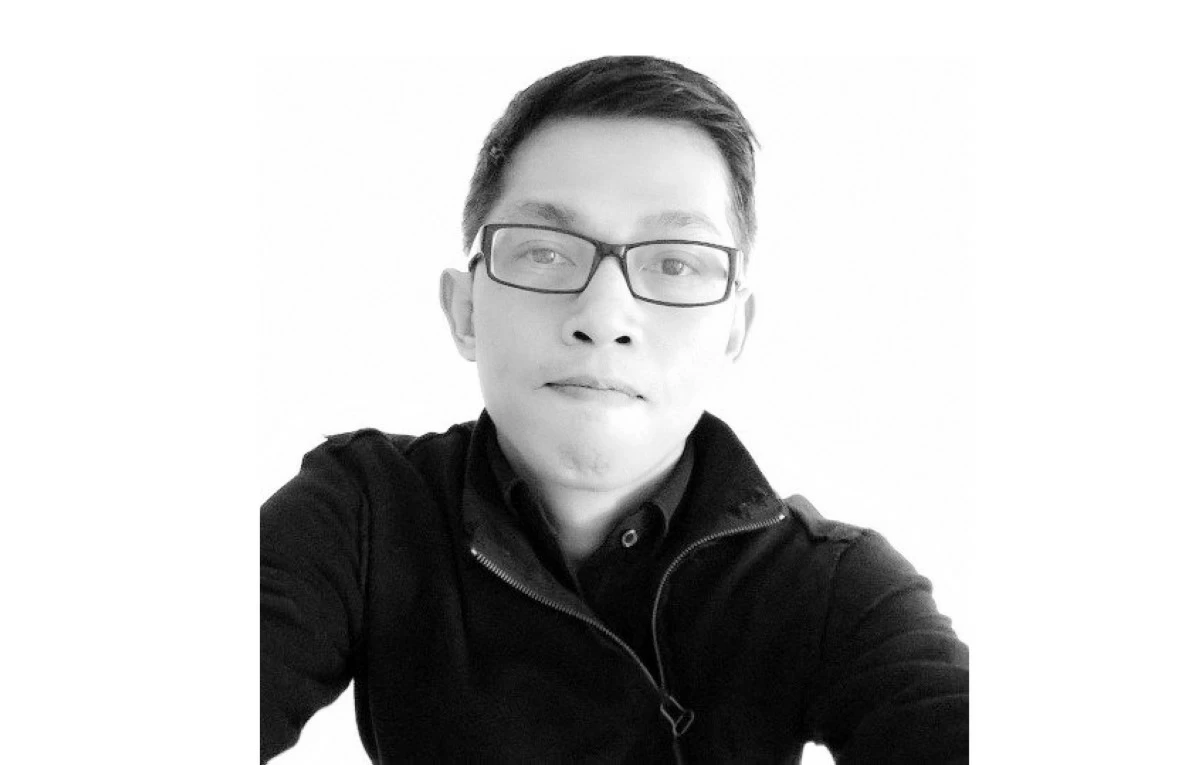
I was in Congress then, serving as public information officer of Ka Satur. I personally witnessed the time when the administration filed rebellion charges against Ka Satur and the five other lawmakers from Bayan Muna, Anakpawis and Gabriela. Fortunately, the House then granted them protective custody against any arrest. Like other staff, we stayed with the representatives for weeks inside the Batasan Pambansa premises.
That celebrated rebellion case against the “Batasan 6” would later be dismissed.
I guess that was the beginning of a change in the government’s view of activist presence in Congress, despite them winning their seats in the House. By the next elections of 2007, trumped-up disqualification cases would be filed against Bayan Muna, Anakpawis and Gabriela, months after the president.
A year prior, the president signed Executive Order 493 forming the Inter-Agency Legal Action Group “to provide effective and efficient handling and coordination of the investigative and prosecutorial aspects of the fight against threats to national security.” Twelve years later, another president organized the National Task Force to End Local Communist Armed Conflict (NTF-ELCAC).
No other partylist has had to endure such a level of official hostility, coinciding almost exactly with the entry to Congress. Partylists of traditional politicians and political dynasties are only happy to take over.
ADVERTISEMENT
.most-popular .layout-ratio{ padding-bottom: 79.13%; } @media (min-width: 768px) and (max-width: 1024px) { .widget-title { font-size: 15px !important; } }

{{ articles_filter_1561_widget.title }}

.most-popular .layout-ratio{ padding-bottom: 79.13%; } @media (min-width: 768px) and (max-width: 1024px) { .widget-title { font-size: 15px !important; } }

{{ articles_filter_1562_widget.title }}

.most-popular .layout-ratio{ padding-bottom: 79.13%; } @media (min-width: 768px) and (max-width: 1024px) { .widget-title { font-size: 15px !important; } }

{{ articles_filter_1563_widget.title }}

{{ articles_filter_1564_widget.title }}

.mb-article-details { position: relative; } .mb-article-details .article-body-preview, .mb-article-details .article-body-summary{ font-size: 17px; line-height: 30px; font-family: "Libre Caslon Text", serif; color: #000; } .mb-article-details .article-body-preview iframe , .mb-article-details .article-body-summary iframe{ width: 100%; margin: auto; } .read-more-background { background: linear-gradient(180deg, color(display-p3 1.000 1.000 1.000 / 0) 13.75%, color(display-p3 1.000 1.000 1.000 / 0.8) 30.79%, color(display-p3 1.000 1.000 1.000) 72.5%); position: absolute; height: 200px; width: 100%; bottom: 0; display: flex; justify-content: center; align-items: center; padding: 0; } .read-more-background a{ color: #000; } .read-more-btn { padding: 17px 45px; font-family: Inter; font-weight: 700; font-size: 18px; line-height: 16px; text-align: center; vertical-align: middle; border: 1px solid black; background-color: white; } .hidden { display: none; }
function initializeAllSwipers() { // Get all hidden inputs with cms_article_id document.querySelectorAll('[id^="cms_article_id_"]').forEach(function (input) { const cmsArticleId = input.value; const articleSelector = '#article-' + cmsArticleId + ' .body_images'; const swiperElement = document.querySelector(articleSelector); if (swiperElement && !swiperElement.classList.contains('swiper-initialized')) { new Swiper(articleSelector, { loop: true, pagination: false, navigation: { nextEl: '#article-' + cmsArticleId + ' .swiper-button-next', prevEl: '#article-' + cmsArticleId + ' .swiper-button-prev', }, }); } }); } setTimeout(initializeAllSwipers, 3000); const intersectionObserver = new IntersectionObserver( (entries) => { entries.forEach((entry) => { if (entry.isIntersecting) { const newUrl = entry.target.getAttribute("data-url"); if (newUrl) { history.pushState(null, null, newUrl); let article = entry.target; // Extract metadata const author = article.querySelector('.author-section').textContent.replace('By', '').trim(); const section = article.querySelector('.section-info ').textContent.replace(' ', ' '); const title = article.querySelector('.article-title h1').textContent; // Parse URL for Chartbeat path format const parsedUrl = new URL(newUrl, window.location.origin); const cleanUrl = parsedUrl.host + parsedUrl.pathname; // Update Chartbeat configuration if (typeof window._sf_async_config !== 'undefined') { window._sf_async_config.path = cleanUrl; window._sf_async_config.sections = section; window._sf_async_config.authors = author; } // Track virtual page view with Chartbeat if (typeof pSUPERFLY !== 'undefined' && typeof pSUPERFLY.virtualPage === 'function') { try { pSUPERFLY.virtualPage({ path: cleanUrl, title: title, sections: section, authors: author }); } catch (error) { console.error('ping error', error); } } // Optional: Update document title if (title && title !== document.title) { document.title = title; } } } }); }, { threshold: 0.1 } ); function showArticleBody(button) { const article = button.closest("article"); const summary = article.querySelector(".article-body-summary"); const body = article.querySelector(".article-body-preview"); const readMoreSection = article.querySelector(".read-more-background"); // Hide summary and read-more section summary.style.display = "none"; readMoreSection.style.display = "none"; // Show the full article body body.classList.remove("hidden"); } document.addEventListener("DOMContentLoaded", () => { let loadCount = 0; // Track how many times articles are loaded const offset = [1, 2, 3, 4, 5, 6, 7, 8, 9, 10]; // Offset values const currentUrl = window.location.pathname.substring(1); let isLoading = false; // Prevent multiple calls if (!currentUrl) { console.log("Current URL is invalid."); return; } const sentinel = document.getElementById("load-more-sentinel"); if (!sentinel) { console.log("Sentinel element not found."); return; } function isSentinelVisible() { const rect = sentinel.getBoundingClientRect(); return ( rect.top < window.innerHeight && rect.bottom >= 0 ); } function onScroll() { if (isLoading) return; if (isSentinelVisible()) { if (loadCount >= offset.length) { console.log("Maximum load attempts reached."); window.removeEventListener("scroll", onScroll); return; } isLoading = true; const currentOffset = offset[loadCount]; window.loadMoreItems().then(() => { let article = document.querySelector('#widget_1690 > div:nth-last-of-type(2) article'); intersectionObserver.observe(article) loadCount++; }).catch(error => { console.error("Error loading more items:", error); }).finally(() => { isLoading = false; }); } } window.addEventListener("scroll", onScroll); });

Sign up by email to receive news.