






A question over the total number of party-list seats has prompted the Commission on Elections (Comelec) to call for formal position papers from concerned parties before finalizing the allocation and proclamation of winning groups in the 2025 midterm elections.
Manila Bulletin
 Philippines
National
63 or 64 seats? Comelec to resolve party-list allocation amid proclamation preps
Philippines
National
63 or 64 seats? Comelec to resolve party-list allocation amid proclamation preps
Philippines
National
63 or 64 seats? Comelec to resolve party-list allocation amid proclamation preps
63 or 64 seats? Comelec to resolve party-list allocation amid proclamation preps
By Dhel Nazario
Published May 16, 2025 10:42 am
|
Updated May 16, 2025 01:09 pm


At A Glance
- A dispute over the total number of party-list seats—whether 63 or 64—has prompted the Comelec to call for formal position papers from party-list groups before finalizing allocations and proclaiming winners in the 2025 elections.
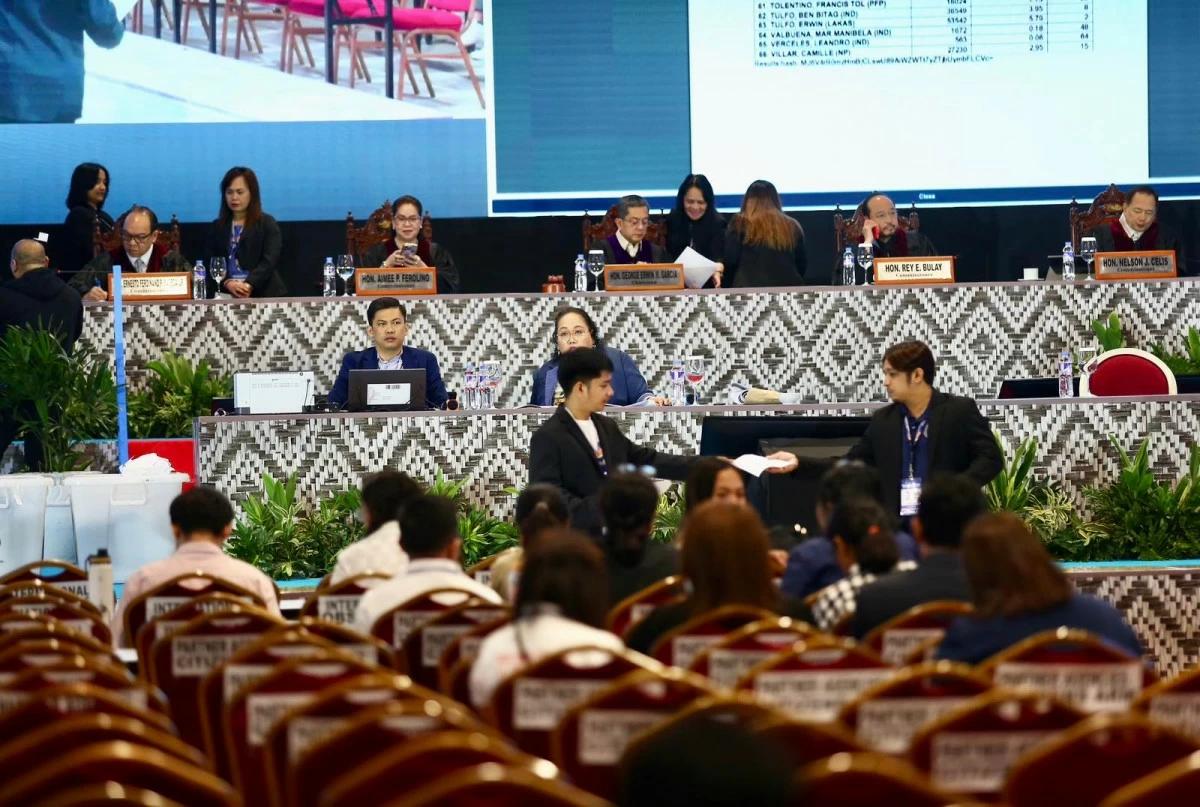
During Thursday’s session of the National Board of Canvassers (NBOC), Atty. Karlo Domondon of the PhilRECA Party-list filed a manifestation and motion on the declared number of party-list seats. Domondon asserted that, contrary to the earlier statement of Comelec Chairman George Erwin Garcia that there are 63 seats up for allocation, the correct number should be 64.
"According to our computation, Your Honor, with all due respect, we believe that the seats must be 64, and it is contained in our motion,” Domondon stated, requesting that the issue be resolved before the end of the canvass.
In response, Comelec Chairman Garcia acknowledged the motion and invited all party-list representatives, lawyers, and legal counsels to submit formal position papers to address key questions surrounding the party-list seat allocation process.
Garcia outlined three central issues for resolution:
- Whether the correct number of party-list seats is 63 or 64
- How to compute the entitlement to multiple seats, specifically for groups that may qualify for two or three seats, based on jurisprudence and past COMELEC practice
- The status of disqualified or de-accredited party-lists and how this may affect the final allocation
“These are all very important,” Garcia said. “So that everybody will be heard on this particular issue, and we can incorporate all considerations in the promulgation of a resolution.”
He emphasized that with the submission of position papers, they would no longer have any need for oral argumentation.
“The issue of how many seats, whether 63 or 64, the entitlement to two or three seats, or none at all, must all be addressed comprehensively,” Garcia stressed. “There are even cases of party-lists whose accreditations were cancelled. All of this must be factored into the resolution.”
The final proclamation of party-list winners is tentatively scheduled for Monday, May 19, pending the resolution of these issues. The proclamation of the 12 winning senators is expected to proceed earlier, on Saturday, May 17, if recommended by the Supervisory Group.
The party-list system, designed to ensure sectoral representation in the House of Representatives, allocates 20 percent of the chamber’s total seats. The number of party-list seats each group receives is based on the number of votes garnered, following a complex formula shaped by both law and Supreme Court rulings.
As of Thursday, the canvassing of all 175 COCs nationwide and overseas has been completed.