






 Business
The Economy
BSP chief warns trade shocks pose greater threat than supply issues
Business
The Economy
BSP chief warns trade shocks pose greater threat than supply issues
BSP chief warns trade shocks pose greater threat than supply issues
Remolona: No tools for trade war
By Derco Rosal


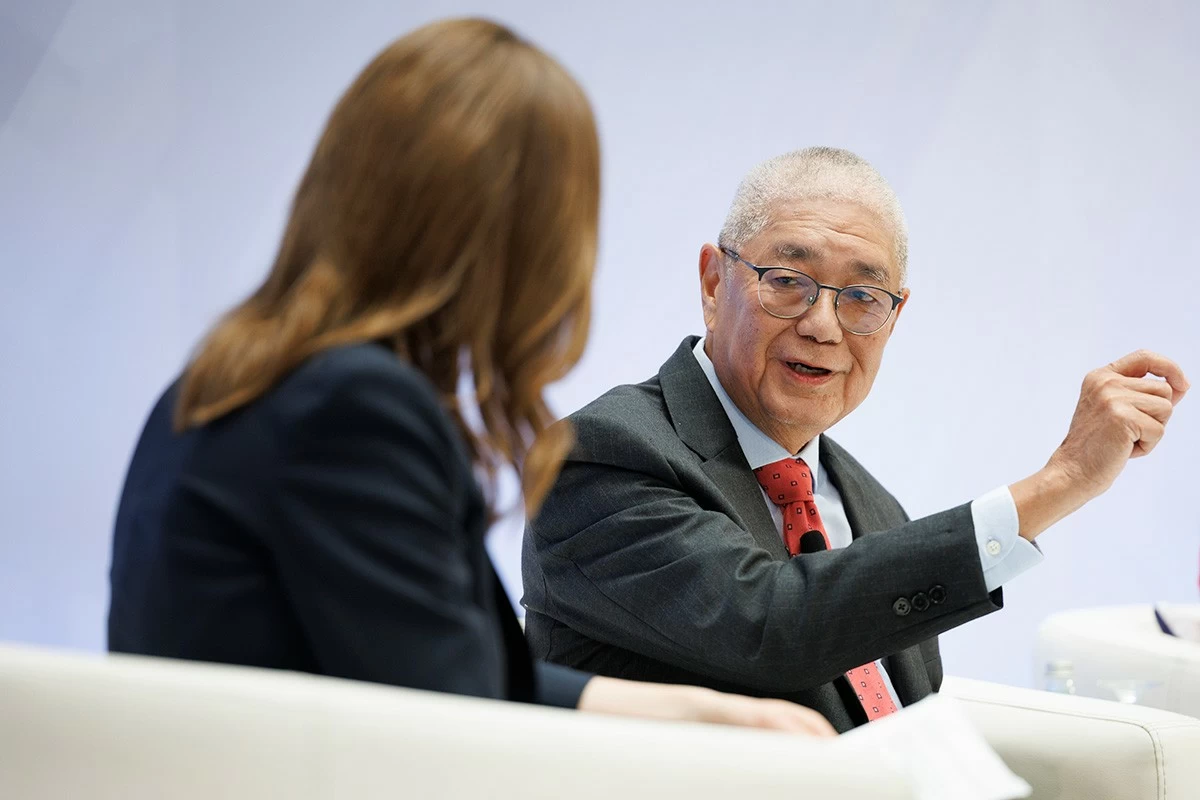
Bangko Sentral ng Pilipinas (BSP) Governor Eli Remolona Jr. has warned that trade shocks are more damaging than supply shocks—as they can shrink the country’s capital stock and slow growth—which monetary policy is not equipped to address.
Remolona said at the International Monetary Fund (IMF) meetings in Washington, D.C. that trade shocks are more challenging to manage than supply shocks and could have lasting impacts on the economy.
“Supply shocks come and go, [but] this kind of shock that we are seeing now tends to stick around,” Remolona said during the IMF flagship seminar centered on the evolving art of monetary policy in developing countries on April 25. This event was held on the sidelines of the IMF-World Bank Group (WBG) spring meetings.
“Trade shocks tend to affect investment in the longer term, partly because investment goods tend to be highly dependent on imports,” Remolona further said.
Remolona then “cautioned that trade shocks could cause the capital stock to shrink, potentially resulting in a lower growth trajectory for developing countries,” including the Philippines.
According to the Philippine Statistics Authority (PSA), the local economy accelerated by 5.4 percent in the first quarter of 2025, almost stagnant from the 5.3-percent growth posted in the fourth quarter of 2024. The government blamed this sluggish growth on the 19.9-percent decline in net exports.
“Unfortunately, monetary policy doesn’t have the tools for that kind of shock,” the central bank governor noted.
Among the major trade shocks were the across-the-board punitive tariffs imposed by United States (US) President Donald Trump on imports from its trading partners, including a 17-percent reciprocal tariff on Philippine exports.
Shortly after imposing the tariffs, Trump ordered a three-month pause and is now engaging in rate negotiations with various governments.
Despite having no tools for trade shocks, Remolona stressed that the continued slowdown of inflation gives the BSP “more degrees of freedom to reduce policy rates.”
April’s inflation rate of 1.4 percent is the slowest in over five years, since November 2019’s 1.2 percent, before the pandemic disrupted the country.
Last month’s inflation rate fell significantly below the government’s target band of two percent to four percent, but remained within the BSP’s forecast range of 1.3 percent to 2.1 percent.
After the quartet-point cut in April, private sector economists now expect another 75-bps reduction in the key borrowing costs by year-end, bringing down the current 5.5 percent rate to 4.75 percent.
The BSP earlier signalled a “more accommodative” policy stance following the release of the below-target inflation data. Remolona had also said that the central bank “still has room to further ease monetary policy.”
The IMF-WBG spring meetings were held from April 21 to 26, with the IMF focusing on economic stability and growth.