






As the Philippines grapples with a functional literacy crisis, a group of teachers on Monday, May 5, emphasized that systemic issues — not teacher performance — are at the core of the problem.
Manila Bulletin
 Philippines
National
Philippines faces a functional literacy crisis — but don't 'blame' the teachers
Philippines
National
Philippines faces a functional literacy crisis — but don't 'blame' the teachers
Philippines
National
Philippines faces a functional literacy crisis — but don't 'blame' the teachers
Philippines faces a functional literacy crisis — but don't 'blame' the teachers
Group says systemic issues, not classroom shortcomings, are at the root of the country's alarming literacy rates
Published May 5, 2025 09:46 pm


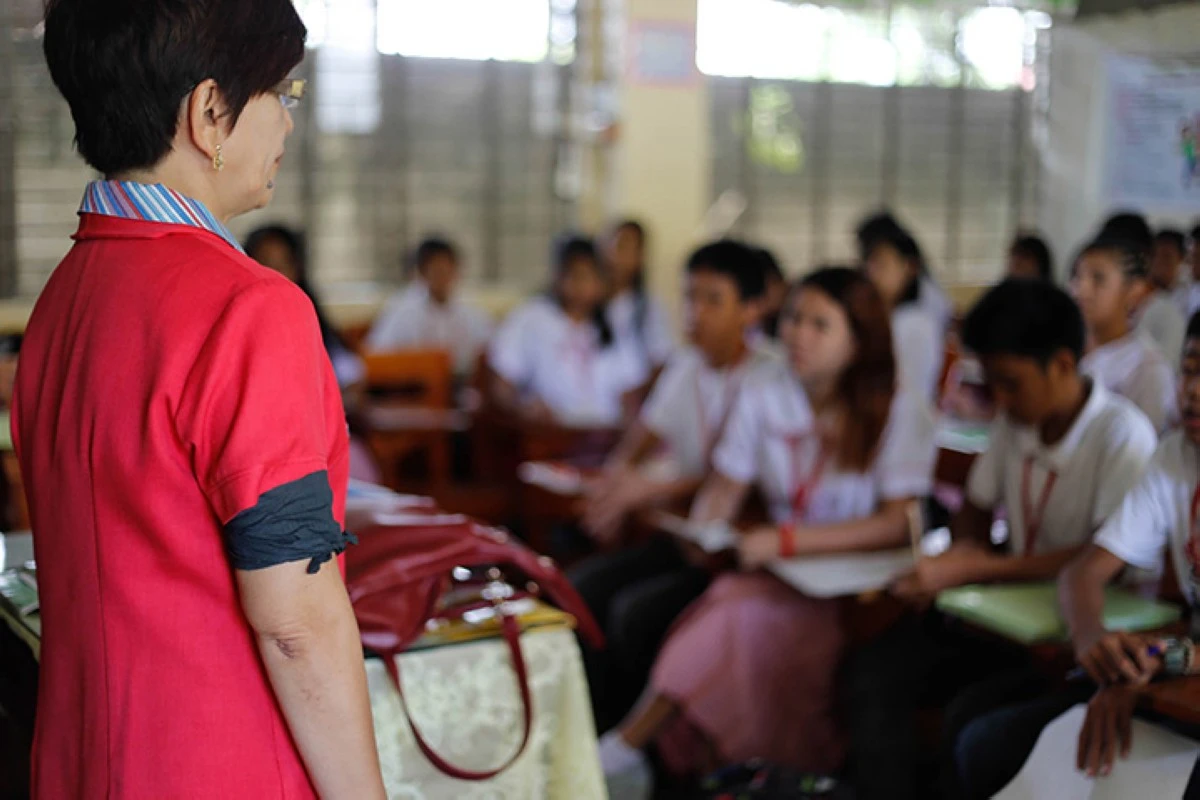
A group reiterated that teachers are not the barrier to reform but the key to it and that meaningful education reform must begin with respecting and empowering the profession. (JOJO RINOZA /FILE PHOTO / MANILA BULLETIN)
“The persistently low levels of functional literacy in the country reflect the chronic neglect of our educational systems—something we in the teaching profession have long been warning about,” said the Teachers’ Dignity Coalition (TDC).
TDC issued a statement following the release of the latest 2024 Functional Literacy, Education, and Mass Media Survey (FLEMMS), which revealed that over 18 million junior high school graduates struggle with comprehension, raising concerns about functional literacy in the country.
Teachers reject blame, demand structural reform
For TDC, the 2024 FLEMMS results should not merely be viewed as statistical data, but as a “loud, clear, and urgent call to action.”
However, the group stressed that teachers should not be blamed for the crisis.
“We strongly reject and denounce the growing narrative in some quarters that the solution lies primarily in retraining teachers, as if they are to blame for the failures of the system,” TDC said. “Let us be clear: this crisis is not the fault of our teachers,” the group added.
According to TDC, narratives suggesting that retraining teachers is the key solution are not only flawed but also “profoundly unjust.”
“Teachers are not the problem; they are among the primary victims of a system riddled with underfunding, misguided policies, and deep-rooted socio-economic inequalities,” TDC said, noting that teachers are already overworked, underpaid, and under-supported.
Beyond a literacy issue
Highlighting the daily struggles of students who attend overcrowded and under-resourced schools while battling hunger and poverty, TDC said the crisis is not “merely a literacy issue—it is a social justice issue.”
“Behind these troubling figures are millions of Filipino children who go to school hungry, who struggle to understand lessons while preoccupied with basic survival,” TDC said.
“These are the same learners who walk long distances to reach overcrowded, under-resourced schools; who share tattered textbooks and broken chairs; and whose parents can barely afford their school supplies,” the group added.
Education budget falls short of constitutional mandate
Among the pressing issues related to the state of the country’s education system, TDC pointed to the national budget.
TDC lamented that the 2025 national education budget once again fails to meet the constitutional requirement of prioritizing education.
“Despite the urgency, the government's 2025 national budget for education does not reflect any serious intent to reverse this decline,” the group argued.
For instance, TDC noted that the allocation for the Department of Education (DepEd) once again falls far below the constitutional mandate.
“How can we expect quality outcomes when even the most basic inputs are lacking—and the law itself is being ignored?” the group stressed.
The group also criticized the continued diversion of public funds to confidential and intelligence expenses, infrastructure programs of questionable value, and politically driven assistance schemes.
“Worse, we continue to witness a significant portion of public funds being funneled into questionable programs, controversial infrastructure projects, patronage-driven dole-outs disguised as assistance, confidential and intelligence funds, and other non-educational priorities,” TDC said.
“This rampant misuse of taxpayers’ money, fueled by a culture of impunity and systemic corruption, robs our children and our future of the resources they rightfully deserve,” the group added.
Support the teachers
The TDC reiterated that teachers are not the barrier to reform but the key to it, and that meaningful education reform must begin with respecting and empowering the profession.
“Teachers’ salaries remain low—among the lowest in Southeast Asia,” TDC said, noting that their benefits are often “delayed and insufficient,” while opportunities for professional development are rare and, when available, frequently tokenistic or burdensome.
“Many teachers are demoralized, exhausted, and contemplating leaving the profession—not because they have lost their passion, but because the system has consistently failed to support them,” TDC added.
TDC also pointed to the “congested and often unrealistic curriculum,” which attempts to cover too much content in too little time with limited instructional resources.
This, the group added, is further complicated by “frequently changing and contradictory policies” on student discipline, assessment, and teacher performance, which add “more stress and confusion” to an already overburdened workforce.
TDC noted that functional literacy will “never improve” unless the hunger and poverty that learners face, the demoralization and burnout of teachers, the deteriorating state of classrooms, the chronic lack of learning resources, and a curriculum that overwhelms but underdelivers are confronted head-on.
“We cannot speak of improving literacy or learning outcomes without first addressing these root problems,” TDC said.
READ: