

ADVERTISEMENT

How DepEd Secretary Angara plans to improve education quality for Filipino youth

Published Jul 24, 2024 02:42 pm

Improving the quality of education for Filipino learners was one of the foremost directives from President Marcos, newly appointed Department of Education (DepEd) Secretary Sonny Angara said on Wednesday, July 24.
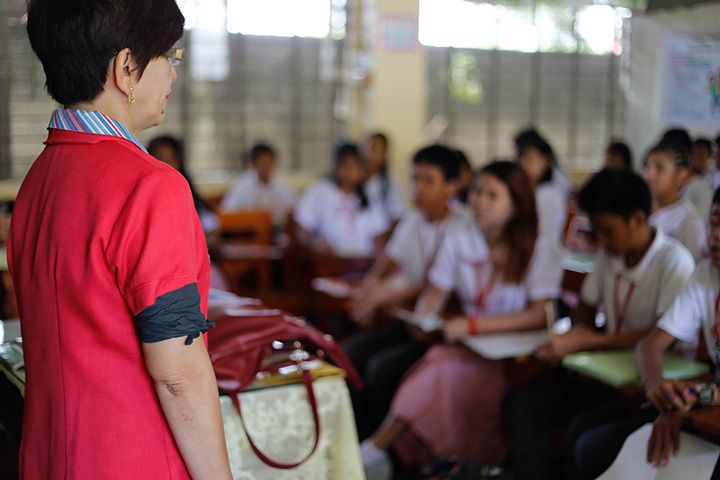
JOJO RINOZA  FILE PHOTO  MANILA BULLETIN.jpg
JOJO RINOZA / FILE PHOTO / MANILA BULLETIN

“This is a huge challenge,” Angara said during the second day of the 2024 Post-State of the Nation Address (SONA) Discussions. He noted that a comprehensive plan and strategic approach are needed to accomplish this task.

“The President knows it will take a long time, but we need to plant seeds for the long term and achieve some wins in the short term,” he added.

Improving performance

Specifically, Angara mentioned that improving the quality of education, as reflected in the scores of Filipino students on local and international tests, is among the marching orders from President Marcos.

“The President also emphasized the need to improve our scores in local and international tests [and] one of our recommendations is to establish a task force for the PISA [Program for International Student Assessment],” Angara said.

PISA is an international assessment that measures 15-year-old students' reading, mathematics, and science literacy.

When the Philippines participated in PISA for the first time in 2018, Filipino students ranked last among 79 participating countries and economies in reading and second to last in science and mathematics.

In 2022, when the country participated for the second time, the results showed that the proportion of students scoring below a baseline level of proficiency “did not change significantly” compared to the 2018 results.

READ:

https://mb.com.ph/2023/12/5/pisa-2022-no-significant-improvements-seen-in-ph-students-performance

Early on, Angara said DepEd is preparing for the 2025 PISA, which will focus on science.

“We're inserting 30-minute reading periods between classes to strengthen the reading and comprehension skills of our students, and we're supplementing current initiatives like Catch-Up Fridays with a focus on science projects because the upcoming 2025 PISA exam will focus on science,” he explained.

READ:

https://mb.com.ph/2024/1/13/what-is-catch-up-fridays

DepEd, Angara explained, is also planning to create some PISA-type quizzes and examinations to be given to students periodically.

“We need to monitor their progress to see if the interventions we are implementing are having an effect, and hopefully, we can also gather data at a more granular level—meaning at the student level—where we can really monitor who is adapting well to the new learning programs,” he added.

To address learning losses, Angara said the National Learning Recovery Program will also continue.

Better teaching, learning environment

To improve education quality, Angara emphasized the important role of teachers and the support provided to them and the learners.

READ:

https://mb.com.ph/2024/7/22/angara-eyes-key-strategies-to-close-gaps-in-basic-education-across-the-philippines

“We need to modify local conditions to perform better on these exams, as well as change our pedagogy—or the way we teach—to better approximate a problem-solving approach and develop critical thinkers,” Angara explained.

As highlighted in PISA and other international large-scale assessments, Filipino students do not fare well in problem-solving and critical thinking.

Angara noted that addressing the state of Philippine education requires setting both short-term and long-term goals.

“In the short term, to develop these skills, we are including periods in the everyday curriculum for reading to strengthen the foundations of literacy and numeracy,” Angara said. “But in the long term, we’ll have to institute some reforms in how we teach,” he added.

To improve education quality, Angara highlighted the need to “utilize significant concepts going forward.”

As President Marcos pointed out during his third SONA on July 22, Angara also agreed that harnessing new technologies will help improve education outcomes.

“We need our students to be technologically savvy, and across the Philippines, we need to provide better inputs for our students,” he added.

RELATED STORY:

https://mb.com.ph/2023/5/29/ph-education-in-crisis-1

Related Tags

PISA crisis in education Sonny Angara DepEd DepEd Secretary Sonny Angara
ADVERTISEMENT
.most-popular .layout-ratio{ padding-bottom: 79.13%; } @media (min-width: 768px) and (max-width: 1024px) { .widget-title { font-size: 15px !important; } }

{{ articles_filter_1561_widget.title }}

.most-popular .layout-ratio{ padding-bottom: 79.13%; } @media (min-width: 768px) and (max-width: 1024px) { .widget-title { font-size: 15px !important; } }

{{ articles_filter_1562_widget.title }}

.most-popular .layout-ratio{ padding-bottom: 79.13%; } @media (min-width: 768px) and (max-width: 1024px) { .widget-title { font-size: 15px !important; } }

{{ articles_filter_1563_widget.title }}

{{ articles_filter_1564_widget.title }}

.mb-article-details { position: relative; } .mb-article-details .article-body-preview, .mb-article-details .article-body-summary{ font-size: 17px; line-height: 30px; font-family: "Libre Caslon Text", serif; color: #000; } .mb-article-details .article-body-preview iframe , .mb-article-details .article-body-summary iframe{ width: 100%; margin: auto; } .read-more-background { background: linear-gradient(180deg, color(display-p3 1.000 1.000 1.000 / 0) 13.75%, color(display-p3 1.000 1.000 1.000 / 0.8) 30.79%, color(display-p3 1.000 1.000 1.000) 72.5%); position: absolute; height: 200px; width: 100%; bottom: 0; display: flex; justify-content: center; align-items: center; padding: 0; } .read-more-background a{ color: #000; } .read-more-btn { padding: 17px 45px; font-family: Inter; font-weight: 700; font-size: 18px; line-height: 16px; text-align: center; vertical-align: middle; border: 1px solid black; background-color: white; } .hidden { display: none; }
function initializeAllSwipers() { // Get all hidden inputs with cms_article_id document.querySelectorAll('[id^="cms_article_id_"]').forEach(function (input) { const cmsArticleId = input.value; const articleSelector = '#article-' + cmsArticleId + ' .body_images'; const swiperElement = document.querySelector(articleSelector); if (swiperElement && !swiperElement.classList.contains('swiper-initialized')) { new Swiper(articleSelector, { loop: true, pagination: false, navigation: { nextEl: '#article-' + cmsArticleId + ' .swiper-button-next', prevEl: '#article-' + cmsArticleId + ' .swiper-button-prev', }, }); } }); } setTimeout(initializeAllSwipers, 3000); const intersectionObserver = new IntersectionObserver( (entries) => { entries.forEach((entry) => { if (entry.isIntersecting) { const newUrl = entry.target.getAttribute("data-url"); if (newUrl) { history.pushState(null, null, newUrl); let article = entry.target; // Extract metadata const author = article.querySelector('.author-section').textContent.replace('By', '').trim(); const section = article.querySelector('.section-info ').textContent.replace(' ', ' '); const title = article.querySelector('.article-title h1').textContent; // Parse URL for Chartbeat path format const parsedUrl = new URL(newUrl, window.location.origin); const cleanUrl = parsedUrl.host + parsedUrl.pathname; // Update Chartbeat configuration if (typeof window._sf_async_config !== 'undefined') { window._sf_async_config.path = cleanUrl; window._sf_async_config.sections = section; window._sf_async_config.authors = author; } // Track virtual page view with Chartbeat if (typeof pSUPERFLY !== 'undefined' && typeof pSUPERFLY.virtualPage === 'function') { try { pSUPERFLY.virtualPage({ path: cleanUrl, title: title, sections: section, authors: author }); } catch (error) { console.error('ping error', error); } } // Optional: Update document title if (title && title !== document.title) { document.title = title; } } } }); }, { threshold: 0.1 } ); function showArticleBody(button) { const article = button.closest("article"); const summary = article.querySelector(".article-body-summary"); const body = article.querySelector(".article-body-preview"); const readMoreSection = article.querySelector(".read-more-background"); // Hide summary and read-more section summary.style.display = "none"; readMoreSection.style.display = "none"; // Show the full article body body.classList.remove("hidden"); } document.addEventListener("DOMContentLoaded", () => { let loadCount = 0; // Track how many times articles are loaded const offset = [1, 2, 3, 4, 5, 6, 7, 8, 9, 10]; // Offset values const currentUrl = window.location.pathname.substring(1); let isLoading = false; // Prevent multiple calls if (!currentUrl) { console.log("Current URL is invalid."); return; } const sentinel = document.getElementById("load-more-sentinel"); if (!sentinel) { console.log("Sentinel element not found."); return; } function isSentinelVisible() { const rect = sentinel.getBoundingClientRect(); return ( rect.top < window.innerHeight && rect.bottom >= 0 ); } function onScroll() { if (isLoading) return; if (isSentinelVisible()) { if (loadCount >= offset.length) { console.log("Maximum load attempts reached."); window.removeEventListener("scroll", onScroll); return; } isLoading = true; const currentOffset = offset[loadCount]; window.loadMoreItems().then(() => { let article = document.querySelector('#widget_1690 > div:nth-last-of-type(2) article'); intersectionObserver.observe(article) loadCount++; }).catch(error => { console.error("Error loading more items:", error); }).finally(() => { isLoading = false; }); } } window.addEventListener("scroll", onScroll); });

Sign up by email to receive news.