







Stop fake news: It brings much anxiety and loss


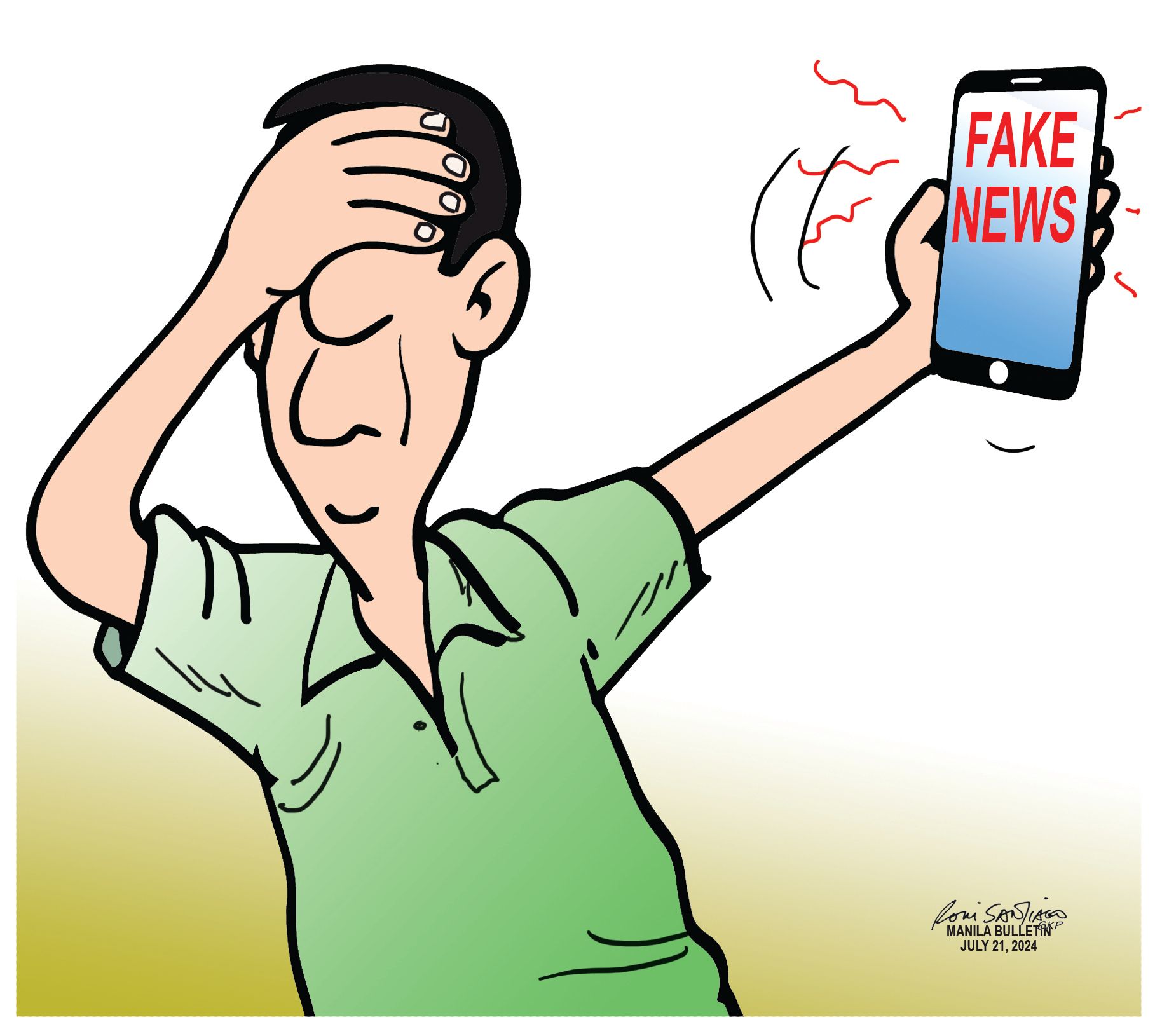
Last week, fake news was serious enough for government agencies to issue advisories to the public.
On July 18, two government agencies – the Social Security System (SSS) and the Philippine Atmospheric, Geophysical and Astronomical Services Administration (PAGASA) – issued warnings about fake news related to their operations. One was spread through a text message to mobile phones, the other by posts in social media.
The SSS advised members not to reply to text messages regarding benefit claims or expiring contribution payments. The messages, sent as text message, promised recipients that they would get incentives in exchange for clicking on a provided link.
“Do not click the link in the message of these fake text alerts. It will lead to a phishing site that will steal personal information such as SS numbers and login credentials from My.SSS account,” said Normita M. Doctor, SSS Member Services and Support Group senior vice president.
Another was from PAGASA, warning that the social media posts about an approaching super typhoon with the intensity of “Yolanda” is fake news. PAGASA Weather Specialist Chenel Dominguez clarified that there is no truth to these alarming claims. She urged the public to rely only on verified sources for weather information.
These warnings are not new. In the past months – even years – warnings against fake news have become almost common advisories posted on social media, published in traditional media, and discussed in television interviews. And yet, when fake news pops up again, it still finds victims.
These two cases of fake news, though, should push relevant government agencies and private institutions to work harder to establish measures to protect the public from malicious individuals. The two cases represent sensitive areas in community life – affecting SSS members who have worked for many years and are concerned about their benefits, and the common citizens concerned about safety during natural disasters.
The warning about a super typhoon with the intensity of “Yolanda” approaching was especially a cruel type of fake news. It did not bring monetary benefit or stolen personal information to the perpetrator. It was deliberately done to spread anxiety and fear.
One way to fight fake news is education. Government and private companies have conducted, and continue to do so, many forums and seminars to educate the public to recognize fake news. But more awareness campaigns need to be done because the prevalence of fake news is a “form of war that is raging in our midst right now,” as Manila Bulletin columnist Antipolo City Mayor Jun Ynares wrote recently.
“The enemy is invisible, and the objective is to rob us of our inner peace. The strategy is to sow “chaos” and to fuel “confusion.” “Chaos” is the psychological and emotional state of a person characterized by a sense of loss of control and helplessness.
“Confusion” is the state where one cannot distinguish between true and false. The combination of the two takes away our ability to make an accurate assessment of our situation, establish a clear goal, and assess our options,” he wrote.
We need the cooperation of everyone in this campaign to stop fake news from disturbing our lives and causing fear and financial losses. You can start by not passing on what you evaluate as fake news to your chat groups where an innocent member can forward it to add to the misinformation.