

ADVERTISEMENT

Gov't, DepEd urged to ensure 'full funding' for teaching overload pay

Published May 3, 2024 05:29 am

As it welcomed the latest policy issued by the Department of Education (DepEd) on payment of teaching overload, a group of education workers urged the government and the agency’s leadership to ensure full and sufficient funding for it.
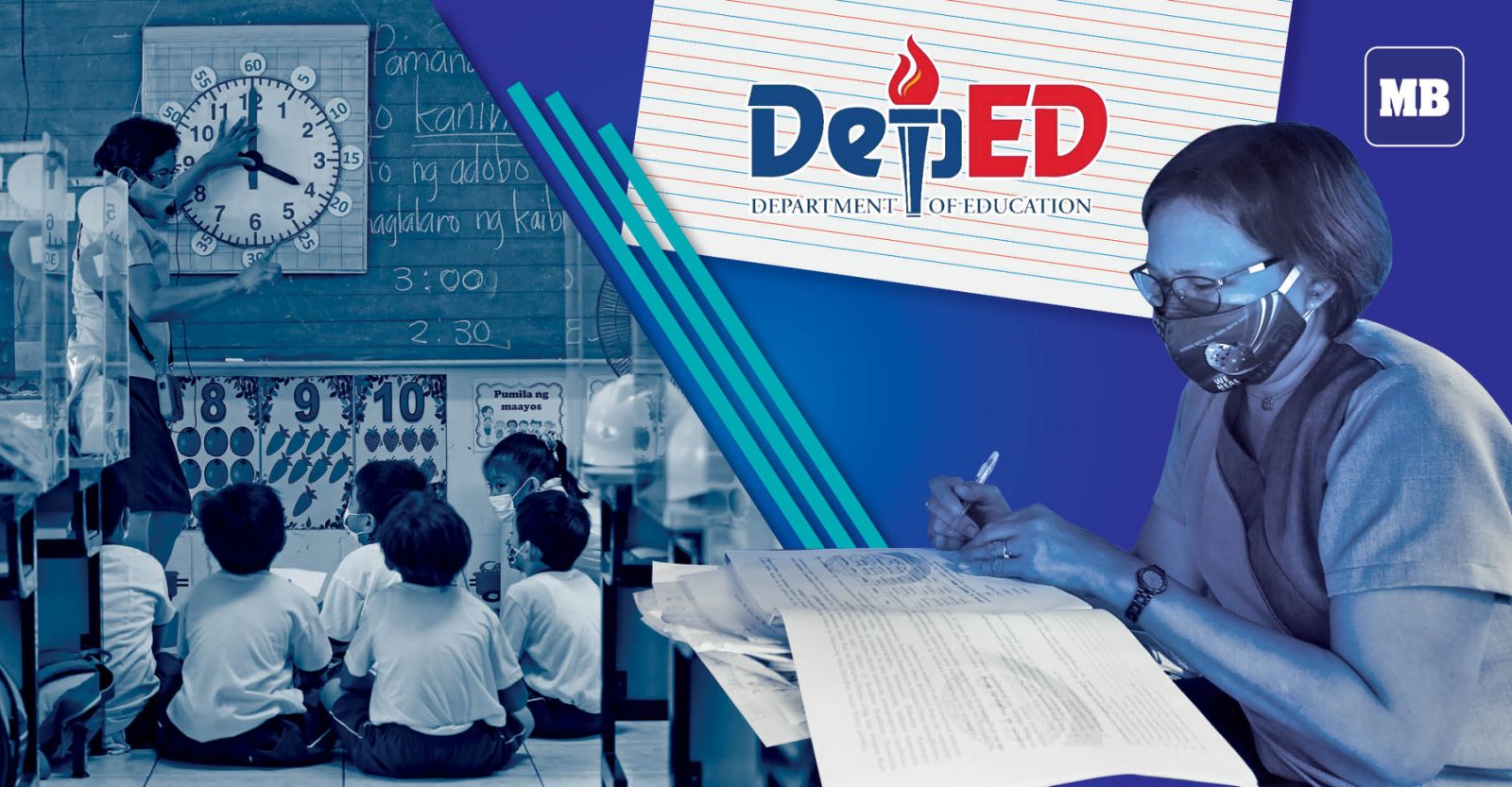
Teacher DepEd MB Visual Content Group.jpg
(DepEd / MB Visual Content Group)

“To ensure that these policy guidelines take full effect unlike other issuances and directives that do not materialize on the grounds, the national government and the DepEd must allocate substantial funds so all teachers receive due compensation for going above and beyond their normal teaching duties,” said Alliance of Concerned Teachers (ACT) Philippines Chairperson Vladimer Quetua.

ACT was referring to DepEd Order No. 05, s. 2024 signed by Vice President and Education Secretary Sara Duterte or the “Rationalization of Teachers’ Workload in Public Schools and Payment of Teaching Overload.”

READ:

https://mb.com.ph/2024/4/30/dep-ed-orders-payment-for-teaching-overload-beyond-prescribed-working-hours-groups-react

ACT welcomed the DepEd’s latest outlining policy guidelines for the rationalization of teachers' workload in public schools and payment of teaching overload.

For the group, this is a “product of the relentless fight of the union which brought to light the dire necessity for the agency’s recognition of teachers’ labor rights to humane workload and appropriate compensation and benefits for exceeding workload and work hours.”

Quetua said the policy is a “long overdue recognition of public school teachers’ labor rights to fair and equitable workload and proper compensation and benefits for teaching overload and extended work hours.”

While it is a “great feat,” Quetua said the national government and the DepEd “must work on ensuring that sufficient funding will be allocated for its full implementation.”

Aside from streamlining the teachers’ workload, the latest DepEd issuance outlined the payment of teaching overload for those who will exceed the prescribed number of hours.

The payment of teaching overload, DepEd said, will be made “every quarter” and subject to the “extent of allotment” for the purpose.

In the “case of insufficiency of funds,” DepEd said the teaching overload hours will be converted to earned Vacation Service Credits (VSC) provided under its existing policy.

In a message to reporters, DepEd Undersecretary Michael Poa explained that the payment of the teaching overload is “similar to the way overtime pay is computed” — even for those in the private sector.

“The 25 percent is additional compensation on top of a teacher’s regular remuneration,” Poa said. “For every hour of overload, for example, the teacher is paid 125 percent of his or her hourly rate,” he added.

RELATED STORY:

https://mb.com.ph/2024/4/30/dep-ed-streamlines-public-school-teachers-workload-ancillary-tasks-for-more-teaching-time

Related Tags

overtime pay Alliance of Concerned Teachers Filipino teachers DepEd teaching overload
ADVERTISEMENT
.most-popular .layout-ratio{ padding-bottom: 79.13%; } @media (min-width: 768px) and (max-width: 1024px) { .widget-title { font-size: 15px !important; } }

{{ articles_filter_1561_widget.title }}

.most-popular .layout-ratio{ padding-bottom: 79.13%; } @media (min-width: 768px) and (max-width: 1024px) { .widget-title { font-size: 15px !important; } }

{{ articles_filter_1562_widget.title }}

.most-popular .layout-ratio{ padding-bottom: 79.13%; } @media (min-width: 768px) and (max-width: 1024px) { .widget-title { font-size: 15px !important; } }

{{ articles_filter_1563_widget.title }}

{{ articles_filter_1564_widget.title }}

.mb-article-details { position: relative; } .mb-article-details .article-body-preview, .mb-article-details .article-body-summary{ font-size: 17px; line-height: 30px; font-family: "Libre Caslon Text", serif; color: #000; } .mb-article-details .article-body-preview iframe , .mb-article-details .article-body-summary iframe{ width: 100%; margin: auto; } .read-more-background { background: linear-gradient(180deg, color(display-p3 1.000 1.000 1.000 / 0) 13.75%, color(display-p3 1.000 1.000 1.000 / 0.8) 30.79%, color(display-p3 1.000 1.000 1.000) 72.5%); position: absolute; height: 200px; width: 100%; bottom: 0; display: flex; justify-content: center; align-items: center; padding: 0; } .read-more-background a{ color: #000; } .read-more-btn { padding: 17px 45px; font-family: Inter; font-weight: 700; font-size: 18px; line-height: 16px; text-align: center; vertical-align: middle; border: 1px solid black; background-color: white; } .hidden { display: none; }
function initializeAllSwipers() { // Get all hidden inputs with cms_article_id document.querySelectorAll('[id^="cms_article_id_"]').forEach(function (input) { const cmsArticleId = input.value; const articleSelector = '#article-' + cmsArticleId + ' .body_images'; const swiperElement = document.querySelector(articleSelector); if (swiperElement && !swiperElement.classList.contains('swiper-initialized')) { new Swiper(articleSelector, { loop: true, pagination: false, navigation: { nextEl: '#article-' + cmsArticleId + ' .swiper-button-next', prevEl: '#article-' + cmsArticleId + ' .swiper-button-prev', }, }); } }); } setTimeout(initializeAllSwipers, 3000); const intersectionObserver = new IntersectionObserver( (entries) => { entries.forEach((entry) => { if (entry.isIntersecting) { const newUrl = entry.target.getAttribute("data-url"); if (newUrl) { history.pushState(null, null, newUrl); let article = entry.target; // Extract metadata const author = article.querySelector('.author-section').textContent.replace('By', '').trim(); const section = article.querySelector('.section-info ').textContent.replace(' ', ' '); const title = article.querySelector('.article-title h1').textContent; // Parse URL for Chartbeat path format const parsedUrl = new URL(newUrl, window.location.origin); const cleanUrl = parsedUrl.host + parsedUrl.pathname; // Update Chartbeat configuration if (typeof window._sf_async_config !== 'undefined') { window._sf_async_config.path = cleanUrl; window._sf_async_config.sections = section; window._sf_async_config.authors = author; } // Track virtual page view with Chartbeat if (typeof pSUPERFLY !== 'undefined' && typeof pSUPERFLY.virtualPage === 'function') { try { pSUPERFLY.virtualPage({ path: cleanUrl, title: title, sections: section, authors: author }); } catch (error) { console.error('ping error', error); } } // Optional: Update document title if (title && title !== document.title) { document.title = title; } } } }); }, { threshold: 0.1 } ); function showArticleBody(button) { const article = button.closest("article"); const summary = article.querySelector(".article-body-summary"); const body = article.querySelector(".article-body-preview"); const readMoreSection = article.querySelector(".read-more-background"); // Hide summary and read-more section summary.style.display = "none"; readMoreSection.style.display = "none"; // Show the full article body body.classList.remove("hidden"); } document.addEventListener("DOMContentLoaded", () => { let loadCount = 0; // Track how many times articles are loaded const offset = [1, 2, 3, 4, 5, 6, 7, 8, 9, 10]; // Offset values const currentUrl = window.location.pathname.substring(1); let isLoading = false; // Prevent multiple calls if (!currentUrl) { console.log("Current URL is invalid."); return; } const sentinel = document.getElementById("load-more-sentinel"); if (!sentinel) { console.log("Sentinel element not found."); return; } function isSentinelVisible() { const rect = sentinel.getBoundingClientRect(); return ( rect.top < window.innerHeight && rect.bottom >= 0 ); } function onScroll() { if (isLoading) return; if (isSentinelVisible()) { if (loadCount >= offset.length) { console.log("Maximum load attempts reached."); window.removeEventListener("scroll", onScroll); return; } isLoading = true; const currentOffset = offset[loadCount]; window.loadMoreItems().then(() => { let article = document.querySelector('#widget_1690 > div:nth-last-of-type(2) article'); intersectionObserver.observe(article) loadCount++; }).catch(error => { console.error("Error loading more items:", error); }).finally(() => { isLoading = false; }); } } window.addEventListener("scroll", onScroll); });

Sign up by email to receive news.