







Higher education summit mirrors lofty aspirations for youth development


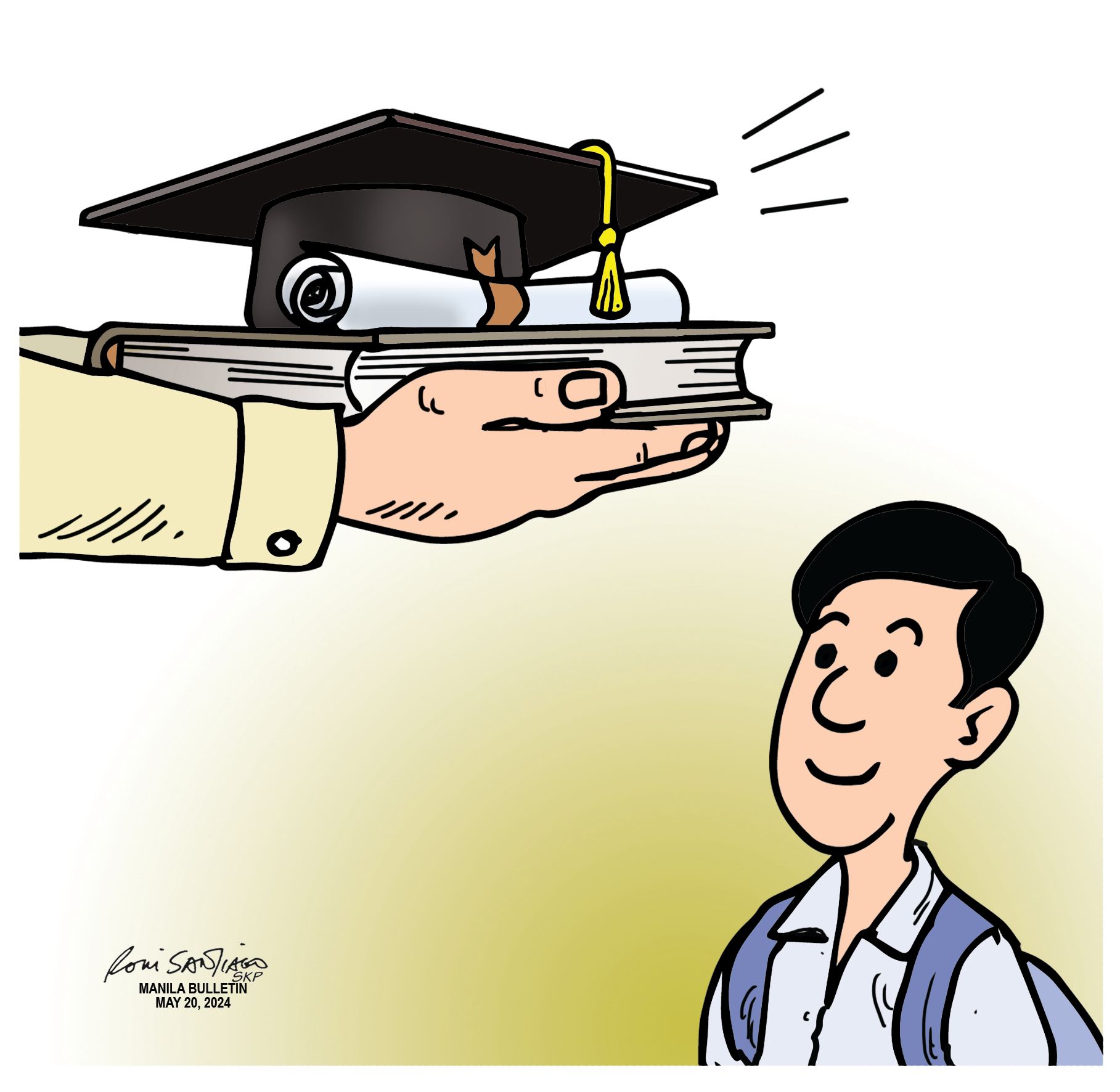
At the first-ever National Higher Education Summit held last week, President Marcos declared that “the most important service that government must provide to its people is a good education.” Noting that in the recent Times Higher Education’s 2024 Asia University Rankings, no Philippine university was among the top 100, he signaled the need to “pursue a comprehensive and all-encompassing strategy that will turn this trend around.” He proposed a four-pronged strategy:
First, joint government-private sector collaboration must be enhanced. Government must ensure the strategic viability of private higher education institutions (HEI) “by nurturing policies and support.”
Second, government must sustain investments that enable Filipinos from the most needy families to fully attain the benefits of tertiary education. Noting that “of all state expenditures, education delivers the best dividends,” he reported that aside from the ₱135 billion allocated this year, the government will continue to provide sufficient budgetary support.
Third, “mandates must be attached to merits,” which means that the government must continually benchmark performance against global standards and exert efforts to ensure that Filipino students are capable of attaining excellence.
Fourth, he urged stakeholders to explore and develop non-financial areas of action, as well as consider fresh challenges and approaches brought on by the global post-pandemic economy.
A noted economist-educator, Dr. Bernardo Villegas of the University of Asia and the Pacific, has expressed the view that the government may need to scale back on establishing state universities and colleges (SUCs) that now number 629, compared to 1,729 private HEIs. “There are 2,095,160 students in State Universities and Colleges (SUCs) and 2,069,649 in private HEIs, a 50-50 sharing,” according to Dr. Villegas.
He notes and proposes: “Part of the funds that can be shifted away from SUCs should be invested in establishing more quality Technical Education and Skills Development Authority (TESDA)-type schools that are more likely to train skilled workers in great demand in the booming sectors of construction, tourism, healthcare, and agribusiness.” He also cited the need to enact vital legislation that has been identified by the Second Educational Commission (EDCOM 2) as priorities, namely: Early Childhood Care and Development and Basic Education; Higher Education and Teacher Education and Development; Technical-Vocational Education and Training (TVET) and Lifelong Learning; Governance and Finance. The bills that have already been filed are HB 8559 on Teacher Quality (Amendment of the Teacher Professionalization Act) and SB 2354 (Apprentice Training System Act).
It may be noted that Congress is mindful that the quality of higher education is affected by the quality of basic education, and that a more holistic approach would include consideration of technical-vocational education and training.
Finally, President Marcos’ call to action deserves the full support of all stakeholders: “Let us mold a new generation of critical thinkers, problem solvers, and visionaries who will realize our aspiration for a new Philippines, a Bagong Pilipinas [and] bring us to a future of growth, opportunity, and prosperity.”