

ADVERTISEMENT

Why this Dabawenya honors decay

Caroline 'Bing' Galang Taojo's 'Essence of Being' captures end moments

Published Apr 8, 2024 07:35 am

By JINGGOY SALVADOR

For Caroline Taojo, “Essence of Being” is a nostalgic trip through blooms. While most of the visual artists would paint flowers at the peak of their beauty—plump, robust, and beaming with vibrant hues— this artist captures the end moment and offers her audience a different perspective for appreciation.

1.jpg
Why this Dabawenya honors decay

The exhibition was engaging with 20 artworks that sparked a conversation.  Why did the artist choose to illustrate her subject on the onset of decay? Aren’t flowers a symbol of beauty and celebration? True. But Caroline also sees the beauty of the subject past its prime, and shares why.
5.jpg
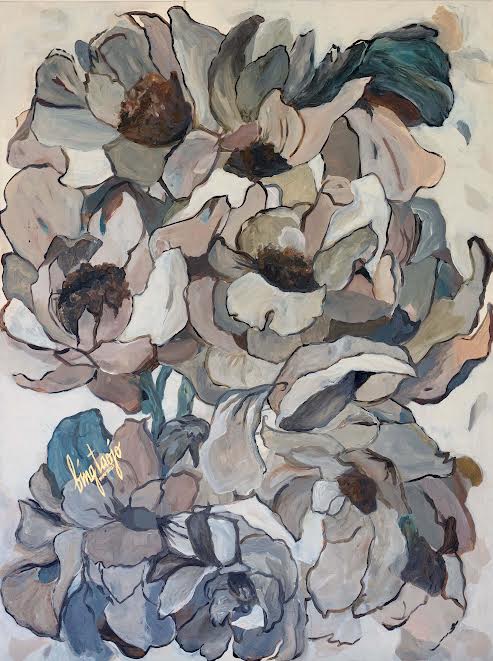
TEAL ECHOESTEAL ECHOES 3, acrylic on canvas, 48x36 inches

“The flower’s wilting stage is a phase that many don’t care much about. Its decorative period is at its end, thus discarded once it withers. I don’t know why I am attracted to it even at this phase when it starts to wear pastel hues of grays, browns, and mustard, the irregular and awkward shapes the petals and sepal take on once the vivid colors start to fade. I wanted to capture these beautiful images on my canvas for everyone to see and appreciate it like I do.”

But this was not always the case. Flowers have always been this artist’s favorite subject since she picked up the brush fresh from high school in the ’80s. Blooms were captured at their pinnacle of splendor, filling her canvases with vivid colors. In fact, one of these obras opens the exhibit. It was along her journey sans formal art education but frequenting art exhibitions and museums, reading books, joining art workshops, immersing herself in different art expressions, that she eventually found what appealed to her most—Abstract Impressionism and muted colors, both of which became evident in her artworks painted in 2019. Confident with this fusion, she expressed it again in a collection for her first major exhibition in her hometown, Tagum City, Davao del Norte.
MB.jpg
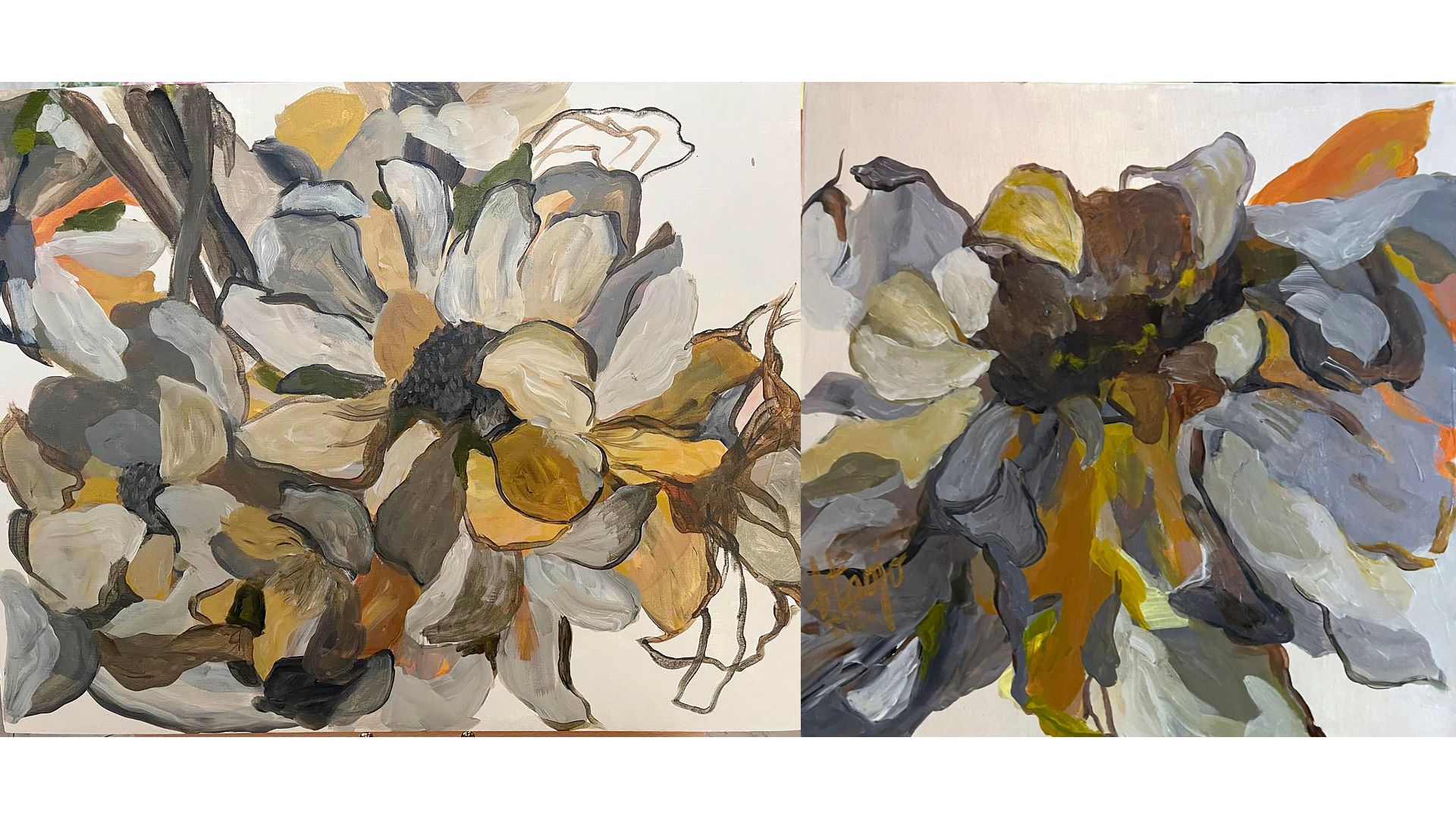
SUNFLOWER NUANCES 2, acrylic on canvas, , 24x30 inches and SUNFLOWER REFRAIN 1, acrylic on canvas, 16x 16 inches

“I only joined post art workshop exhibits because I was insecure with my capability as an artist,” she said. “Two years ago, I was welcomed by renowned Davao artists, all of whom I look up to, to join their group show. I felt the acceptance. It was a boost to my confidence. I still held on to my dream of one day having my own exhibition, and that will be before I turn 61. So, I got over my insecurities, embraced my imperfections, and channeled them into my art. This exhibit is the result—and it’s happening today at age 60.”

In “Essence of Being,” the artist’s fascination for the muted tones of the color wheel greatly influenced her pieces. She uses this color palette to bring a new dimension to flowers, allowing her a dialogue with nostalgia.
3.jpg
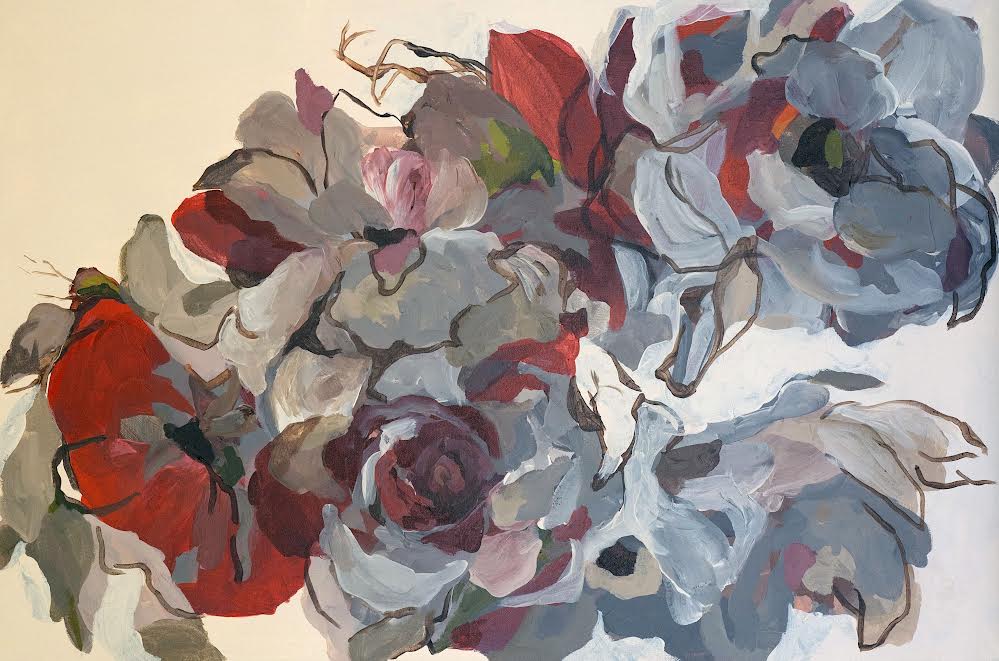
CRIMSON DISSIPATION 3, acrylic on canvas, 24x30 inches

Looking closely at the components of the bouquets on the canvas, one would catch images of peonies, morning glory, zinnias, roses, and sunflowers. These flowers were not chosen at random. Each has a significance for the artist.

With each bloom she looks back to the past and pays tribute to mentors and people close to her heart.

The morning glory honors Louella de Borja, the first woman who inspired and taught her to paint; the peonies honor painter Betsy Westendorp, who was generous in sharing her advice on art; the rose honors the Virgin Mary; and the zinnias honor her youngest son, Andreas, who brought the flower seeds coming home from the US, which are now in bloom at her home garden.  
4.jpg
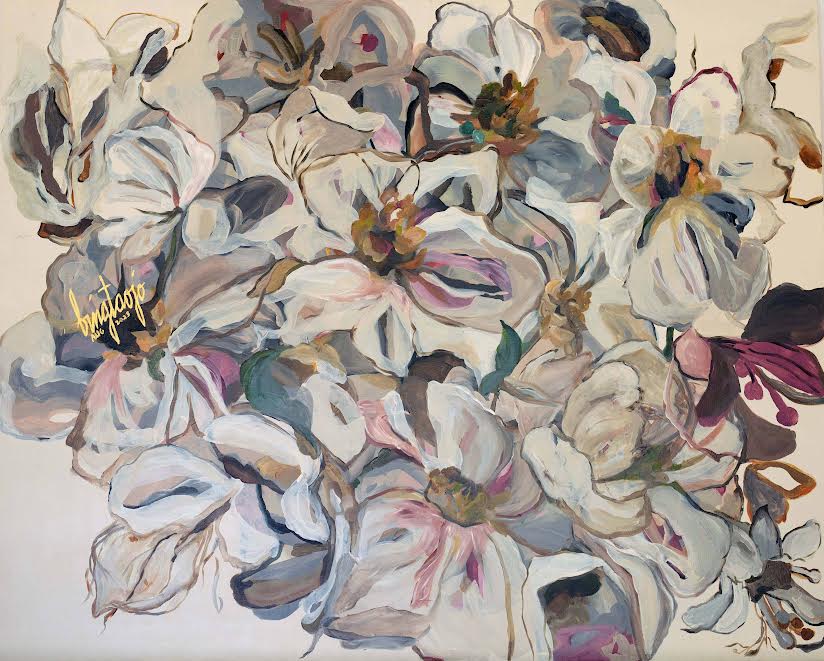
BLOOMING SHADOWS 1B, acrylic on canvas, 48x 60 inches

“Essence of Being” is an invitation to glorify and bask in the beauty of these flowers past their full bloom, past their vibrant hues, when colors fade to shades of pastels, and on to tones of amber and grey, colors that are just as fascinating.

Caroline likens the phases of the flower’s time to our own being, both poetic in its brevity and fragility. The sprouting of a bud to birth elicits excitement, the full bloom to the prime of life worth the celebration, and the wilting stage to our maturity when we gain wisdom that can be imparted.

She poses these questions to her audience, “Shouldn’t the closing be honored? Aren’t the fruits born after the blooms? Isn’t it at the wilting (stage) that new seeds come about? Seeds that bring forth new blooms, which promise new life? Isn’t this the essence of existence?”

“Essence of Being” is the first major show of Dabawenya Caroline Galang Taojo at the Tagum City Historical and Cultural Office. The exhibition runs until April 12. 

Related Tags

MB Lifestyle Online Arts and Culture
ADVERTISEMENT
.most-popular .layout-ratio{ padding-bottom: 79.13%; } @media (min-width: 768px) and (max-width: 1024px) { .widget-title { font-size: 15px !important; } }

{{ articles_filter_1561_widget.title }}

.most-popular .layout-ratio{ padding-bottom: 79.13%; } @media (min-width: 768px) and (max-width: 1024px) { .widget-title { font-size: 15px !important; } }

{{ articles_filter_1562_widget.title }}

.most-popular .layout-ratio{ padding-bottom: 79.13%; } @media (min-width: 768px) and (max-width: 1024px) { .widget-title { font-size: 15px !important; } }

{{ articles_filter_1563_widget.title }}

{{ articles_filter_1564_widget.title }}

.mb-article-details { position: relative; } .mb-article-details .article-body-preview, .mb-article-details .article-body-summary{ font-size: 17px; line-height: 30px; font-family: "Libre Caslon Text", serif; color: #000; } .mb-article-details .article-body-preview iframe , .mb-article-details .article-body-summary iframe{ width: 100%; margin: auto; } .read-more-background { background: linear-gradient(180deg, color(display-p3 1.000 1.000 1.000 / 0) 13.75%, color(display-p3 1.000 1.000 1.000 / 0.8) 30.79%, color(display-p3 1.000 1.000 1.000) 72.5%); position: absolute; height: 200px; width: 100%; bottom: 0; display: flex; justify-content: center; align-items: center; padding: 0; } .read-more-background a{ color: #000; } .read-more-btn { padding: 17px 45px; font-family: Inter; font-weight: 700; font-size: 18px; line-height: 16px; text-align: center; vertical-align: middle; border: 1px solid black; background-color: white; } .hidden { display: none; }
function initializeAllSwipers() { // Get all hidden inputs with cms_article_id document.querySelectorAll('[id^="cms_article_id_"]').forEach(function (input) { const cmsArticleId = input.value; const articleSelector = '#article-' + cmsArticleId + ' .body_images'; const swiperElement = document.querySelector(articleSelector); if (swiperElement && !swiperElement.classList.contains('swiper-initialized')) { new Swiper(articleSelector, { loop: true, pagination: false, navigation: { nextEl: '#article-' + cmsArticleId + ' .swiper-button-next', prevEl: '#article-' + cmsArticleId + ' .swiper-button-prev', }, }); } }); } setTimeout(initializeAllSwipers, 3000); const intersectionObserver = new IntersectionObserver( (entries) => { entries.forEach((entry) => { if (entry.isIntersecting) { const newUrl = entry.target.getAttribute("data-url"); if (newUrl) { history.pushState(null, null, newUrl); let article = entry.target; // Extract metadata const author = article.querySelector('.author-section').textContent.replace('By', '').trim(); const section = article.querySelector('.section-info ').textContent.replace(' ', ' '); const title = article.querySelector('.article-title h1').textContent; // Parse URL for Chartbeat path format const parsedUrl = new URL(newUrl, window.location.origin); const cleanUrl = parsedUrl.host + parsedUrl.pathname; // Update Chartbeat configuration if (typeof window._sf_async_config !== 'undefined') { window._sf_async_config.path = cleanUrl; window._sf_async_config.sections = section; window._sf_async_config.authors = author; } // Track virtual page view with Chartbeat if (typeof pSUPERFLY !== 'undefined' && typeof pSUPERFLY.virtualPage === 'function') { try { pSUPERFLY.virtualPage({ path: cleanUrl, title: title, sections: section, authors: author }); } catch (error) { console.error('ping error', error); } } // Optional: Update document title if (title && title !== document.title) { document.title = title; } } } }); }, { threshold: 0.1 } ); function showArticleBody(button) { const article = button.closest("article"); const summary = article.querySelector(".article-body-summary"); const body = article.querySelector(".article-body-preview"); const readMoreSection = article.querySelector(".read-more-background"); // Hide summary and read-more section summary.style.display = "none"; readMoreSection.style.display = "none"; // Show the full article body body.classList.remove("hidden"); } document.addEventListener("DOMContentLoaded", () => { let loadCount = 0; // Track how many times articles are loaded const offset = [1, 2, 3, 4, 5, 6, 7, 8, 9, 10]; // Offset values const currentUrl = window.location.pathname.substring(1); let isLoading = false; // Prevent multiple calls if (!currentUrl) { console.log("Current URL is invalid."); return; } const sentinel = document.getElementById("load-more-sentinel"); if (!sentinel) { console.log("Sentinel element not found."); return; } function isSentinelVisible() { const rect = sentinel.getBoundingClientRect(); return ( rect.top < window.innerHeight && rect.bottom >= 0 ); } function onScroll() { if (isLoading) return; if (isSentinelVisible()) { if (loadCount >= offset.length) { console.log("Maximum load attempts reached."); window.removeEventListener("scroll", onScroll); return; } isLoading = true; const currentOffset = offset[loadCount]; window.loadMoreItems().then(() => { let article = document.querySelector('#widget_1690 > div:nth-last-of-type(2) article'); intersectionObserver.observe(article) loadCount++; }).catch(error => { console.error("Error loading more items:", error); }).finally(() => { isLoading = false; }); } } window.addEventListener("scroll", onScroll); });

Sign up by email to receive news.