ADVERTISEMENT

This is why Penang is foodie paradise

Inside one of many reasons this island in northwest Malaysia is a food destination like no other

Published Mar 6, 2024 02:22 pm

At A Glance

  • Michelin Selected at the 2022 Michelin Star Revelation, this Peranakan restaurant is nestled like a secret garden in an old flower shop, more than 30 years old, on Jalan Burma, Pulau Tikus in George Town.
1.jpg
4.jpg
 
5.jpg
6.jpg
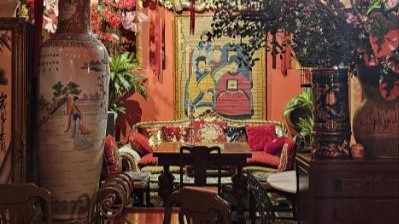
A DREAM COME TO LIFE Flower Mulan Nyonya Café's interior gives a glimpse of Penang's simple beauty through its oriental decor and homely vibes

I don’t think I can write about Penang without doing something worthy of James Hilton’s Lost Horizon or Paradise Lost.

It isn’t my first time in Penang, an island off Malaysia’s northwest, a foodie paradise afloat on the Strait of Malacca. When I was young, I came across the island, along with Malacca, on a Louis Vuitton map of the old world, which lured me in with its romance.

So I went on my own— a disaster, but only because I was young, didn’t have enough money, didn’t know a lot of people, and didn’t know enough of the world to see what unique things Penang had to offer.

Love is sweeter the second time around. On invitation of Travel Warehouse, Inc. and Air Asia, which flies twice daily from Manila to Kuala Lumpur and seven times daily from Kuala Lumpur to Penang, I revisited this jewel of a place, staying four days and three nights in the state capital and town center George Town, a UNESCO World Heritage Site.

My Malaysian food crawl began as soon as my Air Asia monoclass plane reached 30,000 feet above sea level upon leaving NAIA Terminal 3 for Kuala Lumpur at 1:10 a.m. or as soon as the flight attendant handed over fresh and piping hot my in-flight meal from Air Asia’s Santan, the world’s first restaurant brand by an airline. It was Malaysian favorite and Air Asia signature Pak Nasser’s Nasi Lemak with chicken rendang, fragrant coconutsteamed rice, mildly spicy sambal, half a hard-boiled egg, fried anchovies, and crunchy groundnuts.

I recommend the airline’s after-midnight flight to Kuala Lumpur—the other flight leaves after lunch— because then you arrive in Penang just in time for brunch. While we’re at it, try to book a Hot Seat, any of the seats in the front of the plane and emergency exit rows with a pitch of up to 29 inches and width of 16 to 17 inches. In a Hot Seat, you have a leg room of at least 20.3 inches, that is if you’re on the first row or in the emergency exit row.

Now let’s go to Penang. I have so much to write about what to eat since I went there on a food crawl, but I have limited time and space in which to tell the epic that is Penang, so let me start with the best spot I found there, a live dream, the Flower Mulan Nyonya Café, a worthy representation of the island’s treasures and pleasures.

10.jpg
ASAM PRAWNS Or tamarind prawns, a popular Nyonya recipe of prawns with caramelized kaffir-flavored sugar and tamarind juice

In this magical place, I found everything that highlighted how much I missed the first time I came to Penang over 20 years ago. Michelin Selected at the 2022 Michelin Star Revelation, this Peranakan restaurant is nestled like a secret garden in an old flower shop, more than 30 years old, on Jalan Burma, Pulau Tikus in George Town.

Its menu is quite a treat for my palate since it was only lately, on a trip to Singapore during the pandemic, that Peranakan, otherwise known as Nyonya or Straits-Chinese cuisine, revealed itself to me.
8.jpg
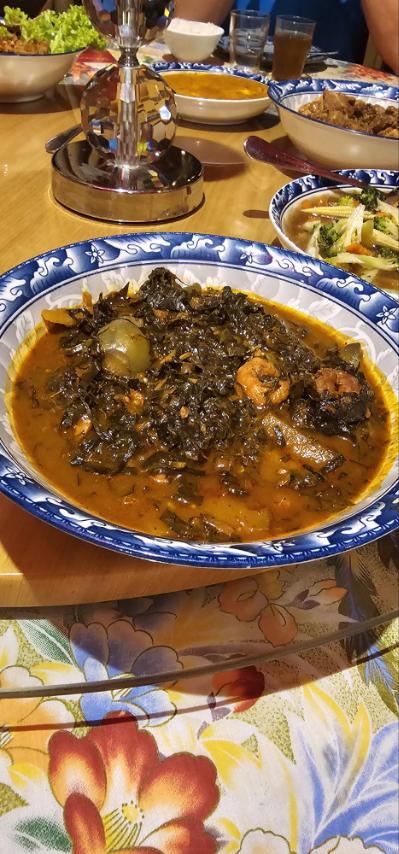
LEMAK PERUT IKAN Tamarind-based curry of salted fish stomach made even more flavorful with galangal, lemongrass, turmeric, mint leaves, and basil leaves

Peranakan traces its roots to the settlers in what was once known as Nanyang or maritime Southeast Asia, the British Colonial ruled ports in the Malay Peninsula and the Indonesian Archipelago, as well as Singapore. It is defined by Britannica as “a native-born person of mixed local and foreign ancestry.” There are Peranakan Arabs, Peranakan Indians, Peranakan Dutch, and Peranakan Chinese, such as the family behind Flower Mulan Nonya Café.
13.jpg
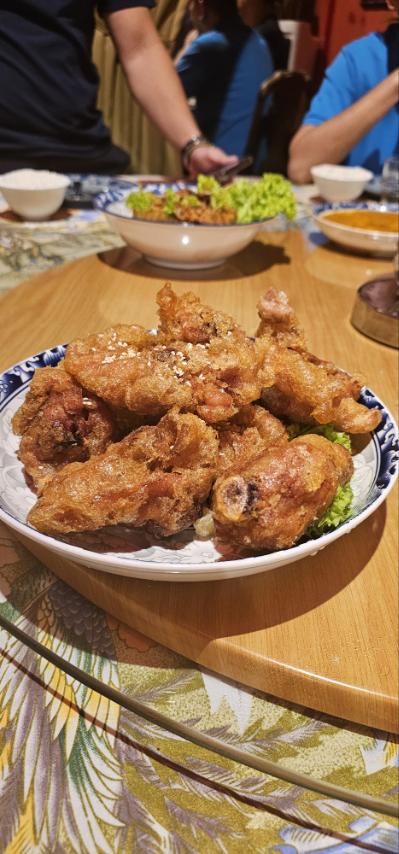
KUNYIT & SERAI FRIED CHICKEN Fried chicken with turmeric and lemongrass
11.jpg
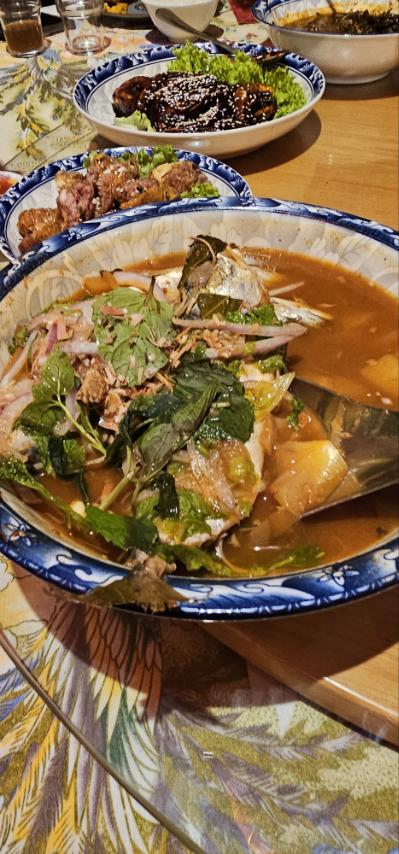
ASAM PEDAS Fish in sour broth

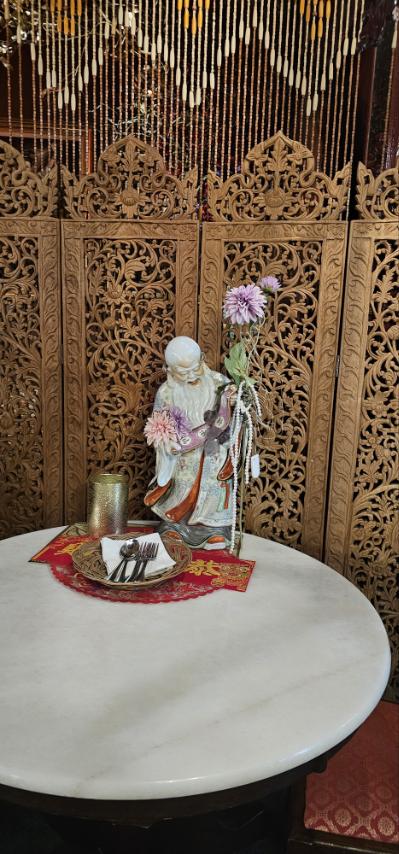
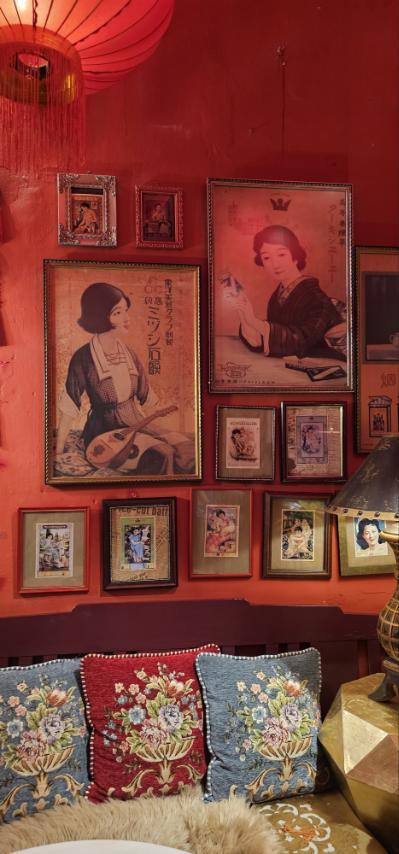
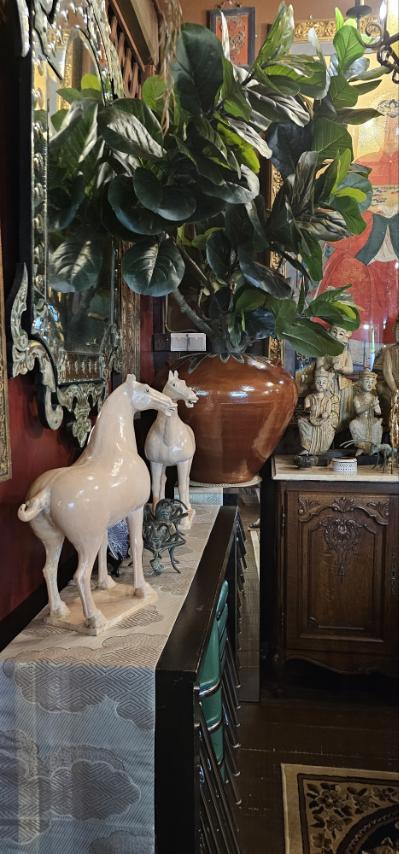
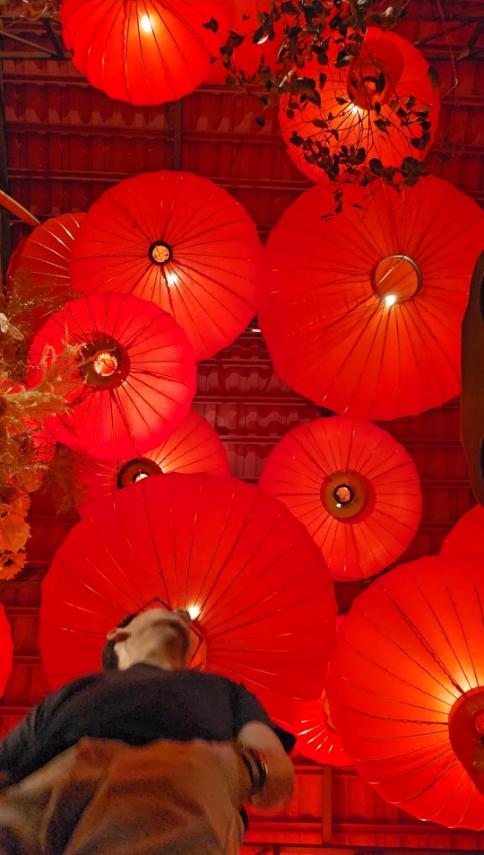
The restaurant is, quite literally, a treasure trove no less breathtaking as the secret cave in which Ariel in The Little Mermaid kept her gadgets and gizmos—“Look at this stuff, isn’t it neat?”—from the human world. It is a long-lost foodie Eden abloom in every corner, in every nook and cranny, on every tabletop, on the ceiling, and on the floor with Venetian mirrors, Buddhas laughing or reclined, paper lanterns, taxidermied peacocks, horse figurines caught in mid-gallop, ballerinas in an eternal twirl, Chinese scrolls, opium cans, hanging flowers, vintage chandeliers, woodcarvings, opulent room dividers, Victorian bust sculptures, Oriental jars, even a Renaissance painting, and many other objets d’art and objects of desire. It’s a maximalist’s paradise!

The menu at Flower Mulan Nonya Café is small, but it is big on traditional Nonya or Peranakan specials.

We had two kinds of fried chicken, one with kunyit and serai (turmeric and lemongrass) and the other called Golden Salted Egg Fried Chicken.

Also served was something similar to our sinigang, asam pedas or fish in sour broth. Hong bak or braised pork with Asian aromatic spices was also on the menu.

Most interesting was lemak perut ikan, the mother dish of Peranakan cuisine, a tamarind-based curry of salted fish stomach made even more flavorful with galangal, lemongrass, turmeric, mint leaves, and basil leaves.

Other dishes we tried included the famous Peranakan fish cake otak-otak, traditionally wrapped in attap or nipa leaves, but served here without the leaf parcel, as well as asam prawns, lobak or pork roll, which was kind of like kikiam, and acar-acar or mixed spicy vegetables.
14.jpg
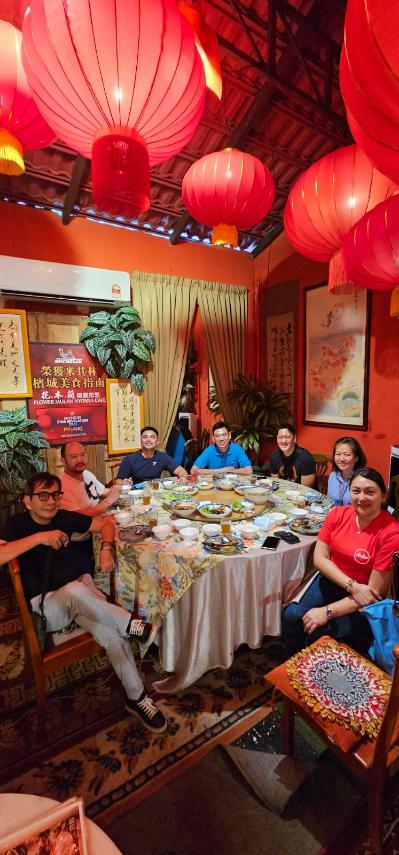
PENANG FOOD CRAWLERS From left: The author, Pepper Teehankee, Marvin Agustin, Jaison Yang, Angelo Comsti, our tour guide Jenny, and Elaine Quemuel Plopenio

I’m a sucker for interiors. Once upon a time I thought that for me the atmosphere, more than what was on my plate, was the main event of any dining experience. But all over Penang on this trip, as well as on my previous trips to Singapore and Indonesia, I’ve enjoyed Peranakan dishes at hawker centers, turo turo-like establishments, holes-in-the-wall, and in the middle of the public market and I’d say that, at Flower Mulan Nyonya Café, the atmosphere, magical as it is, is only a bonus.

To book your own food crawl in Penang, call +63 927 738 71 62. I’ll tell you about breakfast at the Chowrasta morning market next.
15.jpg
 

Related Tags

Manila Bulletin Lifestyle AA Patawaran
ADVERTISEMENT
.most-popular .layout-ratio{ padding-bottom: 79.13%; } @media (min-width: 768px) and (max-width: 1024px) { .widget-title { font-size: 15px !important; } }

{{ articles_filter_1561_widget.title }}

.most-popular .layout-ratio{ padding-bottom: 79.13%; } @media (min-width: 768px) and (max-width: 1024px) { .widget-title { font-size: 15px !important; } }

{{ articles_filter_1562_widget.title }}

.most-popular .layout-ratio{ padding-bottom: 79.13%; } @media (min-width: 768px) and (max-width: 1024px) { .widget-title { font-size: 15px !important; } }

{{ articles_filter_1563_widget.title }}

{{ articles_filter_1564_widget.title }}

.mb-article-details { position: relative; } .mb-article-details .article-body-preview, .mb-article-details .article-body-summary{ font-size: 17px; line-height: 30px; font-family: "Libre Caslon Text", serif; color: #000; } .mb-article-details .article-body-preview iframe , .mb-article-details .article-body-summary iframe{ width: 100%; margin: auto; } .read-more-background { background: linear-gradient(180deg, color(display-p3 1.000 1.000 1.000 / 0) 13.75%, color(display-p3 1.000 1.000 1.000 / 0.8) 30.79%, color(display-p3 1.000 1.000 1.000) 72.5%); position: absolute; height: 200px; width: 100%; bottom: 0; display: flex; justify-content: center; align-items: center; padding: 0; } .read-more-background a{ color: #000; } .read-more-btn { padding: 17px 45px; font-family: Inter; font-weight: 700; font-size: 18px; line-height: 16px; text-align: center; vertical-align: middle; border: 1px solid black; background-color: white; } .hidden { display: none; }
function initializeAllSwipers() { // Get all hidden inputs with cms_article_id document.querySelectorAll('[id^="cms_article_id_"]').forEach(function (input) { const cmsArticleId = input.value; const articleSelector = '#article-' + cmsArticleId + ' .body_images'; const swiperElement = document.querySelector(articleSelector); if (swiperElement && !swiperElement.classList.contains('swiper-initialized')) { new Swiper(articleSelector, { loop: true, pagination: false, navigation: { nextEl: '#article-' + cmsArticleId + ' .swiper-button-next', prevEl: '#article-' + cmsArticleId + ' .swiper-button-prev', }, }); } }); } setTimeout(initializeAllSwipers, 3000); const intersectionObserver = new IntersectionObserver( (entries) => { entries.forEach((entry) => { if (entry.isIntersecting) { const newUrl = entry.target.getAttribute("data-url"); if (newUrl) { history.pushState(null, null, newUrl); let article = entry.target; // Extract metadata const author = article.querySelector('.author-section').textContent.replace('By', '').trim(); const section = article.querySelector('.section-info ').textContent.replace(' ', ' '); const title = article.querySelector('.article-title h1').textContent; // Parse URL for Chartbeat path format const parsedUrl = new URL(newUrl, window.location.origin); const cleanUrl = parsedUrl.host + parsedUrl.pathname; // Update Chartbeat configuration if (typeof window._sf_async_config !== 'undefined') { window._sf_async_config.path = cleanUrl; window._sf_async_config.sections = section; window._sf_async_config.authors = author; } // Track virtual page view with Chartbeat if (typeof pSUPERFLY !== 'undefined' && typeof pSUPERFLY.virtualPage === 'function') { try { pSUPERFLY.virtualPage({ path: cleanUrl, title: title, sections: section, authors: author }); } catch (error) { console.error('ping error', error); } } // Optional: Update document title if (title && title !== document.title) { document.title = title; } } } }); }, { threshold: 0.1 } ); function showArticleBody(button) { const article = button.closest("article"); const summary = article.querySelector(".article-body-summary"); const body = article.querySelector(".article-body-preview"); const readMoreSection = article.querySelector(".read-more-background"); // Hide summary and read-more section summary.style.display = "none"; readMoreSection.style.display = "none"; // Show the full article body body.classList.remove("hidden"); } document.addEventListener("DOMContentLoaded", () => { let loadCount = 0; // Track how many times articles are loaded const offset = [1, 2, 3, 4, 5, 6, 7, 8, 9, 10]; // Offset values const currentUrl = window.location.pathname.substring(1); let isLoading = false; // Prevent multiple calls if (!currentUrl) { console.log("Current URL is invalid."); return; } const sentinel = document.getElementById("load-more-sentinel"); if (!sentinel) { console.log("Sentinel element not found."); return; } function isSentinelVisible() { const rect = sentinel.getBoundingClientRect(); return ( rect.top < window.innerHeight && rect.bottom >= 0 ); } function onScroll() { if (isLoading) return; if (isSentinelVisible()) { if (loadCount >= offset.length) { console.log("Maximum load attempts reached."); window.removeEventListener("scroll", onScroll); return; } isLoading = true; const currentOffset = offset[loadCount]; window.loadMoreItems().then(() => { let article = document.querySelector('#widget_1690 > div:nth-last-of-type(2) article'); intersectionObserver.observe(article) loadCount++; }).catch(error => { console.error("Error loading more items:", error); }).finally(() => { isLoading = false; }); } } window.addEventListener("scroll", onScroll); });

Sign up by email to receive news.