






 Philippines
National
Here are some churches in Metro Manila that are worth visiting for Visita Iglesia
Philippines
National
Here are some churches in Metro Manila that are worth visiting for Visita Iglesia
Here are some churches in Metro Manila that are worth visiting for Visita Iglesia


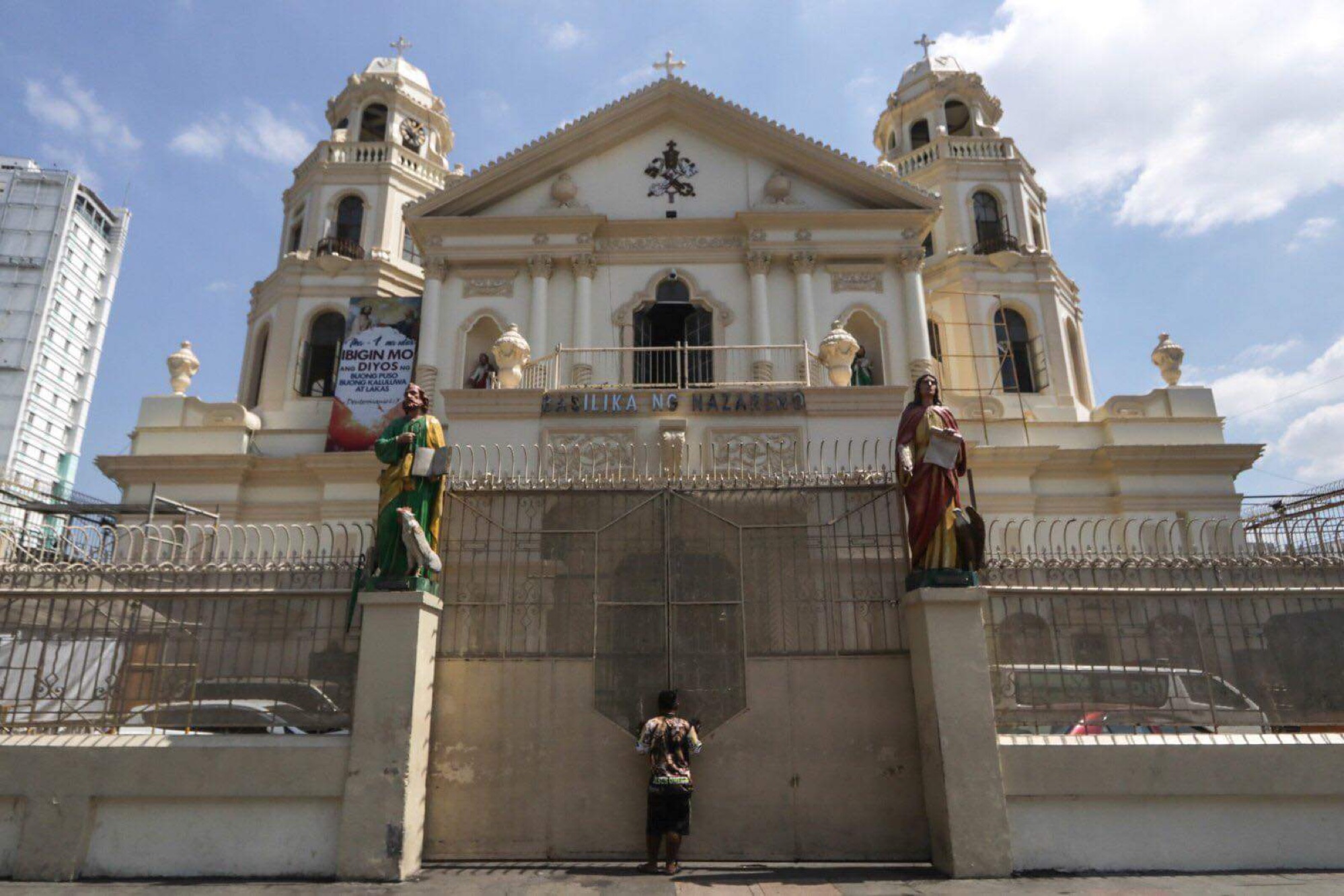
Churches in the Philippines are popular tourist destinations because of their beautiful artwork and cultural significance.
In the Roman Catholic Church, Visita Iglesia is a custom that takes place during Holy Thursday. It involves people visiting, praying, and reflecting in at least seven different churches.
Fr. Nante Tolentino, president of the Association of Catholic Shrines and Pilgrimages and rector of the Antipolo International Shrine, explained in an interview with the Manila Bulletin that Visita Iglesia allows Catholics to "deepen" their spiritual connection with God, "meditate" on the suffering of Christ, and "seek forgiveness" for their sins.
The priest pointed out that Visita Iglesia is both a religious practice and a social and familial tradition, with families and friends frequently visiting churches together to foster bonding relationships while engaging in spiritual activities.
"Visita Iglesia can be understood as a time for reflection, introspection, and reconnecting with God, reflecting on the sacrifice Jesus did for us to have the fullness of life," Tolentino said.
While some people choose to follow the Stations of the Cross, he asked the faithful to pray before the Blessed Sacrament on the Altar of Repose.
He added that this is also an opportunity to pause, contemplate, and find solace or inspiration.
Popularity of Metro Manila churches
When asked why several of Metro Manila's churches were so popular during Visita Iglesia, he said it was because of its historical significance, religious relics, cultural importance, and spiritual atmosphere.
These churches, he pointed out, have architectural beauty that includes stunning architectural designs and intricate details that showcase a blend of Spanish colonial, Baroque, and neoclassical styles.
"They serve as venues for religious festivals, processions, and other cultural events that attract both local devotees and tourists," he added.
He also said these churches are easily accessible to visitors, making them convenient stops during Visita Iglesia.
In a rapidly changing world, Tolentino emphasized that Visita Iglesia remains relevant for Filipino Catholics by providing a tangible way to observe and engage with their faith.
With this, the Department of Tourism and the National Commission for Culture and the Arts released recommendations for Manila Churches that the faithful can visit this Holy Week.
Quiapo Church (Minor Basilica of the Black Nazarene)
First on the list is the National Shrine of the Black Nazarene, currently known as the "Quiapo Church," one of the most visited churches during Holy Week.
The church was officially declared as a national shrine last Jan. 29
READ:
https://mb.com.ph/2024/1/29/quiapo-church-officially-declared-as-nat-l-shrine
The church is home to the miraculous Black Nazarene, and every Good Friday, devotees gather there for its procession.
Location: Plaza Miranda, Quezon Blvd., Quiapo, Manila
Facebook page: https://www.facebook.com/quiapochurch/
Website: https://quiapochurch.com.ph/
San Sebastian Church (Minor Basilica of San Sebastian)
The San Sebastian Church, officially called the Minor Basilica of San Sebastian, stands in Manila City's Quiapo district.
It is best known for being the only church made entirely out of steel in Asia, making it one of the must-visit churches in Manila for Visita Iglesia.
Location: Pasaje del Carmen St, Quiapo, Manila, 1001 Metro Manila
Binondo Church (Minor Basilica and National Shrine of Saint Lorenzo Ruiz)
Based on the church was established in 1569 and was dedicated to San Lorenzo Ruiz—the first Filipino saint who once considered it his spiritual home.
Dominican priests constructed it in Manila's Binondo district, which is currently the largest Chinatown in the world to convert members of the local Chinese community to Catholicism.
Location: Plaza Lorenzo Ruiz, Binondo, Manila
Facebook page: https://www.facebook.com/binondochurch1596/
Website: https://rcam.org/minorbasilicaofsanlorenzoruiz/
San Agustin Church (Immaculate Conception Parish)
San Agustin Church, or the Immaculate Conception Parish, is another historic structure in the Walled City of Intramuros.
One of the most popular family destinations in the Philippines is the oldest stone church in the country, known for its Baroque architecture.
In addition, this historic church was declared a National Cultural Treasure by former President Marcos Sr. in 1973.
Location: 181 Gen Luna Street, Intramuros, Manila
Facebook: https://www.facebook.com/LaConsolaciondeIntramuros/
Manila Cathedral (Manila Metropolitan Cathedral-Basilica)
Also inside the Intramuros, the Manila Cathedral is the Premier Church, Cathedral, and Basilica—the Mother of all Churches, Cathedrals, and Basilicas in the Philippines.
According to the church, it is the first Cathedral in the country to be elevated to the rank of a Basilica by Pope John Paul II's own initiative.
Location: Cabildo cor., Beaterio Streets, Intramuros, Manila
Facebook: https://www.facebook.com/themanilacathedral/
Website: http://manilacathedral.com.ph/
Ermita Church (Archdiocesan Shrine of Our Lady of Guidance)
The Ermita Church was named after the Marian image of the Immaculate Conception that is kept inside its walls.
The church is home to the oldest Marian image in the Philippines and was declared an archdiocesan shrine in 2005.
Location: M.H. del Pilar Street, Ermita, Manila
Facebook: https://www.facebook.com/DeGuiaErmita/
Malate Church
Built by the Augustinian friars in 1588, the Malate Church is one of the oldest Churches in the Philippines.
The church features a captivating blend of Muslim and Baroque architecture.
Location: 2000 M. H. Del Pilar Street, Malate, Manila 1004
Facebook: https://www.facebook.com/MalateCatholicChurch
Website: https://malatecatholicchurch.org/