ADVERTISEMENT

Upskilling with UK-PH transnational education: A practical path to global credentials

TNE is typically a partnership between a foreign university and a local institution in the student's home country

Published Mar 25, 2024 03:31 am
a.jpg
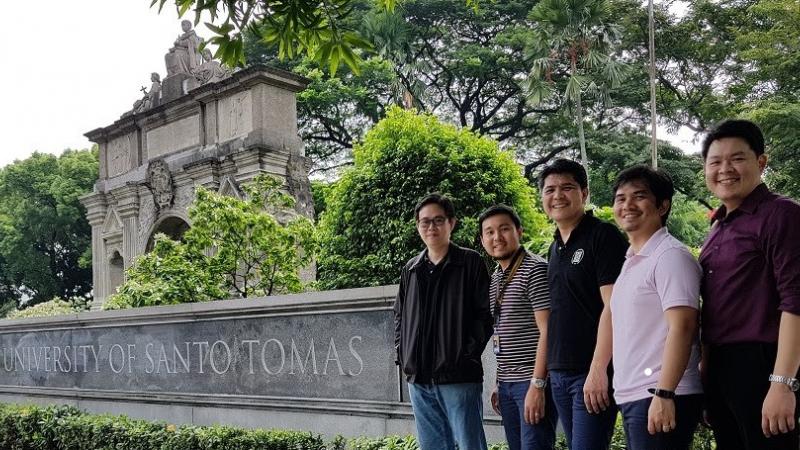
Photo shows (L-R): Architects Chiu, de Vera, Ong, with colleagues from UST College of Architecture before their PhD study. C Joey De Vera

Across the globe, younger generations aspire to pursue higher education and attain global credentials to enhance their personal and professional development. However, many of them encounter obstacles and challenges, including academic pressure, time commitment, and economic biases. For Filipinos, transnational education (TNE) could provide a solution.

What is transnational education?

An alternative to the traditional route of studying abroad, TNE typically involves a partnership between a foreign university and a local institution in the student's home country. This means you don't have to spend all your time abroad to complete the program. For instance, students can study in the Philippines and obtain two qualifications: one from the Philippines and the other from a UK university.

The British Council facilitates connections between universities in the United Kingdom and the Philippines, enabling them to collaborate on developing TNE programs in specialized disciplines that may be unavailable or limited in the Philippines, such as MSc in Robotics Engineering (offered by De La Salle University and Liverpool Hope University) and MRes in Tropical Biological Oceanography (offered by Silliman University and Newcastle University).

These niche areas allow Filipino students to specialize in disciplines that are not widely available yet, giving them a competitive edge in their chosen fields while providing them with a global perspective. Moreover, these partnerships provide local universities with additional capacities and resources to develop the knowledge pool in these niche disciplines over the long term, enabling them to contribute to national sustainable development.

Why choose the UK: Real success stories from TNE graduates

Wherever you are in the world, having a degree from the UK instantly opens doors. Known for its prestigious universities and high-quality education system, four of the top ten universities in the world are located in the UK (according to the QS World University Rankings 2024).

But studying in the UK isn't just about receiving an exemplary education. It creates access to valuable work placements and internships, bridging the gap between theory and applied expertise. UK graduates are amongst the most employable in the world because they not only emerge with impressive credentials but also bring real-world experience that resonates with employers worldwide. Just take it from these Filipino TNE graduates who have found success after completing their UK education:

"The TNE programme allowed me to learn more about various cultures," says Brian James Chiu, an architect and professor at the University of Santo Tomas. "It helped foster a deeper appreciation for different points of view, which is particularly true in education and the academic environment."

Chiu was part of the first cohort of the dual Ph.D. in architecture programme, a joint effort of the University of Reading and the University of Santo Tomas. "Studying at the University of Reading provided a unique opportunity to gain international exposure, meet brilliant people, and build lasting relationships," he says.

Sarina Arciga, a professor at Bicol University Tabaco Campus, echoes Chiu's sentiments. Arciga's programme, MSc in Advanced Biological Sciences specializing in Sustainable Food Systems, was a joint initiative of the University of Liverpool and Bicol University.

Apart from providing Arciga with a wider understanding of how science could be used to address sustainability issues, the programme also broadened her horizons. "Getting this scholarship introduced me to experiences that are beyond the academic realm," she says. "I consider myself blessed to be given a life-changing opportunity like this."

Explore TNE opportunities through British Council Philippines

Borders don’t need to limit anyone’s potential. Graduates of TNE programmes have already proven so. The British Council readily supports Philippine higher education institutions by increasing the accessibility of higher education and bridging the gap in local expertise. 

With the British Council continuously working on developing and improving TNE, there are lots of opportunities to further academic expertise, gain international exposure, and attain global credentials for anyone who wants to broaden their perspectives.

To learn more about transnational education in the UK, visit the British Council official website.

Related Tags

MB Lifestyle Online Youth and Education
ADVERTISEMENT
.most-popular .layout-ratio{ padding-bottom: 79.13%; } @media (min-width: 768px) and (max-width: 1024px) { .widget-title { font-size: 15px !important; } }

{{ articles_filter_1561_widget.title }}

.most-popular .layout-ratio{ padding-bottom: 79.13%; } @media (min-width: 768px) and (max-width: 1024px) { .widget-title { font-size: 15px !important; } }

{{ articles_filter_1562_widget.title }}

.most-popular .layout-ratio{ padding-bottom: 79.13%; } @media (min-width: 768px) and (max-width: 1024px) { .widget-title { font-size: 15px !important; } }

{{ articles_filter_1563_widget.title }}

{{ articles_filter_1564_widget.title }}

.mb-article-details { position: relative; } .mb-article-details .article-body-preview, .mb-article-details .article-body-summary{ font-size: 17px; line-height: 30px; font-family: "Libre Caslon Text", serif; color: #000; } .mb-article-details .article-body-preview iframe , .mb-article-details .article-body-summary iframe{ width: 100%; margin: auto; } .read-more-background { background: linear-gradient(180deg, color(display-p3 1.000 1.000 1.000 / 0) 13.75%, color(display-p3 1.000 1.000 1.000 / 0.8) 30.79%, color(display-p3 1.000 1.000 1.000) 72.5%); position: absolute; height: 200px; width: 100%; bottom: 0; display: flex; justify-content: center; align-items: center; padding: 0; } .read-more-background a{ color: #000; } .read-more-btn { padding: 17px 45px; font-family: Inter; font-weight: 700; font-size: 18px; line-height: 16px; text-align: center; vertical-align: middle; border: 1px solid black; background-color: white; } .hidden { display: none; }
function initializeAllSwipers() { // Get all hidden inputs with cms_article_id document.querySelectorAll('[id^="cms_article_id_"]').forEach(function (input) { const cmsArticleId = input.value; const articleSelector = '#article-' + cmsArticleId + ' .body_images'; const swiperElement = document.querySelector(articleSelector); if (swiperElement && !swiperElement.classList.contains('swiper-initialized')) { new Swiper(articleSelector, { loop: true, pagination: false, navigation: { nextEl: '#article-' + cmsArticleId + ' .swiper-button-next', prevEl: '#article-' + cmsArticleId + ' .swiper-button-prev', }, }); } }); } setTimeout(initializeAllSwipers, 3000); const intersectionObserver = new IntersectionObserver( (entries) => { entries.forEach((entry) => { if (entry.isIntersecting) { const newUrl = entry.target.getAttribute("data-url"); if (newUrl) { history.pushState(null, null, newUrl); let article = entry.target; // Extract metadata const author = article.querySelector('.author-section').textContent.replace('By', '').trim(); const section = article.querySelector('.section-info ').textContent.replace(' ', ' '); const title = article.querySelector('.article-title h1').textContent; // Parse URL for Chartbeat path format const parsedUrl = new URL(newUrl, window.location.origin); const cleanUrl = parsedUrl.host + parsedUrl.pathname; // Update Chartbeat configuration if (typeof window._sf_async_config !== 'undefined') { window._sf_async_config.path = cleanUrl; window._sf_async_config.sections = section; window._sf_async_config.authors = author; } // Track virtual page view with Chartbeat if (typeof pSUPERFLY !== 'undefined' && typeof pSUPERFLY.virtualPage === 'function') { try { pSUPERFLY.virtualPage({ path: cleanUrl, title: title, sections: section, authors: author }); } catch (error) { console.error('ping error', error); } } // Optional: Update document title if (title && title !== document.title) { document.title = title; } } } }); }, { threshold: 0.1 } ); function showArticleBody(button) { const article = button.closest("article"); const summary = article.querySelector(".article-body-summary"); const body = article.querySelector(".article-body-preview"); const readMoreSection = article.querySelector(".read-more-background"); // Hide summary and read-more section summary.style.display = "none"; readMoreSection.style.display = "none"; // Show the full article body body.classList.remove("hidden"); } document.addEventListener("DOMContentLoaded", () => { let loadCount = 0; // Track how many times articles are loaded const offset = [1, 2, 3, 4, 5, 6, 7, 8, 9, 10]; // Offset values const currentUrl = window.location.pathname.substring(1); let isLoading = false; // Prevent multiple calls if (!currentUrl) { console.log("Current URL is invalid."); return; } const sentinel = document.getElementById("load-more-sentinel"); if (!sentinel) { console.log("Sentinel element not found."); return; } function isSentinelVisible() { const rect = sentinel.getBoundingClientRect(); return ( rect.top < window.innerHeight && rect.bottom >= 0 ); } function onScroll() { if (isLoading) return; if (isSentinelVisible()) { if (loadCount >= offset.length) { console.log("Maximum load attempts reached."); window.removeEventListener("scroll", onScroll); return; } isLoading = true; const currentOffset = offset[loadCount]; window.loadMoreItems().then(() => { let article = document.querySelector('#widget_1690 > div:nth-last-of-type(2) article'); intersectionObserver.observe(article) loadCount++; }).catch(error => { console.error("Error loading more items:", error); }).finally(() => { isLoading = false; }); } } window.addEventListener("scroll", onScroll); });

Sign up by email to receive news.